Sutton Council’s decision in August 2013 to grant planning permission for the Beddington Energy Recovery Facility has come under fresh fire after the Environment Agency this week approved a significant expansion of the incinerator’s waste-burning capacity.
One local politician, speaking about the council’s Liberal Democrat administration at the time, said: “We would not be in this position if the Sutton Liberal Democrats hadn’t actively instigated, championed, and signed off on their incinerator contract in the first place, chaining our borough to decades of mass waste-burning.”
Contract History
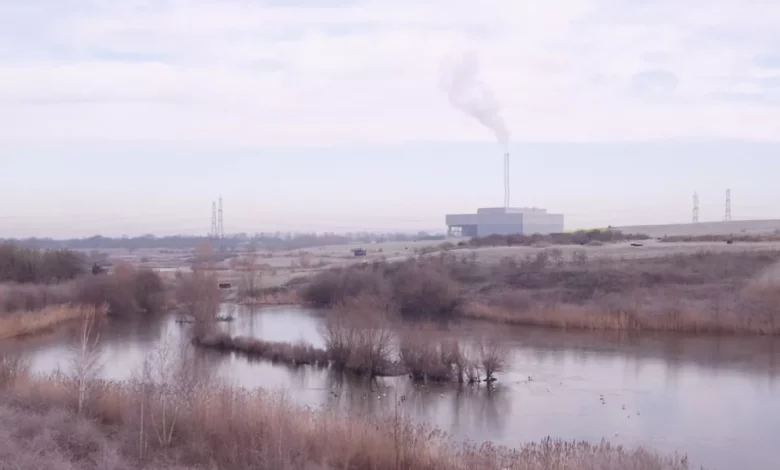
Planning permission for the Beddington Energy Recovery Facility (ERF) was granted in August 2013. Construction began in July 2015 and the plant was expected to be operational by August 2018. The facility serves the South London Waste Partnership, which includes the London boroughs of Croydon, Sutton, Merton and Kingston. It is operated by Viridor, a company owned by KKR.
The original permit allowed the incinerator to process 302,500 tonnes of non-recyclable waste each year. In December 2020 the Environment Agency approved a variation that raised this figure to 347,422 tonnes per annum. Meanwhile, Sutton Council entered into a new waste management contract with Veolia that commenced in April 2025. Veolia, which operates other UK waste facilities and has secured major contracts elsewhere, also runs district heating networks using heat from energy-from-waste plants. A separate Veolia incinerator contract in Hertfordshire was terminated after planning permission for that facility was rejected.
Expansion and Long-Term Implications
On 3 June 2026 the Environment Agency approved Viridor’s application to increase the Beddington ERF’s annual capacity by nearly 35,000 tonnes, allowing it to burn up to 382,286 tonnes of non-recyclable waste each year. The agency justified its decision by citing the facility’s “strong operational performance and demonstrated ability to process additional waste while continuing to operate within strict environmental permit requirements”. It argued that the incinerator provides “a better climate outcome than if the waste was landfilled”.
Critics, however, point to a pattern of permit breaches and environmental harm. Between September 2022 and March 2024 the site exceeded permitted nitrogen oxide (NOx) limits on 916 occasions. Viridor blamed a third-party contractor’s human error in emissions monitoring.
Local residents have also complained about unpleasant odours from the plant. Data from 2019 to 2021 shows the incinerator emitted between 263,000 and 307,000 tonnes of CO₂ each year. One analysis concludes that Beddington produces more CO₂ per unit of electricity generated than a coal power station. A report highlighted an increase in infant mortality rates in a part of Croydon downwind from the facility during its first year of operation.
Environmental groups, including Friends of the Earth, have raised concerns about incinerator emissions such as nitrogen oxides, particulate matter and heavy metals, and some studies have linked these particles to health risks including cancer and infant mortality. Campaigners argue that the term “Energy Recovery Facility” is misleading bureaucratic language used by operators and regulators to downplay the environmental impact of incineration.
The contract’s long-term implications extend beyond health and emissions. Sutton’s recycling rate has fallen from a peak of around 50–51 per cent to 41 per cent in 2023/24, increasing the volume of plastic waste sent for burning and boosting CO₂ and pollutant output. In some cases, recycling from communal bins has been sent for incineration because of contamination and HGV driver shortages. Sutton Council has introduced policies such as a “one brown bin” limit for non-recyclable waste to try to reverse the trend, but opponents fear the expanded incinerator will lock the borough into a waste-burning model for decades, undermining efforts to reduce, reuse and recycle.
There are also concerns that the Sutton Decentralised Energy Network, which could be linked to the incinerator for heat, may commit the borough to waste-based energy rather than renewables. Veolia is actively pushing for policy changes to support more district heating networks connected to energy-from-waste plants.
Political opposition to the expansion has been fierce. Sutton Council formally objected to the Environment Agency’s decision, with Councillor Christopher Woolmer arguing that the site lacked the capacity to process the proposed volume and pointing to Viridor’s repeated permit breaches. Hackbridge Councillor Dave Tchil called the decision an “absolute betrayal” of residents. MP Bobby Dean has called for central government to review the approval, describing it as “disgraceful”. Councillor Nick Mattey has been a vocal opponent, leading a petition against the expansion. Campaign groups including Stop the South London Incinerator and the London Green Party continue to mobilise against the facility.
Past legal challenges were brought against Sutton Council over the original planning permission, raising issues about development on Metropolitan Open Land and a failure to consider relevant environmental factors. Those challenges did not halt the project, and the incinerator’s capacity has now grown by nearly 80,000 tonnes since its first permit. Meanwhile, proposals for a separate SUEZ food waste plant on Beddington Lane have also drawn opposition over traffic, noise and odour concerns. The Environment Agency maintains that its specialist officers reviewed the application and concluded the permit variation provides a “high level of protection to the environment and human health”. Viridor says it takes its environmental responsibility seriously and aims for zero breaches, adding that modern incinerators do not pose a significant risk to public health, citing UK Health Security Agency assessments. The company argues that burning waste diverts material from landfill, which would require substantial land and produce its own environmental consequences.
Despite these assurances, the combination of a decade-long contract, a falling recycling rate, repeated emissions breaches and now an expanded permit has deepened the sense among many local politicians and residents that the 2013 decision has locked the area into a waste management strategy that will prove increasingly difficult to escape.