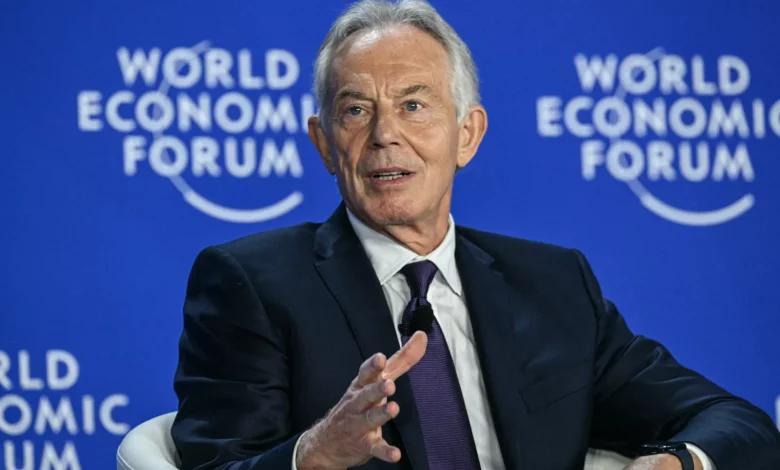
Sir Tony Blair has called on European leaders, including Sir Keir Starmer, to fundamentally rethink the continent’s energy strategy, warning that a narrow focus on climate targets has left Europe “hopelessly exposed” to geopolitical shocks and soaring prices. Writing with former Italian prime minister Matteo Renzi in the foreword to a new report from the Tony Blair Institute (TBI) entitled The Power to Compete: Europe’s Energy Reset, the former prime minister insists that while decarbonisation is “essential”, it “cannot be pursued in isolation”. The countries that will succeed, they argue, are those that can deliver “abundant, secure and affordable energy at scale”.
The intervention comes amid sharpening economic anxiety triggered by the conflict in Iran and broader Middle East instability. The Bank of England has predicted that the average household annual energy bill will rise from £1,641 to close to £1,900 in July and remain at that level for the rest of the year. Analysts have forecast a similar increase: a rise of around 11.2 to 12.7 per cent in the energy price cap for July to September 2026, pushing typical annual bills to between £1,824 and £1,850, compared with the current cap of £1,641 which came into effect on 1 April. The price cap for January to March 2026 stood at £1,758, having fallen from £1,720 for July to September 2025.
Economic warnings mount
The National Institute of Economic and Social Research (Niesr) has warned that a prolonged Middle Eastern conflict could push the UK into recession during the second half of 2026. Even under an optimistic scenario, the think tank estimated the energy crisis could cost the economy £35 billion. Niesr also forecast that inflation would peak at 4.1 per cent in January 2026 and would not return to the 2 per cent target until 2028; under an adverse scenario, inflation could reach 5.25 per cent. These forecasts underscore the urgent backdrop to Sir Tony’s call for a strategic reset.
In their foreword, Sir Tony and Mr Renzi argued that the “global centre of gravity has shifted” towards economies where demand is rising rapidly and where the overriding priority is ensuring supply keeps pace. “For years, the energy transition has been understood primarily as a climate challenge, one defined by targets, timelines and emissions reduction,” they wrote. “But that framing is no longer sufficient. In a world of geopolitical instability, rising electricity demand and intensifying economic competition, energy has become a question of power in the most literal sense.”
Report singles out UK and Denmark for phasing out fossil fuel production
The TBI report, authored by senior policy adviser Tone Langengen, reserves its harshest criticism for the decisions of the UK and Denmark to phase out fossil fuel production. It cites these moves among the “mistakes” made in Europe’s energy approach, stating bluntly: “Fossil fuel was deprioritised while dependence remained high.” The paper notes that Europe’s long-standing reliance on Russian fossil fuels has now been slowly replaced by dependence on Middle Eastern and American supplies. “The decisions of key producers like Denmark and the UK to phase out fossil-fuel production have made the region more exposed to international markets in increasingly unstable times,” it says.
The criticism is particularly pointed given that Denmark has already achieved more than three consecutive months without coal in electricity and heat production by August 2025, and aims to end all fossil fuel production by 2050. The UK, meanwhile, has seen its North Sea output decline and its power sector emissions fall significantly due to the phase-out of coal and the expansion of wind and solar, but remains reliant on gas for 31 per cent of its electricity and on bioenergy for a further 14 per cent. Energy import reliance has increased as North Sea reserves shrink. The report warns that by cutting domestic production, these countries have increased their exposure to volatile global markets at a time when geopolitical shocks are becoming more frequent.
The foreword is careful to state that this is “not an argument for weakening climate ambition” but for “embedding it within a more effective strategy – one that recognises that clean energy succeeds when it helps deliver abundant and affordable power”. The report insists that Europe has the “capabilities to lead in this next phase” but needs a “clearer narrative, stronger political direction and a renewed focus on delivery”. Without such a shift, it warns, the continent risks falling behind those already shaping the energy systems and economic order of the future.
Call for closer UK-EU energy alignment
The report also recommends that the UK and EU move towards a “common market” relationship for energy in the long term, arguing that Britain should be allowed to “opt in” to a continental “system planner” designed to coordinate Europe’s electricity sector. “In the long term, the UK-EU relationship must converge towards a common-market framework – not for political reasons, but because the physical realities of Europe’s interconnected energy systems leave no alternative,” it states. Since Brexit, the UK left the EU’s internal energy market on 1 January 2021, and energy trading through electricity interconnectors is no longer managed through EU single market tools. Nonetheless, energy remains deeply interconnected: trade accounted for 10 per cent of EU-UK trade in 2023, and energy made up 20 per cent of UK exports to the EU. A recent summit agreement, reached on 2 May 2026, aims to integrate electricity markets, stabilise prices and strengthen energy security, with potential investments exceeding £150 billion in renewables. It also includes exploring UK participation in the EU electricity market and the EU Energy Interconnection Platform, and linking their Emissions Trading Systems. However, post-Brexit costs have risen, with potential EU Carbon Border Adjustment Mechanism charges estimated at £800 million between 2026 and 2030.
Sir Keir Starmer has outlined a five-point plan to tackle the energy crisis, including cutting bills, extending fuel duty cuts and investing in “clean British energy” through a new organisation called British Energy, focused on offshore wind and solar farms. There are indications that Labour may be prepared to miss its target of removing almost all fossil fuels from the UK electricity supply by 2030 if it proves significantly more expensive than building gas power. Starmer has also called for closer partnership with the EU on energy and security.
A spokesperson for the Department for Energy Security and Net Zero pushed back against the report’s criticisms, saying: “Net zero is the economic opportunity of the 21st century, with clean power being the route to energy sovereignty, lower bills for good and thousands of good jobs in our communities. The lesson of yet another fossil fuel crisis is the UK needs to get off the fossil fuel rollercoaster and onto clean homegrown power we control.” The spokesperson added that the government is “driving further and faster for clean homegrown power to bring down bills for good – including decisive action to break the influence of gas on electricity prices.”