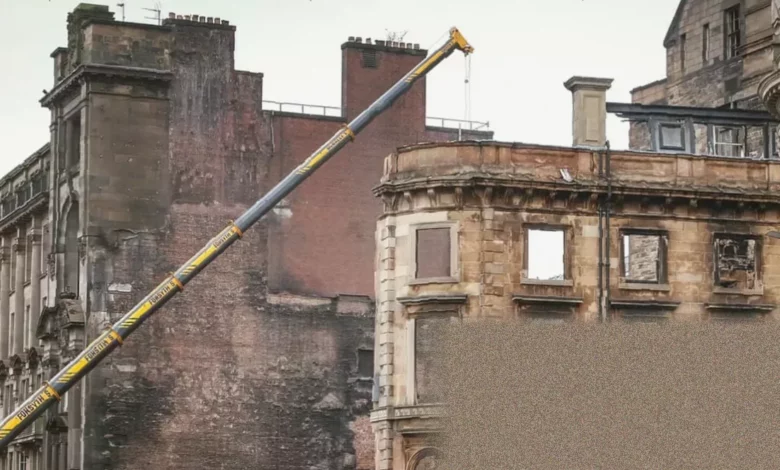
Glasgow Central Station will partially reopen its main concourse on Wednesday, a significant but fragile step towards normality after a devastating fire forced its complete closure over a week ago. The phased return of services to more than half of its high-level platforms will reconnect Scotland’s busiest railway hub, though access will remain severely restricted and a significantly reduced timetable will be in place.
A Week of Widespread Disruption
The station was abruptly closed on Sunday, 8 March, after a ferocious blaze tore through the Grade B-listed Victorian building known as Union Corner adjacent to the station. The Scottish Fire and Rescue Service deployed up to 18 appliances and specialist teams at the height of the incident, with firefighters tackling the fire through the night before handing the site over to Glasgow City Council days later. The closure of a station that typically handles around 116,000 passenger journeys daily had an immediate and severe impact across the national rail network.
In the week following the fire, an estimated 953,000 passenger journeys were disrupted. Cross-border operator Avanti West Coast reported 220 weekday trains were diverted or cancelled, with services terminating at Motherwell or rerouted to Edinburgh. From Wednesday, it will operate a scaled-back service of one train per hour between London Euston and Glasgow Central. TransPennine Express had over 140 trains cancelled or diverted and will suspend services between Glasgow Central and Carlisle indefinitely. CrossCountry confirmed 35 of its services were affected.
ScotRail, which operates nearly all domestic services in Scotland, said the disruption to both its high-level and low-level platforms was so extensive it could not immediately provide a total figure for affected trains. David Ross, ScotRail’s chief operating officer, apologised for the ongoing impact. “Resuming services on more than half the high-level platforms in the station is a big step forward,” he said, adding that the timetable would be kept under review with more services added “when it is safe”.
Demolition and a ‘Different’ Station
The partial reopening comes as demolition crews work around the clock to bring down the unstable remains of the fire-ravaged building. The facade at the junction with Gordon Street, which was left standing, must be demolished before entrances on that street can reopen. For now, passengers will only be able to access the station via entrances to low-level platforms and the Hope Street carriage driveway, normally reserved for vehicle access during events. Entrances on Union Street, Gordon Street, and Hope Street adjacent to Waterloo Street remain closed.
Network Rail engineers found no significant structural damage to the station itself, with issues mainly related to water ingress. Nonetheless, the station will “look different,” with shops and facilities closed and barriers marking an exclusion zone. Essential operational equipment, including the public address system, has been relocated, and temporary facilities set up for staff.
Origin of the Blaze and Regulatory Questions
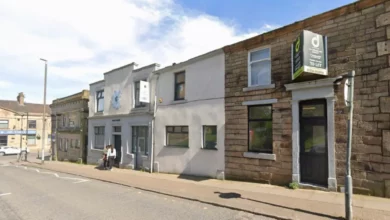
The fire is believed to have started in a vape shop on Union Street, with onlookers reporting hearing explosions potentially caused by lithium batteries stored on-site. Investigations have since revealed that the shop, operated by Junaid Retail Limited trading as Scot’s World, was not registered to sell vapes and had not paid business rates, having been contacted repeatedly by the council’s debt recovery company.
Glasgow City Council’s trading standards team had visited the premises in November 2024, finding its nicotine stock to be legal and refusing a test underage purchase. The incident has highlighted concerns over the lack of a comprehensive regulatory regime for vape shops and the vulnerability of historic buildings to modern fires involving lithium-ion batteries.
Economic Fallout and Recovery Efforts
The closure has dealt a “devastating blow” to consumer confidence and the local economy, according to UKHospitality Scotland, which has called for a business recovery plan including rates relief. The financial impact is substantial, with insurers facing potential pay-outs in the hundreds of millions of pounds. A community fundraising effort has raised over £150,000 for affected businesses.
In response, First Minister John Swinney announced £11 million in government funding to aid recovery, comprising a £10 million package for rebuilding and up to £1 million for demolition costs. A ministerial oversight board has been established to coordinate the response. The incident has starkly interrupted the station’s recovery from the pandemic; after passenger numbers plummeted to 5.3 million in 2020/21, entries and exits had rebounded to over 25 million in 2024-2025, making it the 17th busiest station in Great Britain and the busiest in Scotland.
Network Rail and ScotRail have expressed gratitude for the patience shown by passengers and the community as the complex recovery and rebuilding operation continues.