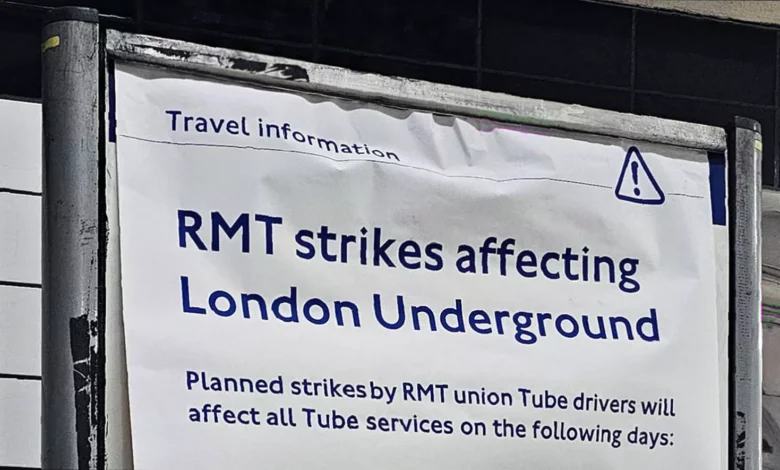
Tube strikes loom this week after the RMT union accused Transport for London of a “baffling” U-turn in negotiations over the introduction of a four-day working week for drivers.
The union claims TfL had initially offered to negotiate on all elements of the proposal but has now informed the RMT it intends to impose its planned shift changes, a move general secretary Eddie Dempsey called “extremely disappointing”. He stated the union had approached talks in good faith throughout, but TfL now appeared unwilling to make concessions to avert action.
The core of the dispute
The fundamental disagreement centres on what a four-day week actually means. The RMT advocates for a net reduction in working hours, condensing the current workload into fewer days but without extending daily shifts. The union argues that longer shifts under a compressed week raise serious safety concerns regarding driver fatigue.
In contrast, TfL’s position, put forward in March 2025, is for a voluntary, cost-neutral change. This means a reduction in the number of shifts worked per week would be offset by extending the length of each shift, maintaining the same total weekly hours and salary. TfL states this pattern is similar to that offered by most other train operating companies and emphasises that drivers who wish to remain on a five-day week would be free to do so.
The financial context is key. Average pay for London Underground drivers has risen from £56,496 in 2019-20 to £71,160 in 2024-25. The RMT’s wider ambition is a transition from a 36-hour to a 32-hour week with no loss of pay, a move TfL has questioned on grounds of cost and feasibility.
Adding complexity to the dispute is the stance of another union. ASLEF, which also represents train drivers, accepted TfL’s 35-hour, four-day week proposal in April 2025, describing it as a desirable deal. TfL has since trialled this working pattern on the Bakerloo line and made such shifts available voluntarily to all drivers.
The RMT, however, states that a majority of train operators rejected TfL’s proposals in e-referendums, citing concerns over shift lengths and safety. This impasse follows a period of suspended action in March, when strikes were called off after a perceived breakthrough, only for talks to collapse again.
Widespread disruption expected
If the strike proceeds, TfL warns disruption will be widespread across the London Underground network. The strikes are scheduled as 24-hour walkouts, beginning at midday on Tuesday 21 April and Thursday 23 April.
On strike days, no service is expected on the Piccadilly and Circle lines. There will be no service on the Metropolitan line between Baker Street and Aldgate, or on the Central line between White City and Liverpool Street. Any services that do run will be less frequent, extremely busy, and passengers may not be able to board the first train.
A detailed daily breakdown indicates that on Tuesday and Thursday, normal services are expected only until mid-morning, with significant disruption from midday onwards. The days following the strikes—Wednesday 22 April and Friday 24 April—will see significant disruption through the morning as services gradually recover.
Other transport modes are expected to be busier but running. The Elizabeth line, Docklands Light Railway, London Overground, Trams and the vast majority of bus routes will operate normally. However, seven specific bus routes in East London operated by Stagecoach will be affected by a separate strike from the early hours of Friday 24 April.
TfL has urged the RMT to call off the strikes and continue working on the proposals, highlighting ongoing dialogue. The RMT’s Eddie Dempsey has signalled that without a resolution, further strike action is planned for the coming months.