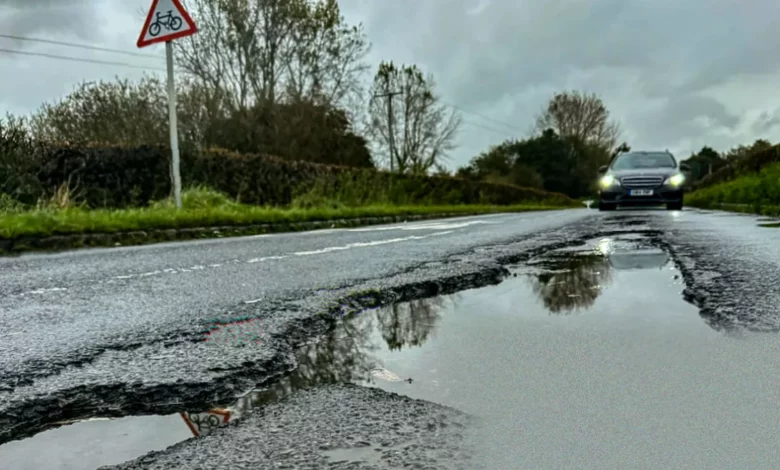
Drivers across the UK are increasingly opting for larger, heavier SUVs in a bid to protect their vehicles from pothole damage, a move that scientists and engineers warn is actively worsening the very problem they seek to avoid. This creates a vicious cycle where deteriorating roads prompt the purchase of more damaging vehicles, accelerating the decline of the road network.
The Self-Defeating Purchase Trend
Recent research carried out for Kwikfit by Opinium reveals the extent to which poor road conditions are influencing vehicle choice. Nationally, 6% of drivers say they were influenced to buy, or bought, an SUV primarily because of the state of the roads. Among those who have already suffered pothole damage to their vehicle, that proportion doubles. In regions like London and Yorkshire, almost one in eight drivers have chosen a bigger car partly due to road condition concerns.
This trend is feeding a market where SUVs now dominate, making up more than half of the 2 million new cars sold in the UK last year. Their share of the new car market has surged from 12% a decade ago to 33% in 2024. Steve Gooding, director of the RAC Foundation, summed up the driver’s dilemma: “Is it any wonder people are turning to rugged off-road oriented vehicles with the shocking state of many roads?” Yet, as the AA’s head of roads policy, Jack Cousens, points out, “all vehicles are at the mercy of potholes”.
The Heavyweight Engineering Impact
The central irony is that these consumer choices are compounding the damage. While the primary cause of potholes remains the freeze-thaw cycle of rainwater in winter, and the heaviest goods vehicles cause immediate harm, the cumulative impact of heavier passenger cars is a significant and growing secondary factor.
SUVs are typically 200-300kg heavier than a standard hatchback or saloon. The engineering principle at play is the “fourth power law”, where the damage inflicted on road surfaces increases exponentially with axle weight. This means a two-tonne SUV could theoretically do 16 times more damage to the road than a one-tonne car.
“The typical SUV exerts around five times more force on the road than the typical passenger car,” said Professor Anna Goodman of the London School of Hygiene and Tropical Medicine. Dr Ali Rahman, assistant professor of civil engineering at the University of Leeds, explained that higher axle loads “increase surface stresses, crack initiation, and road wear”. He notes this is especially problematic in cities, “where the road network was not designed for heavier passenger vehicles”.
The issue is compounded by the rise of electric vehicles, which are on average 312 kg heavier than their petrol equivalents due to battery packs. Research from the University of Leeds calculates that the average EV causes 2.24 times more stress on road surfaces than a comparable petrol car. The Institution of Civil Engineers has confirmed that heavier vehicles, including electric cars, are a factor in reducing the lifespan of roads.
With 52% of local UK roads now having less than 15 years of usable life remaining, this added stress is accelerating a crisis. Professor Christian Brand, emeritus professor in transport at Kellogg College, Oxford, said that while a single lorry does far more damage, “the rapid growth in SUVs means their cumulative impact… may not be negligible and is increasingly relevant for local maintenance pressures”.
The Spiralling Cost of Failure
The financial scale of the problem is staggering. According to the Asphalt Industry Alliance, a road repair trade body, the one-time cost to fix all potholes and bring local roads in England and Wales up to scratch has reached a record £18.6bn, with £16.8bn needed just to achieve an adequate condition.
Local authorities filled 1.89 million potholes in 2024, but repair costs vary wildly—from £4.13 each in Cardiff to £656 in the Shetland Islands, against a national average of £72.37. With an estimated six potholes per mile on council-controlled roads, the burden on motorists is severe. UK drivers spent an average of £320 on pothole-related repairs between 2023 and 2024, with the total national bill for vehicle damage hitting a record £579 million in 2024, up from £474 million the year before.
Breakdown numbers underscore the daily reality: the RAC attended over 8,100 pothole-related callouts between April and June 2023, a five-year high, while the AA handled over 52,000 in April 2023 alone. The damage frequently extends beyond tyres and suspension to sophisticated advanced driver assistance systems (ADAS). Motoring organisations, however, push back against the focus on vehicle weight, arguing that decades of maintenance underfunding is the root cause and that the impact of cars pales next to that of HGVs.
In response, policy measures are being considered. London is examining potential extra charges for large SUVs, primarily on safety and congestion grounds. A spokesperson for Mayor Sadiq Khan confirmed that Transport for London’s research “will look at the full impact of the continued growth in size and weight of these large SUVs, including any impact they have on the state and condition of London’s roads.” Concurrently, there are calls for road tax to be assessed on vehicle weight, directly linking the wear caused to the cost of repair.