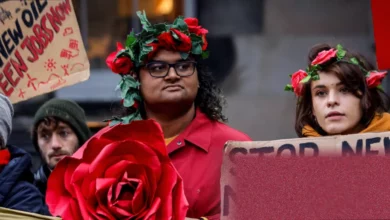
Hundreds of British Iranians marched through central London this afternoon, their voices raised against the regime in Tehran just hours after it launched retaliatory missile strikes across the Middle East. The demonstration, which saw protesters move from the Ministry of Defence to the Iranian Embassy, was a vivid display of diaspora anger and anxiety, set against a backdrop of dramatic military escalation that has left many in the community feeling let down by the UK’s political response.
The protests follow a significant joint US-Israeli military operation on Saturday, described by Washington as “pre-emptive.” Codenamed Operation Epic Fury, the strikes targeted numerous sites across Iran, including intelligence and security headquarters, ballistic missile facilities, and officials’ homes. Multiple sources indicate the compound of Supreme Leader Ayatollah Ali Khamenei was hit and that he was killed. The operation’s stated aims were to dismantle Iran’s military and nuclear capabilities and curb its support for regional proxies, with former US President Donald Trump stating the objective was to bring “freedom” to the Iranian people.
Iran’s response was swift, launching missile strikes at Israel and US bases in several Gulf countries, including Bahrain, Qatar, the United Arab Emirates, and Kuwait, with explosions also reported in Dubai and Saudi Arabia.
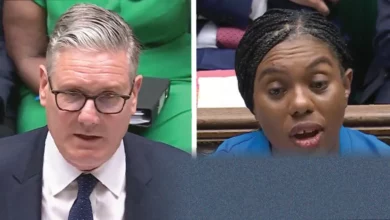
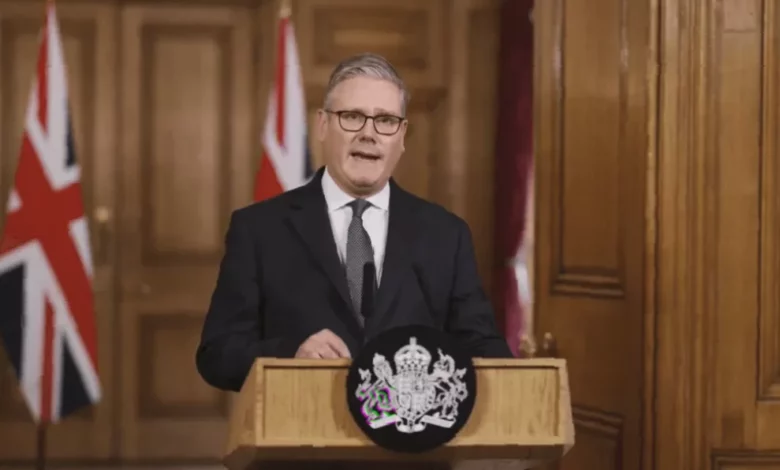
Amid the turmoil, the UK government has sought to tread a careful line. Prime Minister Sir Keir Starmer has unequivocally stated Britain “played no role” in the offensive strikes, a position confirmed by the government which says it “does not want to see further escalation into a wider regional conflict.” However, the UK has bolstered its defensive posture, with RAF fighter jets now conducting patrols from Qatar and Cyprus as part of coordinated regional operations to intercept any incoming Iranian drones and missiles. Sir Keir chaired a meeting of the government’s emergency Cobra committee to discuss the UK’s response, and the government has reiterated its opposition to Iran developing nuclear weapons.
This calibrated stance has drawn criticism from some within the British Iranian community. Speaking to GB News during the London protest, demonstrator Anahit Hosseini expressed profound unease. “I don’t feel safe at all,” she said, criticising what she described as disappointing reactions from UK authorities. “From the perspective of a lot of British Iranian citizens, they have been very disappointed with how the UK Government has reacted to this,” she stated. “Especially the Labour Party has been largely silent about it.”
Her comments point to a complex political picture. While some have perceived Labour as quiet, the party’s leadership has articulated a nuanced position. Sir Keir Starmer has warned of a “risk of escalation” but has also backed US action aimed at Iran’s nuclear facilities, stating Iran can “never be allowed to develop a nuclear weapon” and that the US had “taken action to alleviate that threat.” Labour has consistently condemned the Iranian regime, describing it as “utterly abhorrent” and highlighting its human rights abuses and the threat it poses to dissidents and the Jewish community in the UK.
A core demand from protesters, and a major point of contention in UK politics, is the proscription of Iran’s Islamic Revolutionary Guard Corps (IRGC) as a terrorist organisation. The IRGC has been classified as such by the US, Canada, and, as of January this year, the European Union. Ms Hosseini echoed calls from the march, stating, “The UK Government is refusing to even proscribe the IRGC, even though its acts of terror are well known and documented.”
This pressure is not new. In May 2025, over 550 MPs and peers signed a letter urging the government to label the IRGC a terrorist organisation, citing Iranian terrorism reaching UK soil. The government has previously resisted, fearing diplomatic repercussions; in July 2023 it rejected calls for proscription, opting instead to expand sanctions. However, the UK has acknowledged over 15 credible threats to kill or kidnap British or UK-based individuals since the start of 2022 linked to Iranian state threats.
In contrast, the Labour Party has been a consistent advocate for proscription, arguing it would provide stronger powers to disrupt the IRGC’s activities in the UK. The Labour manifesto committed to adapting counter-terror approaches to deal with state-based threats. Nonetheless, the party is not monolithic on the recent military action. Some Labour MPs have questioned the strikes’ legality. Emily Thornberry, chair of the Commons Foreign Affairs Committee, stated, “There is no legal basis for this attack,” while former leader Jeremy Corbyn described it as “illegal, unprovoked and unjustifiable.”
The London demonstrators, many brandishing the green, white, and red tricolour flag of Iran’s pre-Islamic revolution monarchy, along with American and Israeli flags, were clear in their support for the US-Israeli operation. Ms Hosseini lauded the strikes on what she called Iran’s “apparatus of oppression,” expressing hope they would “weaken the Ayatollah.” The protests also reflect wider unrest; since late December 2025, Iran has been rocked by nationwide protests over economic collapse and repression, met with a severe crackdown and internet blackouts by authorities.
For the protesters in London, the immediate crisis has amplified long-standing grievances. “It’s more important than ever for Iranian British citizens to show their solidarity and support for Iranians who are fighting for freedom and democracy,” Ms Hosseini told reporters. As the UK government emphasises defensive measures and diplomacy, and Labour grapples with its internal divisions on the legality of the strikes while maintaining a hard line on the regime and the IRGC, the diaspora’s call for a more decisive stand continues to echo through the streets of the capital.