Britain must abandon the notion of a special relationship with the United States, a former national security adviser has stated, arguing that the alliance can no longer be relied upon in a world where American interests are shifting.
Lord Peter Ricketts, who served as the UK’s National Security Adviser and spent over 50 years in foreign affairs, said the war in the Middle East had been a “huge wake-up call”. He warned that the concept of a unique bond with Washington was now obsolete and should be “completely forgotten”.
“It’s a transactional relationship with Washington as with every other country,” Lord Ricketts told BBC Radio 4’s Today programme. He added that while collaboration between officials might continue behind the scenes, relations at the top level had become “incredibly difficult and choppy”.
“I think we do have to rethink the idea that the US is a reliable, trustworthy ally on which we can depend in the longer term,” he said, urging a fundamental reassessment of British foreign policy.
A Strained Personal Dynamic
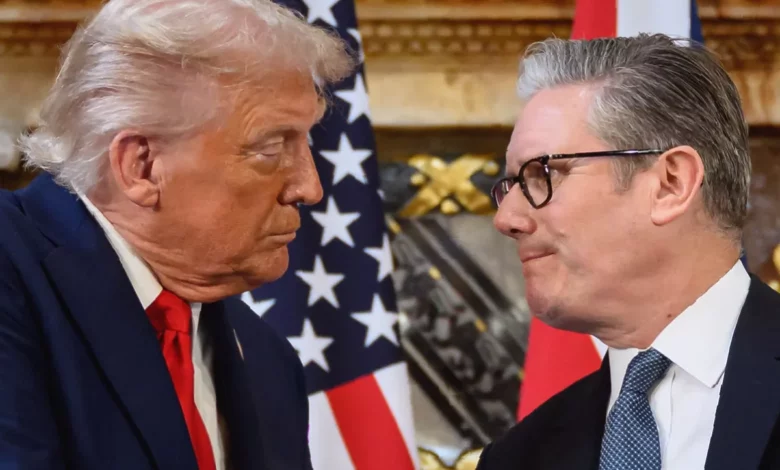
The warning comes against a backdrop of visibly deteriorating relations between Prime Minister Sir Keir Starmer and US President Donald Trump, centred on Britain’s cautious stance towards the conflict with Iran.
President Trump has publicly criticised Sir Keir on multiple occasions. At a White House Easter event, he likened the Prime Minister to the pre-war appeaser Neville Chamberlain, stating “We won’t want another Neville Chamberlain, do we agree?” He has also mocked Sir Keir’s deliberations over sending “two old broken-down aircraft carriers” to the region and declared he was not dealing with a leader like Winston Churchill.
The friction stems from the UK’s refusal to participate in offensive US military operations against Iran, despite granting Washington permission to use British bases like Diego Garcia and RAF Fairford for what it termed “defensive” strikes on Iranian missile sites.
Former foreign secretary Sir James Cleverly said the relationship was “damaged”. “It’s quite clear now that President Trump does not respect Keir Starmer at all,” he told GB News, characterising the Prime Minister’s initial approach as “sycophantic” and indecisive. Sir James suggested the personal relationship between the two leaders was now “beyond repair”.
When questioned on a visit to the Gulf, Sir Keir declined to say if his relationship with Mr Trump was ruined, but defended his position. “I’ve acted as you would expect of a British Prime Minister, which is by being absolutely focused on what is our national interest,” he told broadcasters.
A Call for a European Pivot
Against this strained backdrop, Lord Ricketts’s intervention calls for a strategic pivot. He argued that the UK must now “get closer to the Europeans” and learn to navigate a world where American strategic focus has moved away from Europe.
“We’ve got to work out how we live in a world where American interest has moved away from Europe and we can no longer rely on the kind of relationship we’ve had with America for my 50 years of involvement in foreign affairs,” he stated.
The Prime Minister’s trip to the Gulf on Wednesday 8 April coincided with a fragile diplomatic moment. He travelled to discuss efforts to support a conditional two-week ceasefire between the US and Iran, which President Trump had announced following threats to destroy Iranian civilian infrastructure if a deal was not reached.
Sir Keir welcomed the ceasefire, saying it would “bring a moment of relief to the region and the world”. However, the broader diplomatic climate underscored the central thrust of Lord Ricketts’s analysis: that the era of automatic alignment with Washington is over, compelling Britain to seek firmer foundations for its security and foreign policy elsewhere.