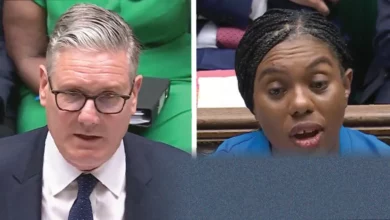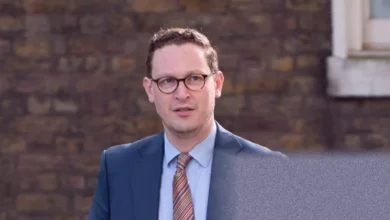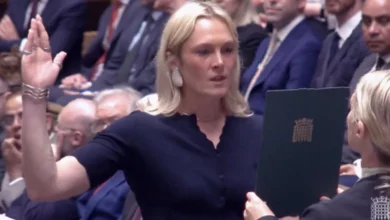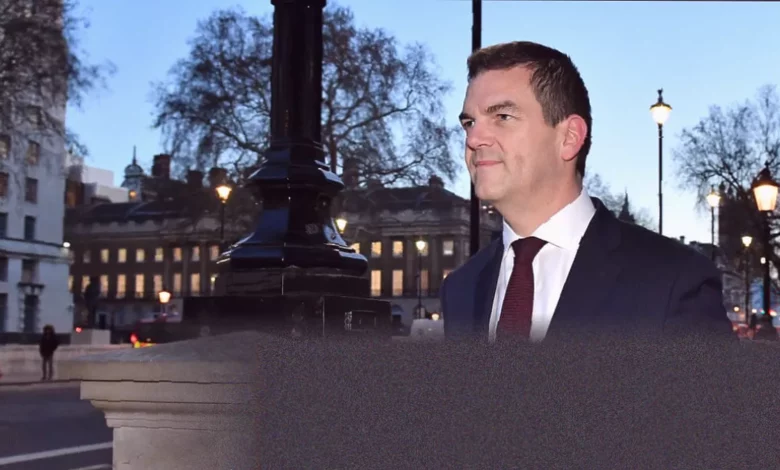
The dismissal of Sir Olly Robbins, the Foreign Office’s most senior civil servant, by Sir Keir Starmer has exposed a profound and damaging rift at the heart of government, triggered by the controversial appointment of Peter Mandelson as US ambassador. The Prime Minister sacked his top diplomat after learning that security officials had raised red flags during Mandelson’s vetting, a fact he claims was kept from him.
The Controversial Appointment
On 20 December 2024, the government announced that Lord Mandelson would be Britain’s next ambassador to Washington, an appointment approved by the King on the recommendation of the Prime Minister and Foreign Secretary David Lammy. Sir Keir hailed Mandelson’s “unrivalled experience,” while Lammy pointed to his background in trade and foreign policy. Mandelson, a former cabinet minister and EU Trade Commissioner who co-founded the advisory firm Global Counsel, called it a “great honour.”
Yet the appointment was immediately contentious. Mandelson had twice resigned from government in the past, was a known critic of some Labour policies, and had documented links to the convicted sex offender Jeffrey Epstein. Furthermore, a senior adviser to Donald Trump’s campaign had reportedly called Mandelson an “absolute moron,” following Mandelson’s own past description of Trump as “little short of a white nationalist and racist.”
Behind the scenes, the formal security vetting process conducted by UK Security Vetting (UKSV) recommended against granting Mandelson the necessary Developed Vetting clearance. Despite this, the Foreign, Commonwealth and Development Office (FCDO), then under Sir Olly Robbins, proceeded with the appointment. Sir Keir told the Commons he was not informed of UKSV’s negative recommendation, calling the omission “unacceptable and unforgivable.”
A Climate of Pressure and Distrust
The seeds of this crisis were sown weeks before Mandelson’s name was announced. On 5 December, Sir Keir launched his “Plan for Change,” a mission-led government approach aimed at focusing the “Whitehall machine.” In that speech, he lamented caution in the civil service, accusing it of being too comfortable “in the tepid bath of managed decline.” He expressed frustration with the “machinery of government,” a sentiment that clearly framed his impatience for results.
It is in this context that Sir Olly Robbins, the former Permanent Under-Secretary at the FCDO, found himself under what he described as “constant pressure” to complete Mandelson’s security checks swiftly. The Prime Minister has denied such pressure existed. Robbins, a seasoned official who previously served as the government’s chief Brexit negotiator, was dismissed in April 2026 when the vetting details emerged. Allies argue he was simply following normal processes and his duty not to disclose sensitive vetting details to ministers.
The fallout has been severe. Former Cabinet Secretary Gus O’Donnell has warned that Robbins’ sacking risks a “serious crisis” in relations between ministers and civil servants, creating a “chilling effect” where officials may become fearful of giving frank advice.
The Damaging Cycle of Blame
This episode exemplifies a corrosive and recurring syndrome in British government. Ministers frequently complain that the bureaucracy is sclerotic and resistant to change. Yet when rushed or ideologically driven projects fail, the same ministers often blame officials for not flagging problems earlier, or even accuse them of sabotage.
Civil servants become perfect scapegoats because they are bound by convention and code not to speak out publicly in their own defence. This tension becomes acute when policy springs from political ideology and governments resist evidence that might undermine it. The traumatic implementation of Brexit for the civil service convinced many Conservatives that Whitehall was a hostile “blob,” an attitude that persists. Recently, senior minister Darren Jones warned that civil servants are too often used as scapegoats for political failure, a pattern seen in scandals like the Post Office Horizon IT inquiry.
Valid criticisms of the civil service do exist and are not unique to the public sector: a risk-averse culture, siloed thinking, inadequate rewards for success, and a lack of accountability for failure. This risk aversion is often structural, born from an adversarial political environment and intense media scrutiny where the price of failure for ministers is high.
Competing Visions of Reform
The debate over reform is now framed by starkly different philosophies. Sir Keir Starmer’s “Plan for Change” seeks to “completely rewire the state” towards a smaller, more efficient, and technologically advanced model, urging civil servants to rediscover policy creativity.
This stands in sharp contrast to the approach advocated by parts of the opposition. Former Conservative minister Kemi Badenoch has claimed about 10% of civil servants are so “obstructive” they should be in jail. Reform UK has pledged a more radical, partisan aggression, proposing to dismiss the top two tiers of the civil service and replace them with political appointees, alongside cutting 68,500 roles to save £5.2bn annually. Unions warn this would devastate expertise and institutional memory.
This model is influenced by Donald Trump’s approach to US officialdom, which has involved executive orders to bring independent agencies under White House control—a move critics describe as a slide towards autocracy. It ignores evidence of the failure and unforeseen costs caused by vandalising state capacity.
Successful reform of an institution with a 170-year history of evolving from Victorian meritocracy to today’s challenges requires a climate of trust, not fear. The foundational principles of permanence and political neutrality, established by the Northcote-Trevelyan reforms, are designed to ensure stable governance. While modernisation is necessary given complex demands and limited resources, it cannot succeed if civil servants are routinely made to carry the can for political misjudgements. The partnership between reforming ministers and forward-thinking officials that Labour initially sought now looks harder to achieve, yet the alternative being offered is an ideological butchery of the state with devastating consequences for public services and effective government.