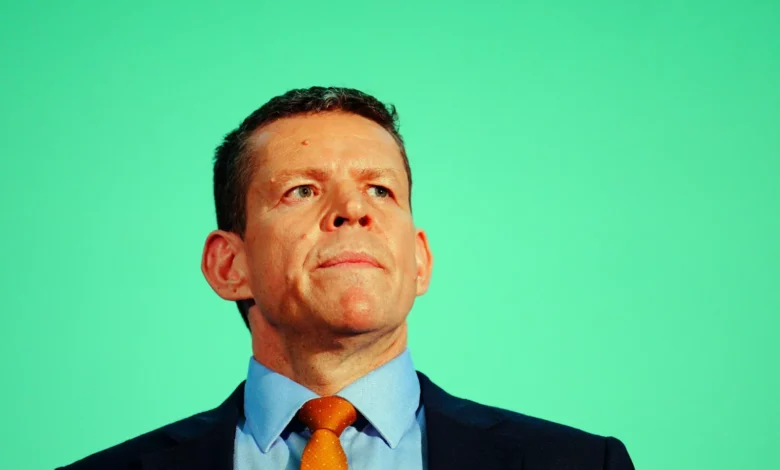
Plaid Cymru faces a “two-horse race” against Reform UK for the Senedd elections in May, leader Rhun ap Iorwerth has warned, as the Welsh nationalists attempt to break almost three decades of Labour dominance by positioning themselves as the only party with Wales’s interests at heart.
The Reform UK threat
Reform UK’s rapid rise is being treated by Plaid Cymru as the most immediate challenge to its ambition of forming a government. Mr ap Iorwerth told The Independent that the growth of the “populist right” was a global phenomenon, citing the examples of Donald Trump in the United States and similar movements across Europe. “It’s important we recognise that we’re not immune from that,” he said, “and, as it happens, it’s a party called Reform that is leading the growth of the political right here.”
The party is actively targeting disillusioned Labour supporters who are ready to break years of tradition. Reform UK’s Welsh leader, Dan Thomas, has pledged to end Wales’s “Nation of Sanctuary” status, despite 91 per cent of the funding associated with that status going to Ukrainian refugees. Immigration policy remains a key political battleground, even though it is decided by Westminster and not the Senedd.
Mr ap Iorwerth warned of a “real threat on a number of different levels to the kind of government that we have”. He singled out the ambiguous position Reform UK holds on devolution. “There’s a threat to the question of Welsh nationhood and democracy,” he said, “because while Reform might say today that they accept devolution, we know that they have no loyalty to devolution. It’s the kind of politics that will change on a whim; there’s a lack of programme there to govern.”
Reform UK’s stance on the Welsh parliament has been confused from the outset. In September, its first Senedd politician said the party had not ruled out scrapping the institution outright. Nigel Farage later dismissed those suggestions, but a party spokesperson subsequently reiterated they “would not rule anything out”. This vacillation, Plaid Cymru argues, represents a direct threat to the democratic settlement that has evolved in Wales since 1998, when the Assembly was first established. The institution was renamed the Senedd in 2020 to reflect its expanded legislative powers, and the 2026 election will be the first held under a “reserved powers” model.
Plaid’s nationalist stance
Plaid Cymru strikes a drastically different tone. Founded in 1925, the party has campaigned on a pro-independence and Welsh nationalist agenda ever since. Mr ap Iorwerth has promised to push for further devolved powers if he becomes first minister, describing the difference between a Plaid-led government and a Labour-led one as a question of loyalty. “I don’t have a boss in London: my boss are the people of Wales,” he said. “That lack of transparency with the relationship between the first minister and Labour prime minister is holding Wales back.”
The party withdrew from its most recent co-operation agreement with Welsh Labour in May 2024, citing concerns over government accountability – specifically a £200,000 donation to First Minister Vaughan Gething’s leadership campaign from a company convicted of environmental offences. The withdrawal cleared the way for Plaid to scrutinise Labour more directly while promoting its own policy ideas. Under the agreement, Plaid had secured free school meals for primary pupils and expanded childcare offers.
Outlining his ambitions for the first 100 days in power, Mr ap Iorwerth has vowed to improve education and healthcare, and bring back a Welsh Development Agency to support businesses. The original WDA, established in 1975, was responsible for encouraging business development and job creation before it was abolished in 2006. Plaid now proposes increasing public procurement from Welsh businesses to at least 70 per cent and supporting a semiconductor cluster. The party’s manifesto also includes a universal childcare offer for children aged nine months to four years and free school meals in secondary schools for pupils on Universal Credit.
Wales is currently the poorest of the UK nations. A 2025 report from the Joseph Rowntree Foundation found that 22 per cent of the population – around 700,000 people – lives in poverty, a figure that has remained largely unchanged for two decades. Nearly half of those in poverty now experience “very deep poverty”. Children are disproportionately affected: nearly one in three children in Wales lives in poverty, and the foundation has warned that if no further action is taken, child poverty could reach 34 per cent by 2029-30 – the highest projected rate in the UK. Barriers to work for disabled people and carers contribute significantly to these rates.
Dr Dewi Jones, the prosecution’s lead expert in the criminal case against Lucy Letby, was among those attending the Plaid Cymru conference. He has been out canvassing for the party and reported being surprised by the positive response. “We have had people repeat the slogan, ‘A new leadership for Wales’ – that’s when you know the message is getting out,” he said.
On immigration, Mr ap Iorwerth acknowledged that “successive UK governments have made a mess in dealing with migration”, but insisted that the answer was not to exploit the issue. “Reform are trying to exploit that,” he said, “and Plaid Cymru will stand up for decency and hope and humanity – it is part of our DNA as a party and that has never been more important in our history.” He described Reform’s use of immigration as “the politics of disinformation”. Recent UK government reforms, such as closing social care visas until 2028 and reducing the graduate visa route, are expected to have a detrimental impact on Wales, particularly on the social care sector and universities, according to the Bevan Foundation.
Projections and polling
The latest YouGov projections indicate Labour is on track for disastrous results in Wales, with a vote share of just 13 per cent and only 12 seats. More in Common’s MRP poll, which surveyed 2,500 people in the country, has put Labour’s chances at 24 seats. In both cases, Labour is projected to trail behind Plaid Cymru and Reform UK – a far cry from the 49 seats required for a majority.
The 2026 election will be the first held under significant Senedd reforms: the number of Members will increase from 60 to 96, a party-list voting system will be introduced, and the number of constituencies will be reduced to 16. This new proportional representation system is expected to reward parties more accurately for their vote share.
Plaid Cymru’s victory in the Caerphilly Senedd by-election in October 2025, which defeated Reform UK and pushed Labour into third place, has been widely seen as a “reset” in Welsh politics. The high turnout – over 50 per cent, the highest ever for a Senedd by-election – demonstrated a major realignment of voter sentiment, with significant shifts from both Labour and Conservative voters. The outcome weakened the Labour government’s minority in the Senedd, making budget negotiations more difficult. Clashes with Reform over immigration are believed to have driven Plaid Cymru’s success in Caerphilly.
Darren Price, a Plaid Cymru councillor in Carmarthenshire and a party member for decades, said: “There’s a positive feeling. It’s been obvious since the autumn that we’re building up towards something historic, we hope. I also think we’ve been careful not to think it’s a done deal.” Addressing voters still on the fence, he added: “There is only one party on the ballot paper that has the interests of Wales at its centre. Everyone else on the ballot is a London party. Devolution is real, and if we want devolution to work, we need to vote for Plaid Cymru.”