Just one week after Labour’s landslide victory in July 2024, officials at the party’s headquarters convened their first crisis meeting. The topic was not the historic win, but the looming local elections in May 2026. Even then, strategists foresaw a brutal contest. Now, according to multiple officials, the party is steeling itself for nothing short of an electoral “bloodbath”.
The scale of the anticipated losses is severe. Labour is projected to lose up to 2,000 council seats across England and is under intense pressure in London, where it risks losing strongholds to Reform UK and the Greens. The picture is similarly grim nationally: polls suggest Labour could come third in both Scotland and Wales, potentially losing control of Wales for the first time since devolution and battling Reform to be Scotland’s official opposition.
Voter dissatisfaction is acute. An IPSOS poll indicates 59% of the public blame Prime Minister Keir Starmer and Chancellor Rachel Reeves for the UK’s economic woes. The handling of the Birmingham bin strike has drawn fierce criticism from Unite’s Sharon Graham, who said Labour should “hang their heads in shame”. Furthermore, a government U-turn on postponing 30 local elections, following a legal challenge from Reform UK, has been weaponised by opponents as a “fiasco”.
Starmer’s counter-strategy and the leadership question
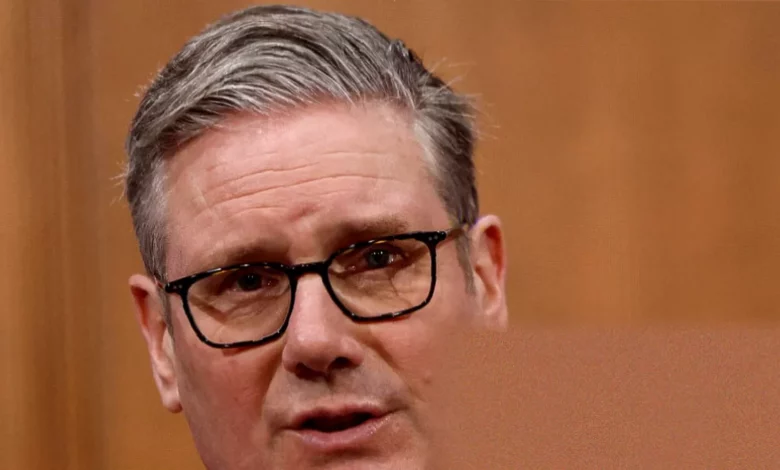
Facing this, Sir Keir Starmer’s immediate strategy is threefold: minimise the results as a verdict on his government, remind his party of the perilous international situation, and swiftly change the narrative. He will launch the local election campaign by urging the country to “stand together” with a message of “Pride in Britain”, warning against votes for Reform or the Greens that risk progress on issues like the energy price cap and NHS waiting lists.
Internally, allies admit the results will be terrible and impossible to spin. “Afterwards, we need to remind everybody that this is classic midterm stuff, but worse,” one Starmer ally said. The open question is whether the parliamentary party will use the expected drubbing to depose the Prime Minister. Some MPs believe the expectation of losses is already “baked in”, while others have genuinely revised their view of Starmer’s long-term survival upwards, citing his judgment on international crises.
Key potential rivals appear to be standing back. Both Angela Rayner and Wes Streeting have told allies they believe the Prime Minister must be allowed to focus on the Middle East crisis and its domestic economic fallout, with one Starmer ally noting it would be “fatal” for them to move against him now. The ongoing US-Israeli war with Iran is a significant deterrent; many MPs believe a leadership contest in the midst of a “huge international crisis” would look “foolish” and “self-indulgent”. Public opinion on Starmer’s handling of the conflict is divided, but 46% of the public support a purely defensive UK military stance, which aligns with his position.
The King’s Speech and the machinery of control
Beyond rhetoric, Downing Street has precise parliamentary machinery to manage any post-election turmoil. Parliament is expected to be prorogued in late April, ahead of the local elections, physically separating MPs when anger is “hottest”. The King’s Speech is then scheduled for 13 May, just days after the results. “It would be much harder for somebody to challenge Keir… when the king is about to come to parliament and announce our plans for the next year,” a senior government source said.
This timing also aims to clear the decks of another thorny issue: the sensitive files relating to Peter Mandelson’s appointment as US ambassador. The documents are now with the Intelligence and Security Committee (ISC), which will examine them for potential redactions. The ISC chair has stated it will not shy from publishing material embarrassing to the government if it does not compromise security. The case, which forced a concession to backbenchers including Angela Rayner, has been described as inflicting a “deep wound” on Starmer’s premiership.
Further disruption is planned via a potential cabinet reshuffle. Advance planning is in place, though Starmer has not made a final decision. It is not expected to see a return for key critics Angela Rayner or Louise Haigh, who resigned following revelations about a prior conviction. Instead, it would focus on senior ministers unhappy in their posts and promotions for new MPs. A shake-up of the whips’ office, nicknamed the “Wags’ office” and distrusted by many MPs, is also likely. Some reports suggest Chancellor Rachel Reeves and Health Secretary Wes Streeting could be at risk, potentially signalling a policy shift.
Public service reform as the long-term narrative
Ultimately, Number 10’s strategy hinges on moving the narrative from a midterm protest to a story of delivery. Insiders say the King’s Speech will focus not only on cost-of-living measures but crucially on public service reform. The government sees everyday interactions with the state—booking appointments, receiving documents—as the public’s barometer for whether things are improving.
The substantive plan for this transformation was laid out in the Spending Review 2025. It commits to a “step-change” in digital and AI across public services, with an additional £1.2 billion for cross-cutting digital priorities. A £3.25 billion Transformation Fund will drive a preventative approach to modernise the state. This includes a renewed digital public infrastructure, the rollout of a GOV.UK Wallet and App, and the launch of a National Data Library to integrate public sector data.
Specific legislative sessions will focus on reforming the Send system and a major drive on digitisation. This is underpinned by a stringent efficiency drive, the first zero-based spending review in 18 years, requiring departments to identify at least 5% savings by 2028-29 and cut administration budgets by 16% in real terms. Alongside this, Labour’s devolution vision aims to unify powers through mayors and combined authorities, seeking to undo decades of over-centralisation.
“There are three years left of this government,” one senior strategist said. The post-May plan is to relentlessly remind the public that investments set in motion are beginning to bear fruit, aiming to turn the page from an expected bloody night at the polls to a story of long-term, tangible change.