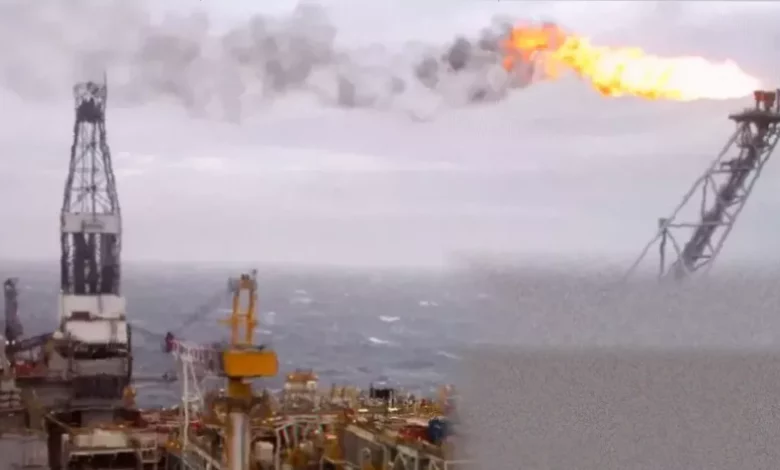
The Labour government has warned that expanding North Sea drilling would deepen the UK’s exposure to volatile international fossil fuel markets, as it faces political pressure to reverse its ban on new oil and gas licences. Ministers argue that the surge in energy prices triggered by the US-Iran conflict reinforces the urgent need to transition to homegrown clean power.
Government Rejects Calls for New Drilling
The Energy Minister, Michael Shanks, stated that the UK is learning the right lessons from recent conflicts to avoid being “exposed to fossil fuels in the same way again.” He and the Energy Secretary, Ed Miliband, have both asserted that issuing new licences would “make no material difference” to energy bills. The government’s position is anchored in its manifesto pledge not to issue new licences for oil and gas exploration, a policy designed to accelerate the shift to renewable energy and manage the climate crisis.
While Labour will not revoke existing licences, it is consulting on a new regime for the North Sea focused on offshore wind, carbon capture, and hydrogen. The policy has created a legal dilemma regarding an ongoing licensing round, with the government seeking advice on implementation to avoid challenges from energy companies. The North Sea Transition Authority (NSTA) remains the responsible body for licensing.
Ed Miliband told a Parliamentary Labour Party meeting that dependence on fossil fuels made the UK a “price taker not a price maker.” He strongly defended the windfall tax – the Energy Profits Levy (EPL) – which has been extended to 2030 and increased to an effective rate of 78%. “All this would do is increase energy company profits and deprive us of revenue we can use to help people through this crisis,” Miliband said, noting the tax had raised £12bn since the start of the Russia-Ukraine war.
Political Pressure from Opposition and Within
The Conservatives plan to use an opposition day debate to argue for scrapping the windfall tax, ending the ban on new licences, and approving the Rosebank and Jackdaw fields. The Shadow Energy Secretary, Claire Coutinho, called turning away from domestic gas “sheer lunacy in the midst of a gas supply crisis,” urging the government to “fast-track Rosebank and Jackdaw.”
This call was echoed by Labour MP Henry Tufnell, who wrote that drilling in the North Sea and scrapping carbon taxes would “kickstart economic growth” in poorer areas. However, colleagues at the PLP meeting said his position had little support, with one MP noting, “He was shot down by others who said it’s a risk to go backwards.”
The debate occurs against a backdrop of significant market volatility. The US-Iran conflict has pushed oil prices to around $120 a barrel and seen European gas prices double, with wholesale price pressures forecast to lift Britain’s domestic price cap by around 10% in July. Petrol and diesel prices are at a near 20-month high.
Plans for Energy Sovereignty Through Clean Power
The government’s central argument is that true energy security can only be achieved by breaking dependence on global fossil fuel markets. Chancellor Rachel Reeves and Ed Miliband are set to outline plans designed to accelerate a homegrown clean energy system.
On Tuesday, Reeves is expected to announce the implementation of the Fingleton review’s recommendations to speed up nuclear power construction through new legislation. The government is also exploring allowing indemnities for critical energy security projects when legally challenged, to prevent delays. A government spokesperson said, “We inherited years of failure on nuclear and years of laws that played into the hands of the blockers. We are fixing both.”
This forms part of a substantial public investment programme. Over £14 billion has been committed to the Sizewell C nuclear power station in Suffolk, a 3.2 GW project which reached a Final Investment Decision in July 2025 and is estimated to cost £38 billion. Furthermore, Wylfa on Anglesey, North Wales, has been selected as the site for Britain’s first small modular reactors (SMRs), backed by £2.5 billion in government investment and led by Great British Energy-Nuclear.
Concurrently, the Chancellor will set out a new anti-profiteering framework to clamp down on price gouging, particularly by petrol retailers. “If the petrol retailers don’t like it then that’s tough because we are on the side of the British people,” Miliband stated.
The legal landscape for energy projects is also shifting. In a landmark ruling in January 2025, a Scottish court found that consent for the Rosebank oil field had been granted unlawfully as the climate impact from burning the fuel was not considered. A similar ruling invalidated the consents for Shell’s Jackdaw gas field, which could have heated 1.4 million UK homes. These decisions have emboldened environmental activists and underscore the government’s argument that the future lies beyond fossil fuels.