Chancellor Rachel Reeves has said Andrew Mountbatten-Windsor “owes it to the victims” of Jeffrey Epstein to come forward and disclose everything he knows about the financier’s treatment of young women and girls, a significant breach of the convention that ministers do not comment on royal matters.
Her statement, made during a visit to a south London supermarket, came as Nigel Farage echoed calls for the former prince to face a police investigation, arguing that “more questions than there were before” have arisen since the release of U.S. justice files.
Epstein Files Reveal New Details and Prompt Police Reviews
The U.S. Department of Justice released over 3 million pages of documents related to Epstein in January 2026, containing hundreds of references to Andrew Mountbatten-Windsor. Among them are emails from 2010 which appear to show him, while serving as the UK’s special representative for trade and investment, sharing confidential reports with Epstein. The correspondence includes discussions with his aide David Stern about discreetly involving Andrew in an “investment highly private office.”
U.S. authorities have sought to question Andrew regarding visits to Peter Nygard’s island in the Bahamas—a location linked to trafficking—but he has not agreed to an interview. The latest batch of files also includes photographs that appear to show Andrew on his hands and knees, crouching over a woman.
Multiple police forces in England are now assessing information from the files. Essex Police are reviewing details about private flights to and from Stansted Airport, following claims by former Prime Minister Gordon Brown that Epstein used the airport to “fly in girls from Latvia, Lithuania and Russia.” Stansted Airport has stated it does not manage passenger arrangements on privately-operated aircraft.
Surrey Police are investigating an allegation from an FBI report concerning a child abuse claim against Andrew and Ghislaine Maxwell, and are believed to be seeking access to unredacted versions of the files. Norfolk Police are also reviewing documents, while Thames Valley Police confirmed in February 2026 that they are assessing reports of alleged misconduct in line with their procedures.
Reform UK Reverses Stance on Two-Child Benefit Cap
In a separate political development, Robert Jenrick used his first speech as Reform UK’s “shadow chancellor” to announce a major policy shift: the party will restore the two-child benefit cap in full, marking a change from its previous position of lifting the cap only for children born to British-born parents.
“Today, Reform is changing our policy on the two-child cap for universal credit,” Jenrick told a press conference in the City of London. “A Reform government will restore the cap in full.” He described the event as a less glamorous affair compared to Nigel Farage’s previous spectacle, quipping that “I don’t think we need the fireworks and smoke machine on this occasion.”
Jenrick, who opened his speech by saying his experience witnessing what government “got wrong” while in Cabinet would aid him in Reform, also set out other economic commitments. These include changes to the Motability scheme, limiting welfare benefits to British nationals, reforming rather than abolishing the Office for Budget Responsibility, and maintaining the Bank of England’s independence.
The announcement follows an incident where two Reform MPs, Robert Jenrick and Suella Braverman, “accidentally” voted with Labour to scrap the two-child limit after reportedly getting trapped in the “aye” lobby, despite Farage’s earlier stance that Reform would vote against such a move.
Shadow equalities minister Claire Coutinho underscored the party’s focus on welfare, stating that “work should pay more than welfare” and noting that the benefits bill is set to rise by over £30 billion over the next five years, according to Office for Budget Responsibility forecasts.
The OBR’s November 2025 report projects that total UK government welfare spending will increase by £73.2 billion between the year ending March 2026 and March 2031, reaching £406.2 billion. Almost half of this rise, £34.2 billion, is for pensioners, bringing their spending to £195.4 billion. Spending on universal credit and related systems is set to rise by £14.5 billion to £106.7 billion, while disability benefit spending is expected to increase by £19.9 billion to £65.3 billion.
The OBR also highlighted that welfare spending as a share of GDP in 2025-26 is estimated at 10.8%, which is 0.8% of GDP higher than before the 2008 financial crisis, but has fallen by 1.2% of GDP since 2012-13. Policy reversals, such as the reintroduction of winter fuel payments to pensioners in England and Wales, are expected to increase spending by £6.9 billion in 2029-30, including a cost of £1.6 billion for winter fuel payments.
Elsewhere, Chancellor Rachel Reeves dodged questions on whether the government would delay plans to equalise the minimum wage for younger and older workers, pointing to existing incentives like the apprenticeship rate and no national insurance contributions for the youngest workers.
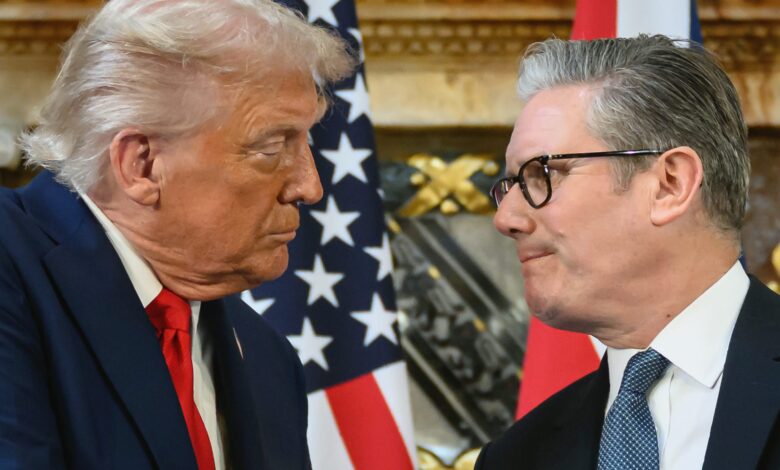
On foreign affairs, Prime Minister Keir Starmer reiterated his support for the US-led peace plan for Gaza in a phone call with President Donald Trump, with Downing Street stating they discussed humanitarian aid access, Iran’s nuclear programme, and Ukraine negotiations. Starmer has also vowed to enforce a crackdown on children’s online activity.