If Plaid Cymru enters government following the next Senedd election, its first 100 days would be defined by a sweeping drive to untangle what it sees as a confused economic landscape and refocus power, procurement, and planning squarely on Welsh needs, the party’s leader has declared.
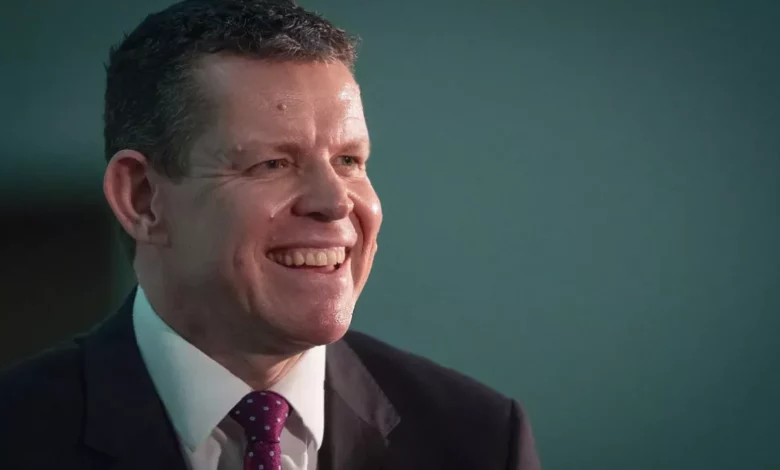
Outlining his party’s business and economic priorities to the Cardiff Business Club, Rhun ap Iorwerth positioned a future Plaid administration as one that would bring order and ambition, moving away from what he described as a “tangled web” of overlapping initiatives “often riddled with either duplication or contradiction”.
Building a ‘Welsh Mittelstand’ and Keeping Wealth in Wales
The vision, drawn from the party’s “Making Wales Work” plan published last year, aims to create a more resilient, fairer, and prosperous economy with a strong emphasis on Welsh ownership. A core objective is to build a “Welsh Mittelstand” – a thriving sector of medium-sized businesses rooted in their communities – to address the so-called “Missing Middle” of firms identified by groups like the Federation of Small Businesses.
Central to this is a radical overhaul of how the Welsh public sector spends its money. Mr ap Iorwerth confirmed a Plaid government would aim to increase the proportion of public procurement spent with Wales-based suppliers from 55% to at least 70%, though a specific timeframe remains to be set. With Welsh public procurement worth an estimated £8 billion annually – Welsh Government spending alone rose from £1.3 billion in 2016 to £1.9 billion in 2021 – the policy is designed to leverage this spending power to support home-grown small and medium-sized enterprises (SMEs).
“We want to make much better use of public procurement in Wales… to support our home-grown small and medium-sized businesses,” he told the audience.
A New Agency and a Clearer Picture
To streamline business support, Plaid has already committed to creating a new arm’s-length National Development Agency for Wales, which would take over functions currently operated under the Welsh Government’s Business Wales banner. The party envisions this as a “one-stop-shop” to help Welsh businesses grow and remain Welsh-owned, citing data that between 2010 and 2017, 53% of Welsh SME ownership transfers were to firms outside Wales.
While no projected timeframe, set-up costs, or annual budget for the agency have been finalised, Mr ap Iorwerth said a panel of business and economic experts would be established within the first 100 days to refine its remit, governance, and operating model. The party suggests the body could operate “more like a real national development bank,” taking equity stakes in businesses and investing in infrastructure, echoing some functions of the former Welsh Development Agency abolished in 2006.
To underpin all economic decision-making, Plaid would also create an economic and fiscal commission to support the collection and analysis of Welsh economic data and set clear targets. “Without that kind of full picture we’re hamstrung in our ability to understand the challenges we’re facing,” Mr ap Iorwerth argued.
Skills, Rates, and Planning: The First 100 Days
The immediate action plan for a new government’s first 100 days would see the launch of a Wales-wide skills audit to identify future needs, followed by a future skills summit involving further and higher education, businesses, and other stakeholders to create a unified strategy.
In a direct move to support high streets, Mr ap Iorwerth confirmed business rates would be repurposed to “redress the imbalance that currently advantages out-of-town shopping”. He criticised the current First Minister’s suggestion that people should “stop watching so much Netflix” to help hospitality, pledging “more practical support”.
This would involve extending a preferential multiplier for retail, hospitality, and leisure firms in town centres. This reform would build on existing Welsh Government support, which for 2025-26 provides £78 million in targeted relief for these sectors, and plans an additional 15% relief for pubs, restaurants, and similar venues in 2026-27 – though some in hospitality have expressed disappointment this is for one year only, unlike a three-year commitment in England.
On planning, Mr ap Iorwerth pledged reforms to offer clarity and firmer consenting timelines, using an upcoming review of the National Development Framework to “simplify, rationalise and ultimately ensure better use of public money”.
Navigating the Existing ‘Web’
A significant theme of the address was the perceived over-complexity of existing economic structures. Mr ap Iorwerth pointed to the array of city and growth deals, freeports, investment zones, and local programmes, some of which are non-devolved or run in partnership with the UK Government.
He stressed that Plaid is not advocating immediate changes to the statutory status of joint corporate committees like the Cardiff Capital Region (CCR), but wants to ensure they maximise their potential. The CCR City Deal, established in 2016, involves over £1.2 billion and aims to create 25,000 jobs and leverage £4 billion in investment by 2031; as of March 2023, it had generated 2,307 jobs and leveraged £165 million.
The party also recognises the role of newer entities like Wales’s two Freeports – on Anglesey and the Celtic Freeport spanning Port Talbot and Milford Haven – and the two Investment Zones in south-east and north-east Wales, which aim to attract billions in private investment. However, the Plaid leader’s comments suggest a future government would seek to bring greater coherence to this patchwork.
“The web is too tangled,” he said. “And we need clarity and consistency so we can carry on with, and build on, really important work that is going on.”
The Broader Economic Landscape
The push for a more assertive Welsh economic strategy comes amid other concerning indicators and related political calls. A recent PwC Women in Work Index showed Wales has fallen to seventh place in the UK, from fifth, attributed in part to lower female full-time employment and labour participation rates, with high childcare costs cited as a key barrier.
Meanwhile, the Welsh Liberal Democrats have joined calls for a dedicated Industrial Strategy for Wales, highlighting that heavy industry and manufacturing account for about 15% of the Welsh economy compared to 9% across the rest of the UK. This call resonates amid ongoing uncertainty for major employers like the Port Talbot steelworks.
Plaid Cymru’s wider economic priorities also include a focus on a green transition, the devolution of the Crown Estate to Wales, and a long-standing ambition for the UK to re-enter the European Single Market and Customs Union. For now, Mr ap Iorwerth’s message to business leaders was that the future of the economy would be shaped by them. “It will be shaped in offices, workshops, laboratories, shop floors and start-ups – by people like you – willing to take risks, invest, innovate and build,” he concluded.