UK-EU reset plan could align Britain with single market rules, bypassing parliamentary vote

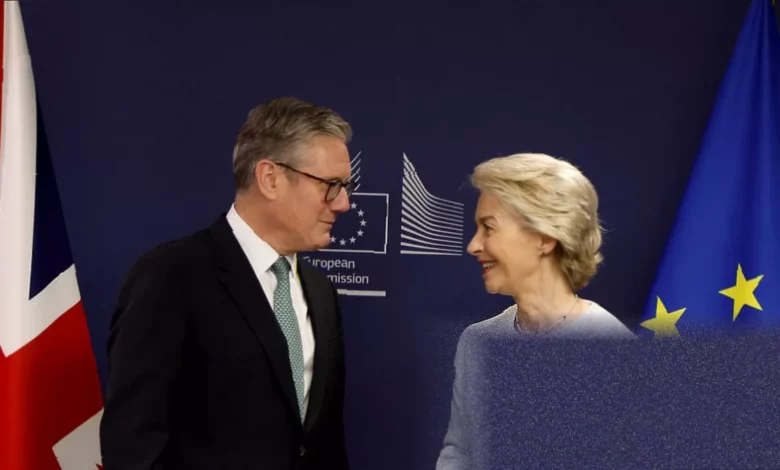
The government is preparing legislation that could allow ministers to dynamically align the UK with European Union single market rules without the need for a full parliamentary vote on each occasion, in a fundamental reshaping of post-Brexit relations.
Bypassing full parliamentary scrutiny
Ministers are bracing for opposition to the plans, which are expected to be contained in a new EU-UK reset bill to be introduced before the summer. At its heart is a “dynamic alignment” mechanism that would enable the UK to sign up to evolving EU regulations in agreed sectors by using secondary legislation, known as “Henry VIII powers”.
These powers, named after the 1539 statute that allowed rule by decree, permit ministers to amend or repeal acts of Parliament without the full scrutiny of primary legislation. While Parliament can approve or reject secondary legislation, it cannot amend it, leading to concerns that MPs may become mere “rubber-stamps”. Any move to block such legislation could provoke retaliatory action from Brussels.
A government source stated that “parliament will have a role for new deals and on new EU laws applying under those deals,” but acknowledged the constraints of the process. The approach is likely to face obstruction in the House of Lords, where a scrutiny committee examines statutory instruments but cannot formally initiate their rejection.
The mechanism of ‘dynamic alignment’
The proposed bill would bring into force existing agreements, notably a food and drink trade deal with the EU worth £5.1bn a year, and enable deals on emissions trading. Crucially, it would also contain powers to allow the UK to follow future EU changes in these areas, and potentially others, if ministers determine it is in the national interest.
This dynamic alignment would mean the UK committing to follow evolving EU single market rules in sectors where it has struck agreements, such as automotive or farming, without a fresh vote each time. The concept is already a feature of the Northern Ireland Protocol, which requires alignment with EU regulations—a politically contentious arrangement as the UK has no say in making those laws.
Sources indicate any disputes over regulations would be settled by an independent tribunal, not the European Court of Justice. Ministers argue the move will cut red tape, reduce costs for businesses, and allow deals on food and drink, security, and migration information sharing to be implemented faster.
Political battle and economic rationale
The government anticipates fierce criticism from hardline Brexit supporters. One government insider said they expected a fight from those who favoured the “harshest terms” of departure, who would “scream treason”. The source added that Nigel Farage’s Reform UK, which has focused on immigration and net zero, was “too cowardly” to engage in pragmatic deal-making.
Opposition parties are also poised to challenge the plans. The Conservative party has stated it opposes any agreement involving rule-taking or dynamic alignment. The shadow business secretary, Andrew Griffith, accused the government of reducing Parliament to a “spectator”. The Liberal Democrats said they would use the bill to force Labour MPs to take a position on closer EU ties, though the party itself supports dynamic alignment and eventually rejoining the Single Market.
Ministers are framing the shift as an economic necessity. They cite the Office for Budget Responsibility’s March 2025 forecast, which estimates Brexit will reduce long-run productivity by 4% and cut exports and imports by 15% compared to remaining in the EU. With almost half of the UK’s total trade in 2024 still with the EU, a government source argued “we’re all paying a cost of living penalty for all the barriers at the border”.
The move is portrayed as part of a wider “strategic partnership” agreed at the first UK-EU summit in May 2025, following the Labour government’s election. The prime minister has previously stated Brexit did “deep damage” to the economy and pointed to global instability, such as the war involving Iran, as a reason for seeking deeper EU ties on trade and defence. The government insists the approach does not break its red lines on rejoining the customs union, single market, or freedom of movement.
Critics, however, warn of “integration by stealth”. Professor Anand Menon, director of the thinktank UK in a Changing Europe, said the reality was “signing up to a deal… that commits us to follow their rules, whether we like it or not.” He characterised it as the “ugly trade-off of Brexit,” where the UK trades political control for economic access without having a vote in EU decision-making.