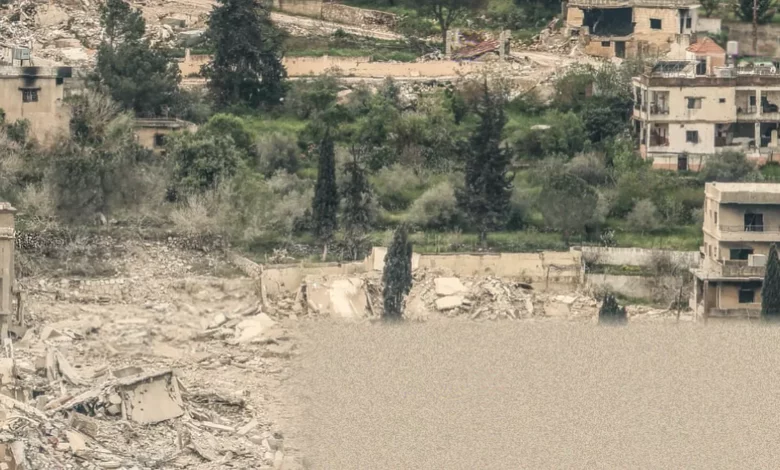
A one-week ceasefire in Lebanon could come into force as soon as tonight, according to a report from an Iranian official cited by the pro-Hezbollah outlet al-Mayadeen. The official stated the move followed pressure from Tehran and would align with the final week of a temporary ceasefire currently in place between the United States and Iran.
The report, however, was immediately met with uncertainty from Israel. Channel 12 news in Israel, citing its own sources, stated that no decision had been made. A senior Israeli official claimed the idea of a week-long truce had been raised by the US special envoy, Steve Witkoff. Israel’s security cabinet is scheduled to convene this evening to discuss the possibility, amid reports that some ministers are pressing not for peace, but for an escalation of attacks in Beirut and beyond southern Lebanon’s Litani River.
Israeli Military Pressure and Lebanese Toll
The potential ceasefire discussions occur against a backdrop of intense Israeli military action. Israel’s military chief of staff, Lieutenant General Eyal Zamir, announced he had ordered areas south of the Litani River to be turned into a Hezbollah “kill zone” as troops press a major offensive. The human cost in Lebanon has been severe. The Lebanese health ministry said Israeli strikes on Wednesday specifically targeted paramedic teams in the town of Mayfadoun, killing at least three. Since early March, official figures state Israeli strikes have killed over 2,000 people and injured nearly 7,000 in Lebanon, displacing approximately one million people—around 20% of the country’s population.
Hezbollah’s position on any ceasefire remains unclear. Senior Hezbollah lawmaker Ibrahim al-Moussawi told Reuters that diplomatic efforts by Iran could produce a ceasefire “soon,” suggesting Tehran had used its economic leverage—a reference to the Strait of Hormuz—to pressure Washington to include Lebanon in any deal. He declined to comment on whether Hezbollah would abide by such a truce.
US Diplomacy and the Naval Blockade
The diplomatic landscape is complex and volatile. The reported Lebanon ceasefire would coincide with the final days of a two-week US-Iran truce brokered by Pakistan, which is set to expire around 22 April. High-level talks in Islamabad last weekend ended without agreement, with disputes centring on Iran’s nuclear programme and the status of the Strait of Hormuz. A senior US official confirmed on Wednesday that the US has not formally agreed to extend its ceasefire with Iran, though engagement continues.
Following the talks’ collapse, the US moved to enforce a naval blockade on Iranian ports and coastal areas, including a partial blockade of the strategically vital Strait of Hormuz, from 13 April. US Central Command (Centcom) has claimed early success, stating that nine vessels were turned back in the first 48 hours and that “no vessels have made it past US forces.” Centcom asserted the blockade had “completely halted” Iran’s maritime trade.
These claims, however, are contested by maritime tracking data. Analysis indicated that at least three ships from Iranian ports crossed the Strait of Hormuz after the blockade began, though some later turned back. Furthermore, data from AXSMarine shows the US action has significantly impacted shipping. After a modest recovery in early April following the initial US-Iran ceasefire, daily crossings fell back to single digits within 24 hours of the counter-blockade enforcement. As of 15 April, nearly a third of merchant vessels in the Gulf were operating without automatic identification signals, a rate described as more than double the pre-conflict baseline.
US President Donald Trump has framed the action aggressively, stating on Truth Social that he was “permanently opening the Strait of Hormuz” and claiming China was “very happy” and had “agreed not to send weapons to Iran.” He has repeatedly said the wider war is “close to over,” hinting at further peace talks. Pakistan’s Prime Minister Shehbaz Sharif has embarked on a four-day tour of Saudi Arabia, Qatar, and Turkey, seen as preparatory work for a potential second round of US-Iran negotiations.
Broader Economic Shockwaves
The conflict has sent severe shockwaves through the global economy. The blockade and earlier closure of the Strait of Hormuz have caused what analysts describe as the largest supply disruption in the history of the global oil market. Brent crude oil averaged $100 a barrel in March, leading to estimated windfall war profits of $23bn for the world’s top 100 oil and gas companies in that month alone.
The ripple effects are widespread. Global urea prices have risen 68%, commercial transits through the Strait have fallen by 94%, and finance ministers from more than ten countries, including the UK, have issued a joint statement calling for a “swift and lasting” end to the war. They cited “unacceptable loss of life and significant disruption to the global economy and financial markets,” which have hit vulnerable economies particularly hard. British Finance Minister Rachel Reeves has previously criticised the US war strategy as a “folly” without a clear exit plan.
As the security cabinet in Jerusalem meets tonight, its decision will weigh not only on the fate of southern Lebanon but on a fragile international diplomatic and economic landscape straining under the pressure of prolonged conflict.