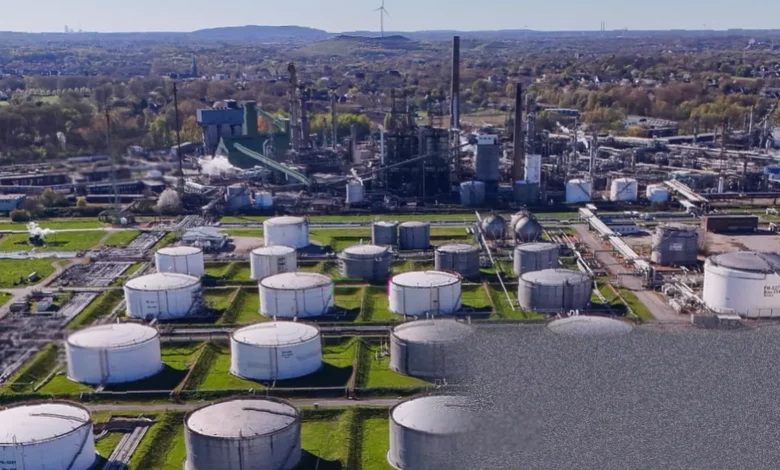
Oil prices plunged by almost 15% on Tuesday night as US President Donald Trump held off on threatened attacks against Iran and Tehran agreed to a temporary ceasefire, a dramatic de-escalation that sent shockwaves through global financial markets.
Markets Embrace the Pause
The announcement triggered an immediate and powerful relief rally across asset classes. Brent crude, the international benchmark, dropped 14.4% to $93.48 a barrel, while US West Texas Intermediate tumbled as much as 19%, a stark reversal of the surge that has defined the five-week conflict. Global stock indices soared: Japan’s Nikkei 225 gained 5%, South Korea’s Kospi jumped 5.9%, and Australian and Hong Kong shares saw significant gains. US stock futures also rose sharply.
In bond markets, the yield on the 10-year US Treasury fell to 4.24% from 4.30%, easing inflation fears and renewing bets on potential interest rate cuts from the Federal Reserve. Haven assets like gold rose over 2%, while cryptocurrencies including Bitcoin and Ether rallied. Saul Kavonic, head of energy research at MST Financial, described the two-week pause as “an off-ramp for Trump’s overly bombastic ultimatum, but not yet an off-ramp for oil markets or the war.”
The Path to a Fragile Ceasefire
The breakthrough came just over an hour before a US deadline for military action was due to pass. President Trump announced he was holding off on attacks subject to Iran agreeing to a two-week ceasefire and reopening the Strait of Hormuz. Iran’s National Security Council swiftly confirmed it had accepted a two-week ceasefire on condition that attacks against it were halted.
The deal was brokered through intensive diplomacy led by Pakistan. Prime Minister Shehbaz Sharif had urged both sides to extend the deadline and proposed the ceasefire, which he announced was “EFFECTIVE IMMEDIATELY” and covered “everywhere, including Lebanon and elsewhere.” However, Israel later contradicted the scope, stating the ceasefire did not include Lebanon. Peace negotiations between the US and Iran are now scheduled to begin in Islamabad on Friday.
Those talks will be complex. Tehran has presented a 10-point proposal that includes demands for Iranian dominance and oversight of the Strait of Hormuz, the withdrawal of US combat forces from the Middle East, a halt to military operations against Iranian-allied groups, full compensation for war damages, the lifting of all sanctions, and the ratification of any final agreement in a UN Security Council resolution.
Uncertainty Ahead: The Strait and the Market
The most critical immediate question for global energy security is the status of the Strait of Hormuz. Iran’s foreign minister said passage through the strait would be allowed for the next two weeks under the management of its military. This chokepoint, only 29 nautical miles wide at its narrowest, is arguably the world’s most important oil transit route. In 2025, an average of 20 million barrels per day of crude and oil products—about 25% of global seaborne oil trade—passed through it, with 80% of those exports destined for Asia. Nearly 20% of global liquefied natural gas trade, primarily from Qatar and the UAE, also transits the strait.
The implications of the two-week grace period are nuanced. As Saul Kavonic explained, it “would enable a release of some oil and LNG tankers from the Strait of Hormuz to market, providing some market pressure relief in May. This does not result in more production, just a release of storage on water.” He added that shuttered production in the region is unlikely to resume without more confidence in a lasting peace. Furthermore, analysts warn that even if a peace deal is struck, the market could remain 3-5 million barrels per day tighter for years due to lasting damage to Iranian export infrastructure from the earlier US-Israeli “Operation Epic Fury” strikes.
This infrastructure damage means oil prices are unlikely to return to pre-war levels, leaving inflation persistence as a lingering theme. The durability of the market rally now hinges on diplomatic progress and the restoration of confidence among insurers and tanker operators. “The pivotal test is whether negotiations kept progressing – and whether insurers and tanker operators regained enough confidence for traffic through Hormuz to run normally again,” said Charu Chanana, chief investment strategist at Saxo.
While Pakistan’s role as intermediary has lent the ceasefire credibility, analysts express deep caution. Prashant Newnaha, a senior strategist at TD Securities, noted a renewed escalation could not be ruled out. Besa Deda, chief economist at William Buck, warned that investors remain aware the ceasefire may not hold, and Neil Newman of Astris Advisory Japan called the relief rally “very fragile.” The head of the International Energy Agency had previously described the Hormuz closure as the “greatest global energy security challenge in history,” and the world is now in a tense fortnight that will determine if that challenge is truly receding.