Financial markets are reeling as military strikes by the US and Israel against Iranian targets escalate into a broader regional crisis, triggering a sharp sell-off in European equities, sending commodity prices soaring, and forcing a rapid reassessment of interest rate expectations on both sides of the Atlantic.
European Equities Plunge Amid Flight from Risk
The UK’s FTSE 100 index tumbled 1.6%, or 172 points, to 10,738, marking its steepest one-day fall since the market turbulence prompted by Donald Trump’s tariffs in April 2025. The FTSE 250 index of medium-sized companies slid 1.5%. The rout was mirrored across the continent, with Germany’s DAX down 2.7%, France’s CAC 40 losing 2.2%, and Italy’s FTSE MIB falling 2.4%. This pulled the pan-European Stoxx 600 share index down 1.4% to a two-week low of 624.94 points.
Oil and Gas Prices Rocket on Supply Fears
Brent crude oil surged $5.50 to $78.42 a barrel, a gain of 8.4% on the session. However, Deutsche Bank market strategist Jim Reid noted this ranks only as the 38th biggest daily gain in 36 years, with larger spikes seen during the Gulf War, the global financial crisis, and the Covid-19 pandemic. The consultancy Wood Mackenzie has warned that prices could potentially exceed $100 a barrel—a level last seen in 2022 during the early days of the Russia-Ukraine war—if tanker flows through the critical Strait of Hormuz are not quickly restored.
Alan Gelder, SVP of Refining, Chemicals and Oil Markets at Wood Mackenzie, stated that tanker traffic has been effectively halted after Iran warned shipping away from the waterway and insurers withdrew coverage. “The key question is when do vessels re-establish export flows,” Gelder said. “No doubt, tanker rates and insurance will increase dramatically, but these costs would only be a small part of the oil price impact associated with a curtailment of oil flows if they last for more than a few days.” He added that even in an optimistic scenario, it could take weeks for exports to re-establish, during which time “oil prices are heavily risked to the upside.”
European natural gas prices, meanwhile, have gone “stratospheric,” according to Neil Wilson, investor strategist at Saxo UK. The Dutch day-ahead gas contract soared 39% to €44.5 per megawatt hour. This spike followed QatarEnergy’s announcement that it had halted production of liquefied natural gas and associated products after military attacks on its facilities in Ras Laffan and Mesaieed Industrial Cities. The state-owned firm is set to declare force majeure on LNG shipments, allowing it to avoid contractual obligations due to unforeseeable events.
Chris Beauchamp, chief market analyst at IG, warned: “The huge bounce in European natural gas prices threatens to upset the more positive outlook for UK inflation and consumer spending. Hopes that pricing pressures would ease and consumers could spend more could be dashed as a price spike similar to 2022 causes a major headache for both policymakers and consumers.” Benchmark European diesel refining margins also rose nearly 25% to their widest since late November, Reuters reported.
Metals and Safe Havens Reflect Geopolitical Anxiety
Industrial metals prices reacted to the disruption, with aluminium on the London Metal Exchange rising 3.1% to $3,236 a metric ton on concerns over Middle Eastern supply, as the region accounts for about 9% of global production capacity. Copper nudged 0.2% higher, zinc gained 1%, lead rose 0.6%, while tin and nickel retreated. Gold, described by Ross Norman, chief executive of Metals Daily, as “the sum of all fears,” jumped 3% to £5,405.90, though Norman cautioned that “event-driven rallies rarely last.” Silver prices increased by a more muted 1.7%.
Critical Shipping Lanes Disrupted
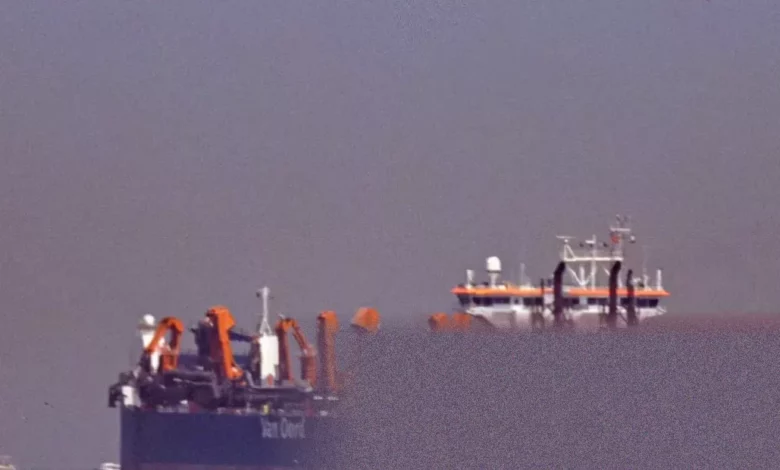
The crisis has severely impacted key global trade routes. Passage through the Strait of Hormuz, a chokepoint for oil and LNG shipments, is now hazardous with self-imposed restrictions, according to analysts. Simultaneously, major shipping firms including A.P. Moller-Maersk, Hapag-Lloyd, and France’s CMA CGM have suspended passages or rerouted services away from the Suez Canal, reflecting fears that Iranian-backed Yemeni rebels might resume attacks on vessels in the southern Red Sea.
Central Bank Policies Thrown into Doubt
The commodity price surges have immediately altered expectations for monetary policy. In the UK, the chance of a Bank of England interest rate cut this month has tumbled to just 48%, down from 80% last week, as traders anticipate policymakers will be hesitant to act with inflation risks rising. Last month, the Monetary Policy Committee was split 5-4 when a narrow majority voted to leave Bank Rate at 3.75%.
Bank of England policymaker Alan Taylor argued that central banks should not raise rates to contain an energy price spike, stating such shocks “move faster than inflation-targeting central banks can respond.” Taylor, who has previously voted for faster rate cuts, said policymakers must recognise that “central banks can never fully solve every type of inflation problem.” He expressed separate concern that UK interest rates may need to remain high if productivity does not recover, but stressed that a rise in oil and gas prices was an external issue the central bank could do little about.
Analysts at Dutch bank ING identified the eurozone as the major economy most exposed to the crisis, facing a potential “energy shock on top of a trade shock” just as it was emerging from stagnation. They noted that an oil price surge puts the European Central Bank in a genuine dilemma, potentially pushing up inflation while deteriorating the growth outlook. ABN Amro outlined scenarios where Brent crude at $100 or $130 a barrel could push US inflation towards 4%—double the Federal Reserve’s target—and complicate the path for rate cuts, as the fear of inflation expectations becoming de-anchored might outweigh the temporary nature of the shock.
Economic Impact Assessments and Market Movements
Maurizio Carulli, global energy analyst at Quilter Cheviot, estimated that a $10 per barrel change in the oil price can add 30 to 40 basis points to consumer inflation indexes and shave 10 to 30 basis points off global GDP growth. On UK forecourts, Simon Williams, head of policy at the RAC, calculated that if oil stays at $80 a barrel, petrol could average 136p a litre, with $100 potentially pushing it nearer to 150p.
Amid the broader market sell-off, certain UK companies gained. On the FTSE 250, oil producers Harbour Energy and Ithaca Energy were the top risers, up 6.5% and 5.5% respectively, while shipping services provider Clarkson gained 5.3% and protective clothing maker Avon Technologies rose 3.8%.
Investor anxiety was further underscored by a 16% surge in Wall Street’s VIX volatility index to its highest level in three months. Christian Schulz, chief economist at AllianzGI, described the situation as a “significant – but not yet destabilising – shock,” with outcomes hinging on whether the conflict spills into broader regional instability. Schulz noted that US and Israeli airstrikes and Iranian retaliation have raised the risk of a full-scale Middle East war, while the death of Iran’s supreme leader raises the chances of regime change and protracted internal instability. He added that markets will likely demand a higher risk premium temporarily, with oil prices expected to rise even if a sustained closure of the Strait of Hormuz remains unlikely for now.