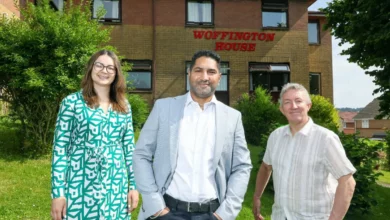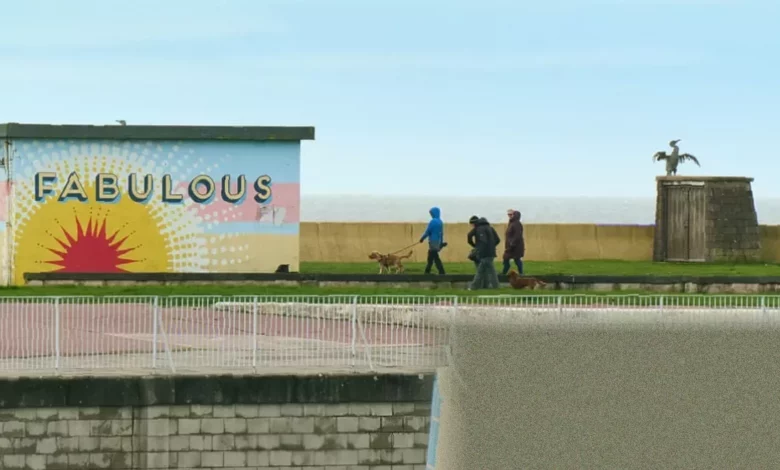
This summer, a group of young people from Morecambe will travel to the RHS Chelsea Flower Show to present a vision of their town’s future. Their creation, the ‘Bring Me Sunshine’ community garden, is more than an exhibit; it is the first physical piece of a long-awaited dream for the Lancashire coastal town and a deliberate statement that, after a decade of talk, the Eden Project Morecambe is finally becoming a reality.
The garden, designed by award-winning landscape designer Harry Holding and architect Alex Michaelis, will debut at Chelsea in May 2026 before being relocated to Morecambe to form the centrepiece of a new 1.6-acre public space. It will open in spring 2027, a full year before the main attraction, serving as a free community hub and a “living classroom” that uses coastal planting, rainwater harvesting, and sustainable materials like mussel shell panels and cockle shell terraces.
A Decade of Promise Nears the Build Phase
For ten years, Morecambe has anticipated the arrival of Eden’s futuristic biomes on its shoreline. Now, after securing crucial funding, the project is moving from blueprint to building site. Construction of the main attraction is scheduled to begin in March 2026, with an opening aimed for winter 2028.
The £100 million project, a collaboration between the Eden Project, Lancaster City Council, Lancashire County Council, and Lancaster University, has secured £50 million from the UK Government’s Levelling Up Fund. A further £2.5 million has been released from this fund, bringing the total government support confirmed so far to £5 million, with additional private and philanthropic funding being finalised.
“I think this year will be the year of change,” said project director John Pye, acknowledging local frustration over past unfulfilled promises. “This year is the year we can actually say we are confident there are going to be diggers in the ground.”
The Vision: Sun, Moon, and the Rhythm of the Bay
Designed by Grimshaw Architects, the practice behind the original Eden Project, the Morecambe site will feature two shell-shaped domes dubbed “the realm of the sun and the realm of the moon.” The sun realm will be filled with plants, while the moon realm is conceived as a digital theatrical space.
The design is directly inspired by Morecambe Bay. “What it’s doing is actually helping remind people about nature’s natural rhythms,” said Eden Project’s chief executive, Andy Jasper. “The big thing that reminds us of that is the tide that goes out here… it’s coming in so fast that it’s faster than galloping horses.” The aim, he said, is to reconnect visitors with the celestial forces governing life on Earth.
This site is intended as a net-zero carbon pilot, integrating sustainable measures from the ground up. Jasper even suggested the new project’s innovations might “make Eden Cornwall look a little bit out of date.”
Hopes for Regeneration in a Town Used to Disappointment
The economic hopes pinned on the project are substantial. The original Eden Project in Cornwall, opened in 2001, offers a powerful precedent. It has generated a £6.8 billion total economic impact for the South West, supported an average of 700 jobs annually in Cornwall, and attracted over 25 million visitors.
For Morecambe, where deprivation exceeds national averages and child poverty rates reach two-thirds in some areas, the projections are a beacon. The project is expected to create 274 direct jobs and support a further 1,083 in the wider economy. It aims to attract 740,000 visitors annually, with the additional revenue for local businesses predicted to exceed the government’s £50 million investment within months of opening.
“It’s making me a bit more optimistic,” said Ruby Goodwin, a 23-year-old horticulture student involved in the garden design. “Increasing those sorts of jobs should be good for everybody.”
Yet, a history of broken promises lingers. “Morecambe’s been promised a lot in the past and we’ve just not seen any of it come to fruition,” said Jordan Baker, 25, whose fiancée, Chloe Jane Hirst, is also involved. He points to a vacant site once promised as a fairground, shopping centre, or housing development. “So I feel like a lot of people hear ‘Eden Project’ and just hear echoes of that.”
This local skepticism is a challenge the project acknowledges. Alongside “global cost pressures,” the team must navigate the practical risks of building a tall structure on the north England coast. “What could possibly go wrong?” Pye quipped, before reaffirming his confidence.
Balancing Ambition with Community and Environment
Community integration is a stated priority. Beyond the Chelsea garden team, Eden has held regular “community conversations.” There is a keen awareness, voiced by Chloe Jane Hirst, that the project must avoid becoming a “big shiny thing” for outsiders while locals are forgotten. She suggested free entry for residents to foster a sense of ownership.
Environmental considerations are also paramount. The site borders the Morecambe Bay Special Protection Area and Special Area of Conservation. Detailed environmental surveys have been conducted to mitigate potential impacts, such as waterborne pollution or disturbance to bird species.
The project moves forward as the Eden Project charity itself navigates challenges, having posted a pre-tax loss of £1.5 million for the 2023/4 financial year. Revised plans for Morecambe now predict 150 full-time equivalent roles, a reduction from earlier estimates of 389.
Nevertheless, the momentum is now tangible. From the community garden taking shape for Chelsea to the detailed construction timeline, the pieces are falling into place. As Andy Jasper put it, channelling the proven model from Cornwall: “I know this model works… It’s going to work here in Morecambe as well.” For a town long waiting for its tide to turn, the diggers moving in will be the most welcome sight of all.