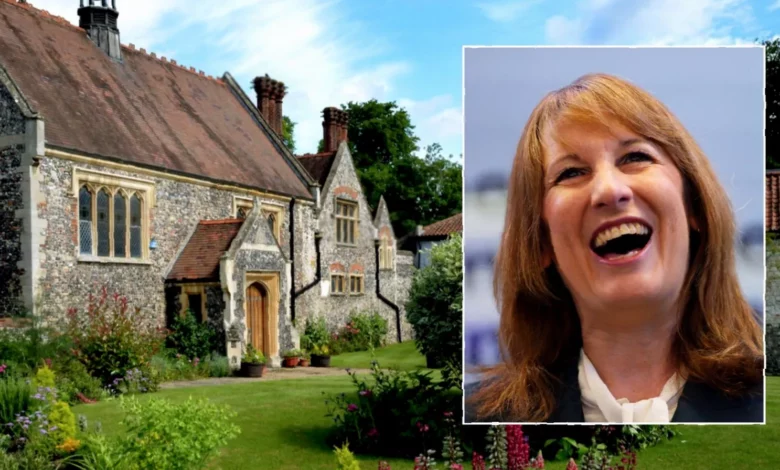
A school that traces its origins back to 631 AD is to close at the end of the current term, with its governors blaming the Government’s imposition of VAT on private school fees for making its finances unsustainable. Thetford Grammar School in Norfolk, which educates around 200 pupils, becomes one of more than 100 independent schools that have shut down since Labour introduced a 20 per cent charge on fees in January 2025.
The school’s chairman, Jay Liu, informed parents of the decision in a letter this week, saying the board had concluded that “no longer viable for TGS to continue operating independently”. The school is planning to merge its resources with Finborough School, a co-educational independent school in Stowmarket, Suffolk, which currently has 675 pupils. Finborough has experience of such combinations, having merged with Hillcroft Preparatory School in 2006.
VAT impact on the independent sector
The closure follows the Labour government’s manifesto commitment to end the VAT exemption on private education, a policy that came into effect on 1 January 2025. The standard 20 per cent rate applies, though some schools have passed on a lower effective increase — reported to average around 14 per cent — by reducing their own fees. Nonetheless, the financial shock has been severe. It is estimated that around 25,000 pupils across England have been affected by school closures since the policy was introduced.
Recent polling by wealth management firm Saltus, based on a survey of high-net-worth parents, found that nearly one in ten children have been withdrawn from UK private schools in response to the VAT hike. Nine per cent of respondents said they had moved their child into state education, three per cent had opted for home schooling, and six per cent had switched to less expensive private schools. A further six per cent had chosen to send their children to private schools abroad to avoid the charge. Overall, 25 per cent of those polled told Saltus they had taken their children out of private education, with eight per cent of that group moving to cheaper establishments.
Mike Stimpson, a partner at Saltus, noted that while private education “remains a major aspiration”, the additional cost “has forced a reassessment of what is affordable, what is sustainable, and what truly represents value over the long term”. He added that many families “are prepared to make sacrifices” even in the face of rising fees and the impact of VAT.
Cumulative financial pressures on independent schools
While the VAT charge has been the most widely discussed factor, Thetford Grammar School’s chairman made clear that it was one of several overlapping pressures that together made the school’s position untenable. In his letter to parents, Mr Liu listed “the imposition of VAT on school fees, alongside the removal of business rates relief, increased employer pension contributions, rises in the minimum wage and continued increases in utility and operating costs” as collectively placing “unsustainable pressure” on the institution.
Since April 2025, the removal of business rates relief has added further costs for charitable independent schools. The combination of higher employer National Insurance contributions — a result of the Government’s increase in employer pension contributions — and a rising minimum wage has squeezed school budgets from both the staff cost side and the operational side. Utility bills and general running expenses have also continued to climb.
The broader pattern of closures is not confined to Thetford. Other historic private schools that have announced they are shutting down in recent months include Carrdus School, Our Lady’s Abingdon, and Rendcomb College, all citing financial instability exacerbated by the VAT on fees and wider economic pressures.
In response to these strains, some schools have cut back on extracurricular activities, reduced staff numbers, or reallocated funds from bursaries to scholarships to try to keep fees competitive. The Saltus survey indicated that some parents have moved children from boarding to day places as a cost-saving measure.
Thetford Grammar School itself has a long and distinguished history. Its founding is likely linked to Sigbert, King of the East Angles, around 631 AD. Historical records show a school existed in Thetford by the 14th century, and it was refounded by an Act of Parliament in 1610 following a bequest from Sir Richard Fulmerston. Notable former pupils include the radical thinker Thomas Paine and the lawyer Roger North. The school operated under Voluntary Controlled status from 1944 before regaining its independent status in 1981.

Government defends the policy
The Department for Education has defended the VAT changes, stating that “ending tax breaks for private schools will raise £1.8 billion a year by 2029/30 to help fund public services, including supporting the 94 per cent of children in state schools, to help ensure excellence everywhere for every child.” Chancellor Rachel Reeves has maintained that “every penny” of the money raised will be invested solely into state schools. The government has also argued that the number of children moving from private to state schools will be low.
The policy has drawn criticism not only from schools and parents but also from opponents who argue it disproportionately affects families with aspirations for private education. Some groups have accused Education Secretary Bridget Phillipson of divisive rhetoric on the issue. Legal challenges have been mounted, with a judicial review hearing taking place in April 2025.