Push to oust Misan Harriman part of wider hostility towards black public figures, Afua Hirsch claims

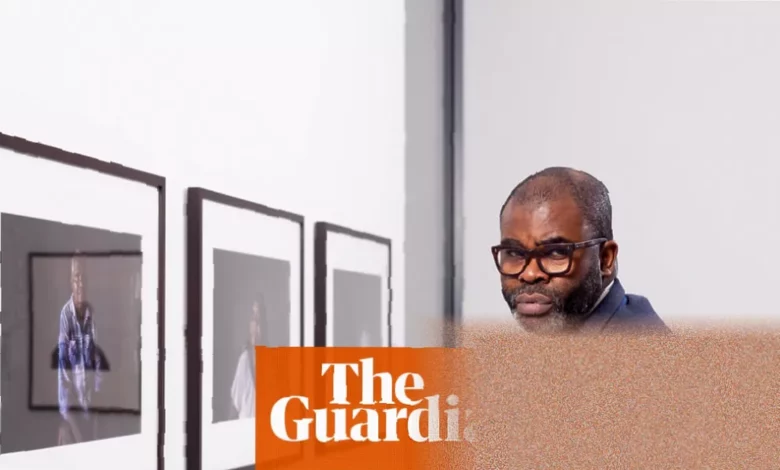
More than a decade after Tommy Robinson launched a short-lived British imitation of a German anti-Islam movement with the promise of attracting a “middle-class” audience, the rhetoric he helped introduce has returned with fresh force. At a weekend rally, his followers called for “re-migration” – a term explicitly equated with ethnic cleansing – while simultaneously, a separate and seemingly more polished campaign has been waged against one of the country’s most prominent cultural figures, the photographer and filmmaker Misan Harriman.
Robinson’s decade of division
In 2015, Robinson, whose real name is Stephen Christopher Yaxley-Lennon, helped establish Pegida UK, a now-defunct chapter of the German far‑right group Patriotic Europeans Against the Islamisation of the West. At the launch, held near Luton, Robinson told a journalist: “It’s the Muslims that are a problem. But you’re all right. You speak English. You’re like us.” The movement died quickly, but the sentiment did not. Robinson, a co‑founder of the English Defence League and a former member of the British National Party and the British Freedom Party, has a long record of criminal convictions for assault, threats, harassment, fraud and contempt of court. He has been imprisoned multiple times, most recently in October 2024, when he was sentenced to eighteen months for repeating false allegations about a Syrian refugee. His appearance at a “Unite the Kingdom” march this weekend saw supporters revive the call for “re-migration”, a demand the Metropolitan Police and political leaders have condemned only tepidly, according to critics.
The targeted rise of Misan Harriman
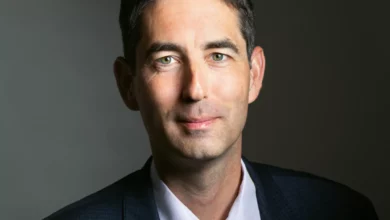
Misan Harriman presents a very different figure. Born in Calabar, Nigeria, in 1977, the son of Chief Hope Harriman, a businessman and politician, and a descendant of King Akengbuwa I of Warri, he was sent to boarding schools in England, where he later spoke of the isolation of being one of very few Black pupils. Entirely self‑taught as a photographer, he began shooting in his late thirties and quickly gained recognition for his documentation of the Black Lives Matter protests in London. His images, which he describes as seeking “hope and empathy”, were published by Vogue, the BBC and The Guardian. In a landmark moment, he became the first Black man to shoot a cover of British Vogue in its 104‑year history, for the September 2020 issue featuring activists and public figures including Marcus Rashford. He has photographed Rihanna, Stormzy, Cate Blanchett, Lewis Hamilton and Tom Cruise, and directed the remote photograph that announced the pregnancy of Meghan, Duchess of Sussex, and Prince Harry. His short film The After (2023), starring David Oyelowo, was nominated for an Oscar in the Best Live Action Short Film category. Some of his most moving work centres on Jewish people, including Holocaust survivors, who he photographs to emphasise solidarity across communities.
In July 2021, Harriman was appointed Chair of the board of trustees of the Southbank Centre, one of Europe’s largest cultural institutions. The Centre hosts six resident orchestras, including the London Philharmonic, the Philharmonia and the Chineke! Orchestra, Europe’s first majority Black and ethnically diverse orchestra. The role is explicitly about protecting inclusive creative spaces.
The coordinated campaign and its underlying motives
Since his appointment, a small group of right‑wing commentators and public figures has set out to remove Harriman from his post. The attacks have been published across establishment media and share a striking pattern: they focus less on his track record than on whether he is the right kind of ethnic minority to occupy such a visible role.
Richard Morrison, the chief culture writer of The Times, criticised Harriman for lacking “interest or expertise in classical music or any other performing art form”, calling this “something of a hindrance” for leading an organisation with concert halls and resident orchestras. The implication, opponents note, is that an Oscar nomination and a Vogue cover count for less than the ability to play the cello. Craig Simpson, arts correspondent for The Telegraph, lamented Harriman’s “well‑documented friendship with the Duke and Duchess of Sussex” and described him as a “Nigerian born British photographer” and “pro‑Palestinian arts boss”. The Telegraph’s coverage has drawn a formal complaint to the Independent Press Standards Organisation (Ipso), supported by a campaign that has now gathered more than 100,000 signatures.
The attacks have been endorsed by Lord Roberts of Belgravia, the historian and conservative grandee who co‑signed a letter to The Times expressing “growing concerns for the Southbank Centre”. Lord Roberts has previously condemned the National Trust’s efforts to acknowledge the legacy of slavery and colonialism as “foul” and is a vocal defender of the British Empire, which he has called “a noble endeavour”. Critics see his intervention as part of a broader effort to discipline cultural institutions that give voice to different perspectives. Harriman, they argue, represents the uncomfortable reality of those Lord Roberts might once have called “native inhabitants” stepping into the highest reaches of British cultural life.
A central thread in the campaign is the attempt to conflate Harriman’s critique of Israel with antisemitism. Some have alleged that he compared Reform UK’s electoral success to the Holocaust. In fact, Harriman quoted the philosopher Susan Sontag, using the context of pre‑war Germany to discuss how majorities can be swayed towards or away from extremism. Another allegation concerns last month’s attacks in Golders Green. Harriman’s first response was an unambiguous post expressing “solidarity to the Jewish community”. When he later learned that a third victim, a Muslim, had been attacked by the same perpetrator on the same day, he asked why many news headlines and the Metropolitan Police had not given that victim equal prominence. The question, he suggested, revealed an unwritten rule in the British media: that recognising Jewish victims and Muslim victims is treated as a zero‑sum game.
Amnesty International has denounced the “smear‑like” attempts against Harriman, stating: “When we allow one community’s trauma to be played off against another’s, we weaken the foundation of safety for everyone.” The Voice, Britain’s oldest Black newspaper, has noted with concern that “this is not accountability culture, it’s more reputational warfare.”
The broader picture: from re‑migration to reputational warfare
The weekend rally that saw Robinson’s followers demand “re‑migration” and the coordinated campaign against Harriman are, according to those who have tracked both, two expressions of the same impulse. One relies on street‑level intimidation, the other on the columns of broadsheet newspapers. Both are aimed at enforcing who is allowed to belong, and on what terms, in British public life. Harriman’s case in particular has made clear that even the highest achievements – an Oscar nomination, a Vogue cover, a leadership role at a major cultural institution – are no protection when a public figure steps outside the narrow boundaries of acceptability set by a determined minority. “All black British people are expected to take note,” the original analysis concluded, “for fear of equally stepping out of line.”