Google Search cannot function on this website unless you first give your consent. That consent allows a third-party service, Google Custom Search, to load and operate—and with it, the use of cookies or similar technologies that track your interaction. The choice is presented as a prompt: click “Allow and Continue” or navigate away. The underlying principle is straightforward—no consent, no search.
What consent means, and what follows
Consent in this context is not a passive agreement buried in terms and conditions. It is an active, explicit step taken by the user before the search tool becomes available. The website’s privacy policy sets out what data may be collected and how it is handled, but the immediate mechanism is clear: the user must opt in. This model mirrors broader data-protection standards that require services to obtain permission before deploying tracking technologies such as cookies. Google Custom Search, the engine behind the search box, may deploy those cookies for purposes including personalisation, analytics, and advertising. Again, none of this happens without the user’s prior consent.
Privacy and the broader picture
The privacy policy referenced in the consent notice is the formal document that explains what happens to the data once consent is granted. It covers the types of cookies used, the duration of storage, and the rights users retain over their information. The notice itself serves as a gate: until a user clicks “Allow and Continue,” no cookies are placed, no search queries are processed, and no data is shared with Google. This approach reflects a growing expectation among regulators and the public that digital services must treat consent as a meaningful, upfront requirement rather than an afterthought.
When the search tool becomes vital: the Bedford shooting
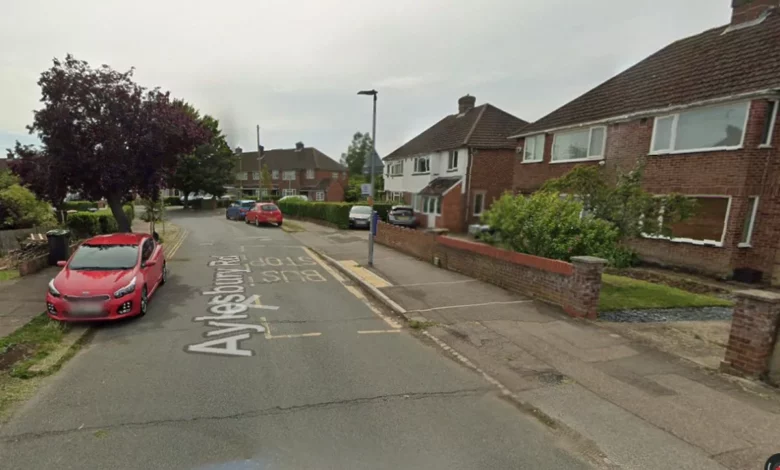
For a reader seeking immediate information about a breaking news story, the consent barrier is the first hurdle. Consider the recent fatal police shooting in Bedford. The incident began shortly after 10:40 PM on Monday, 11 May 2026, when Bedfordshire Police received reports of vehicles being damaged on Aylesbury Road. Officers arrived to find a man in his 40s who had barricaded himself inside a property and was reportedly making threats. Specialist armed officers, police negotiators, and other emergency services were deployed. Despite hours of effort to engage with the man and resolve the situation peacefully, he presented a weapon to officers shortly after 9:30 AM on Tuesday, 12 May 2026. Police then fired their weapons.
The man received immediate advanced first aid at the scene from officers and medical professionals, but he was pronounced dead shortly before 10:30 AM that same day. His next of kin have been informed and are being supported by specialist officers. Under standard protocols, Bedfordshire Police made a mandatory referral to the Independent Office for Police Conduct (IOPC), which has launched its own independent investigation. IOPC investigators have been sent to the scene, and a police cordon remains in place while enquiries continue.
During the incident, a number of nearby properties were evacuated. Residents are now being supported to return to their homes, and it is not believed there is any ongoing risk to the public. Support at the scene was provided by crews from the East of England Ambulance Service, including critical care crews from Magpas Air Ambulance, and Bedfordshire Fire and Rescue Service. Fatal police shootings remain rare in the UK, averaging fewer than ten incidents per year, and this case will undergo detailed scrutiny from law enforcement watchdogs and the public alike.
Readers searching for “Bedford shooting” should be aware that separate incidents in Bedford, Ohio, USA, New Bedford, Massachusetts, USA, and Bedford County, Virginia, USA, are unrelated to this story. The UK incident in Bedford involved the discharging of a firearm by police following a prolonged standoff, and the IOPC investigation will examine the circumstances in full.