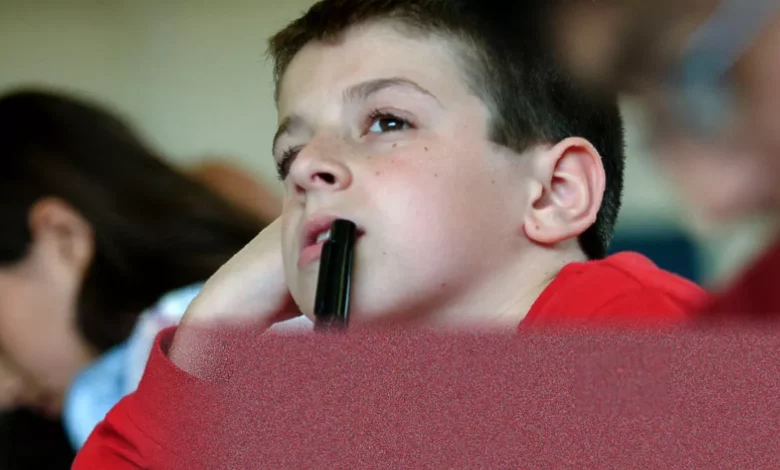
Parents across England are finding themselves back at the kitchen table, staring at long-division problems and multi-step maths puzzles they had hoped never to see again – and the experience is exposing deeper anxieties about the purpose of modern education. Guardian columnist Emma Brockes recently described her own ordeal with a Key Stage 2 maths sheet, confessing that after four decades she still cannot perform long division and that turning to artificial intelligence for help only made matters worse. “This literally doesn’t make sense,” she recalled telling her child, only to receive a gentle pat on the arm and the consoling reply: “It’s OK.” The scene, played out in countless homes ahead of next week’s Year 6 SATs, encapsulates the tension between parental frustration and a quiet, often overlooked resilience in children.
The Homework That Haunts Parents
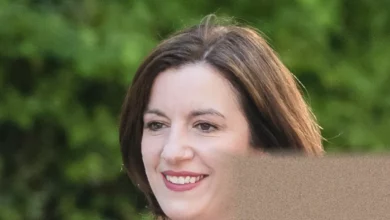
Brockes, a New York-based columnist for the Guardian who also writes for the New York Times, admitted she had “no illusions” about her mathematical ability when she set out to help her 11-year-old. The test preparation included questions on the “past progressive tense” – a grammatical term that left her, a professional writer, crying in bewilderment. “I’m literally a writer and I don’t know what this means!” she wrote. The scenario is familiar to the thousands of parents whose children sit the Standard Assessment Tests (SATs) at the end of Key Stage 2 in England. The tests, which assess English reading, grammar, punctuation and spelling (SPaG), and mathematics, are scheduled for 11–14 May 2026. Results are reported as scaled scores, a method designed to ensure fairness across different versions of the tests. The maths curriculum itself covers nine topics, including the long division of four-digit numbers by two-digit numbers, fractions, decimals, percentages, and multi-step problem solving – exactly the kind of “sweets in bags” questions that Brockes found herself wrestling with.
Her children completed most of their primary education in New York during the peak of “gentle parenting” and “prizes for all” philosophies, an approach that has since begun to wane. In that system, state tests had no upper time limit, and Brockes recalled one daughter returning to an exam paper after a leisurely lunch, only to be forced to hand it over by a teacher who howled, “You’re killing me here.” The anecdote highlights a fundamental tension for parents: how to balance the pressure of exams with the desire to protect children from undue stress.
Why the Old System May No Longer Fit
The personal struggle Brockes describes is a microcosm of a much larger debate about the fitness of the UK’s education system. She questions whether the “old systems of education are still fit for purpose” when artificial intelligence is “eviscerating the entry-level job market” and university degrees are becoming “increasingly expensive and at odds with the skills young people may actually need.” These concerns are borne out by recent research. A study from King’s College London found that firms with high exposure to AI reduced total employment by an average of 4.5%, with the effect concentrated in junior positions. The UK as a whole is experiencing net job losses due to AI, hitting it harder than rival economies such as the United States, Japan and Germany. The workforce is expected to see 10–30% of jobs automated, and while new high-value roles will emerge, the transition requires significant reskilling. Over a quarter of British workers now fear losing their jobs to AI, with younger workers, lower-skilled employees, women and part-time staff disproportionately affected.
At the same time, the value of a university degree is increasingly tied to employability. Universities are prioritising courses in fields like AI, data science, healthcare, cybersecurity and renewable energy, and there is a growing emphasis on skills-based education and industry partnerships. Yet the cost of a degree continues to rise, and some are questioning whether the traditional three-year academic model still offers the best return. Brockes herself notes that a university education now seems to offer “best value as a very expensive developmental stage” – a stage that may not be matched by plunging straight into work. She recalls the American novelist Don DeLillo, who after leaving advertising said he needed “a moment to smoke cigarettes, drink coffee and look at the world.” The question, she writes, is “what else will afford [young people] the time to grow and think and look at the world?”
The critique extends to the nature of testing itself. The pendulum of assessment policy has swung repeatedly. In the 1990s, coursework was emphasised; then, under Michael Gove as Secretary of State for Education (2010–2014), the curriculum was restructured, GCSEs were replaced with a 9–1 grading system, and national curriculum levels were removed. Teachers were left in what has been described as an “assessment wilderness,” struggling with insufficient support and time to adapt. More recently, Key Stage 1 SATs have become optional, and the pandemic accelerated a shift towards more flexible, formative assessment tools. Alternative methods – portfolios, projects, presentations, performance-based tasks – are gaining ground as a way to assess critical thinking and problem-solving rather than rote recall. The rise of tools like ChatGPT has further exposed the limitations of traditional exams, since these new assessments are harder to circumvent with AI.
Gentle parenting, which prioritised empathy and emotional regulation over punishment, is now on the wane. Some experts argue it led to a “parent gap” in which schools have to instil basic rules that were once taught at home. Brockes says she is “too lazy to be a tiger mom” but never liked the approach that “seeks entirely to neutralise pressure around children.” She sees value in learning to meet deadlines, to move on from disappointing grades, and to channel adrenaline productively. The SATs, for all their flaws, “serve a ritualistic purpose that marks the end of something and the start of something new.” They are, she suggests, more about life experience than about learning.
A Lesson in Resilience
In the end, it is the child who offers the most poignant lesson. After Brockes’s outburst at the maths sheet, her daughter patted her arm and said, “It’s OK.” The columnist reflects that this moment may provide a life lesson of its own – in the “limitations of the adult emotional range relative to the occasionally bottomless maturity of children.” The ability to fail, to be confused, and to accept comfort from a younger person is a reminder that education is not solely about passing tests. It is about learning to be human in a world that is rapidly changing, where the old certainties of a degree or a steady career ladder are no longer guaranteed. As DeLillo’s quote suggests, the true life may be found in the quiet spaces between work and assessment – in time to think, to be lost in memory, and to look at the world. And sometimes, that is a lesson best taught by a child with a steady hand and a kind word.