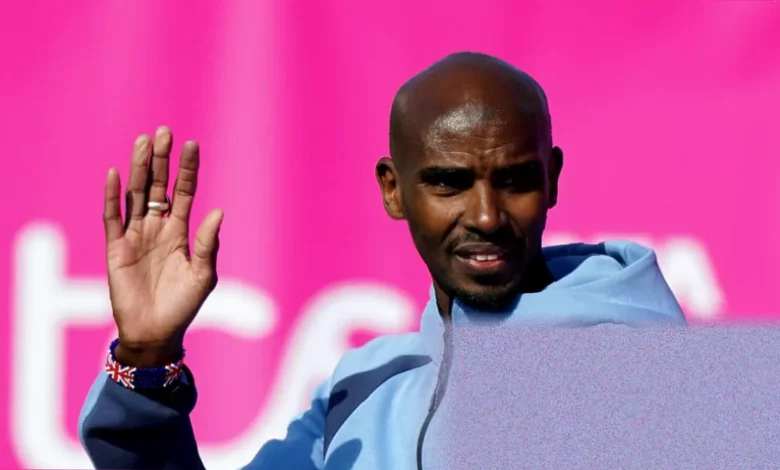
More than 70 leading UK sporting bodies, backed by Olympic gold medallist Sir Mo Farah, are mobilising against potential cuts of £120 million to school sports funding in England, warning that the savings would come at the expense of children’s physical and mental health.
The proposed reductions, which have pitted two government departments against each other, stem from an intention by the Department of Health and Social Care to withdraw its entire £60 million annual contribution to school sport. The Department for Education had separately proposed an additional £60 million cut, which ministers have suggested could be achieved through efficiencies in a new partnership model for physical education. A final decision on the funding is expected as soon as next week.
In a letter coordinated by the Sport and Recreation Alliance and addressed to Health Secretary Wes Streeting and Education Secretary Bridget Phillipson, 76 sporting organisations — including ParalympicsGB, British Rowing, Aquatics GB, British Cycling, the England and Wales Cricket Board, the Lawn Tennis Association and British Gymnastics — expressed “deep concern” over the rumoured reductions. “Quality, inclusive PE and school sport is critical to our children’s health and wellbeing, academic success and sense of belonging in school,” the letter states. “It provides the essential foundation for all children and young people to be active throughout their lives and, for some, to become the next generation of sporting stars.”
Sir Mo Farah, the long-distance runner who serves as National School Sport Champion for the Youth Sport Trust and runs the “Mo’s Mission” campaign aimed at increasing children’s daily physical activity, said he was “really concerned” by the prospect of cuts. “There is so much optimism across sport and education about the potential impact a new structure could have,” he said. “We can’t risk this huge opportunity to improve PE and school sport being wasted for short-term savings when in the long-term it will damage children’s happiness and health. I hope the government listens to leading voices and quickly confirms current spending levels on PE and school sport will be maintained.”
Children’s health already in decline
The campaign against the cuts comes against a backdrop of deteriorating child health statistics that experts say demand sustained investment rather than retrenchment. Government figures published last year confirm a sharp decline in the number of hours allocated to PE in secondary schools, down by nearly 4,000 hours. The most significant drop has been recorded among 11- to 14-year-olds — the same age group that is also experiencing the fastest growth in obesity rates. In England, 22.7% of Year 6 children were obese in 2022-23, up from 18.9% a decade earlier, with obesity prevalence markedly higher in the most deprived areas.
Sport England has repeatedly highlighted that fewer than half of children in the UK meet the Chief Medical Officer’s guidelines of 60 minutes of daily physical activity. The consequences extend beyond physical health: research has linked rising inactivity to a growing mental health crisis among young people, with children from low-income families disproportionately affected by both inactivity and a lack of sports opportunities. The sporting bodies argue that cutting school sport funding would deepen these inequalities precisely when ministers have pledged to tackle childhood obesity and expand mental health support in schools. Streeting himself has previously stated that “obesity robs children of the best possible start in life, sets them up for a lifetime of health problems, and costs the NHS billions.”
The letter warns that any reduction in funding “risk having a hugely detrimental effect on children’s health, wellbeing and opportunity,” and points to the uncertainty already rippling through the sector. “The uncertainty created by the lack of clarity on future funding is already having an impact, with many schools and sector organisations unable to commit to longer-term planning beyond the end of this school year,” it says.
New partnerships model at risk
The government’s planned changes are intended to replace the existing sports premium — which has historically provided around £320 million per year through the Primary PE and Sport Premium — with a new PE and school sports partnership network starting from the next academic year. Under the model announced in June last year by Education Secretary Bridget Phillipson, schools would be mandated to deliver two hours of high‑quality PE per week, forge links with local clubs and national governing bodies, and publicly advertise their sports offering to parents. The aim is to address regional disparities and break down barriers for less active children, girls, and those with special educational needs and disabilities.
The 76 sporting bodies say they back the ambition of the new partnership approach but insist it can only succeed if it is built on the current level of funding. “A reduction in funding risks setting it up for failure before it has got off the ground and undoing much of the progress made in recent years,” the letter states. “There is a real opportunity to build on the world-leading PE and school sport system introduced under the last Labour government and we believe it is essential it is given the right resources to have the best chance of success. Reducing funding would run counter to these aims and ultimately negatively impact those who stand to benefit most.”
The warning carries historical weight. The last major overhaul of school sport delivery, the School Sport Partnership Programme, was severely scaled back after ring‑fenced funding was withdrawn in 2010, a move that was widely seen as a blow to the system. Lisa Wainwright MBE, chief executive of the Sport and Recreation Alliance, said the present moment demanded a different path. “At a time when children’s physical and mental wellbeing must be a national priority, a reduction in funding for PE and school sport would be deeply counter‑productive. We are therefore deeply concerned to hear that funding may be reduced and, alongside our members, including national governing bodies we represent, we are urging ministers to provide clarity that investment in PE and school sport will be maintained, ensuring every child, regardless of background, has the opportunity to be active.”