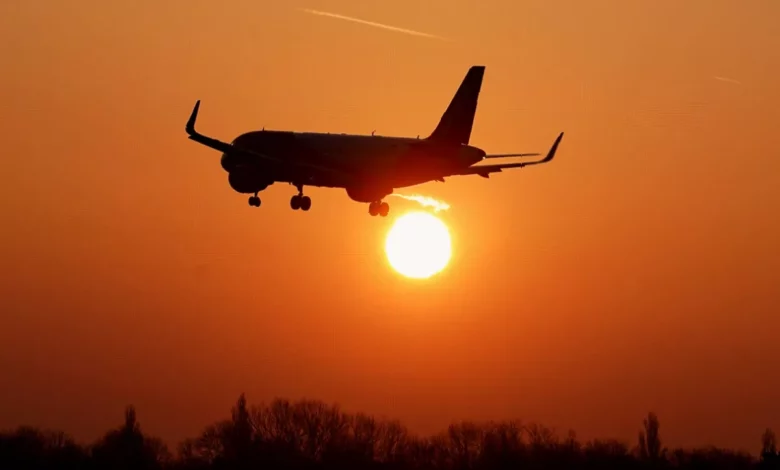
European airports have issued a stark alert that a “systemic” shortage of jet fuel could grip the continent within weeks, threatening the peak summer travel season unless a critical Middle Eastern shipping route is reopened.
The warning comes from Airports Council International (ACI) Europe, which represents more than 600 airports. In a letter to European commissioners, the body’s director-general, Olivier Jankovec, stated that if stable passage through the Strait of Hormuz does not resume within the next three weeks, a systemic shortage is “set to become a reality for the EU”. He emphasised that entering the peak summer period only heightened these concerns.
The Chokepoint: Strait of Hormuz
The root of the impending crisis is the effective closure of the Strait of Hormuz, a vital maritime artery between the Gulf of Oman and the Persian Gulf. The blockade is a consequence of the conflict involving the US, Israel, and Iran, and has led to the largest disruption to world energy supply since the 1970s.
Typically, 120 to 140 ships transit the strait daily, carrying about one-fifth of the world’s oil and liquefied natural gas. For European aviation, the impact is even more acute: historically, over 60% of the continent’s jet fuel has been sourced from Gulf refineries, with an estimated 40-50% of all EU jet fuel imports transiting this narrow passage.
Since the conflict erupted, shipping activity has dwindled to a fraction of its normal volume. Passage is now severely restricted, with vessels required to report to Iran’s Islamic Revolutionary Guard Corps and disclose ownership, insurance, and trading history. There are also suggestions that Tehran is demanding payment for passage. This has forced European buyers into a fierce global scramble for alternative cargoes, competing with Asia for limited supplies and causing trade to seize up further.
Soaring Prices and Operational Chaos
The supply shock has sent jet fuel prices soaring. According to analysts, the cost has more than doubled since the conflict began, with prices in Northwest Europe reportedly reaching $1,573 per tonne, a rise of approximately 120% from pre-conflict levels of around $750. Susannah Streeter, chief investment strategist for Wealth Club, noted carriers are dealing with this doubled cost burden while the threat of shortages lingers.
Airlines, for which fuel constitutes more than 40% of operating expenses, are already taking drastic measures. Ryanair’s chief executive, Michael O’Leary, has warned that 10% to 25% of the airline’s supplies could be at risk in May and June, potentially causing disruptions. Scandinavian airline SAS has cancelled 1,000 flights in April due to fuel costs.
In Italy, the situation is particularly acute. Four airports—Milan Linate, Bologna, Venice, and Treviso—have implemented mandatory rationing, restricting short-haul aircraft to 2,000 litres per flight, which provides less than an hour of airtime. Other Italian airports have also imposed limits. Airlines across the board are responding by cancelling flights, reducing capacity, axing less profitable routes, and hiking fares. Analysts point out that higher jet fuel prices are often passed through to airfares more quickly than road fuel or household energy costs.
EU Vulnerability and Calls for Action
In its letter, ACI Europe argues the crisis has exposed the EU’s “reduced refining capacity for jet fuel production and its acute dependence on imports”. European refining capacity has declined in recent years, leaving the bloc increasingly vulnerable. The situation is further tightened by the EU’s 18th sanctions package on Russian-origin refined products, which took effect in January.
The airports body has called on the European Commission to take urgent action. It wants the Commission to monitor jet fuel supply for the next six months, identify ways to boost EU production, and consider temporarily lifting restrictions that limit imports. Specific measures suggested include exploring joint fuel purchasing and even considering a temporary lift of restrictions linked to the forthcoming EU Methane Emissions Regulation, which has reportedly discouraged some external suppliers from entering summer delivery contracts.
ACI Europe also sees the crisis as an impetus to reinforce support for Sustainable Aviation Fuel (SAF), noting conventional fuel prices are likely to remain elevated. It warns that a jet fuel shortage would “significantly harm the European economy”; the air transport sector contributes approximately €851 billion to EU GDP and supports 14 million jobs.
Diplomatic efforts are underway to ease the blockade. UK Prime Minister Sir Keir Starmer has visited Gulf allies to discuss supporting what he called a “fragile” ceasefire agreed between the US and Iran. He has spoken with US President Donald Trump about the need for a “practical plan” to reopen the strait. While the ceasefire initially brought a drop in oil prices, shipping movements remain severely limited and analysts say the situation on the water has not materially changed, with transit arrangements a key issue for any lasting negotiation.
The EU’s Energy Union Task Force has offered a somewhat contrasting assessment, stating there is currently “no immediate risk” to oil and gas supplies across the bloc. However, officials have acknowledged longer-term risks and identified jet fuel as the most vulnerable product due to its heavy import dependence, highlighting the stressful test facing aviation’s entire supply chain.