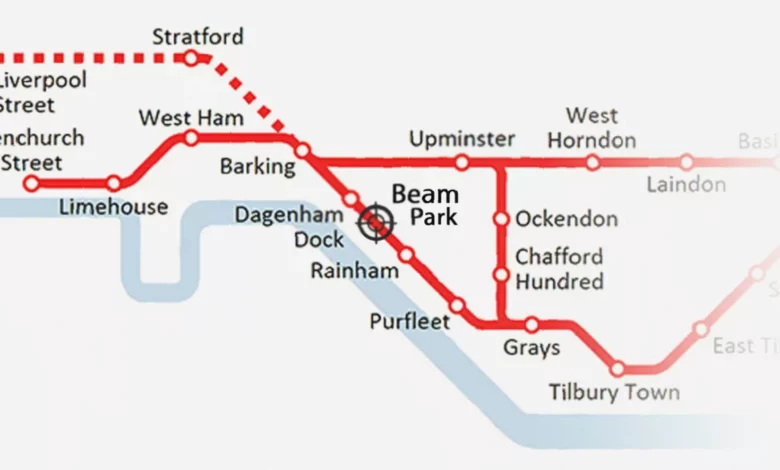
After years of political delays and financial wrangling, a new railway station for East London has been given the crucial green light, finally unlocking the potential for thousands of new homes. The confirmation that Beam Park station can be accommodated within the existing rail network, announced by the Housing Secretary, marks the end of a saga that has left residents waiting and vast tracts of land undeveloped.
From concept to controversy
The idea for Beam Park station has been on the drawing board for over two decades, originating in the 2002 London Riverside Urban Strategy. Havering Council formally took on the role of promoting the station in 2012, and by 2014 it was part of the Greater London Authority’s long-term infrastructure plan, with an initial completion target of 2020 and a £15 million price tag. Planning permission was secured in February 2019, and the developer Countryside agreed to build the station shell. Yet, despite this momentum and the arrival of the first residents on the Beam Park housing estate from late 2020, the project hit a major roadblock.
In October 2021, the Department for Transport (DfT) withdrew its support, stating it would not authorise passenger services. The DfT cited deep-seated concerns over the station’s financial viability, arguing it might not attract enough passengers and could simply draw them away from the adjacent Rainham and Dagenham Dock stations. These operational worries, including the impact on train timetables, had been raised by the train operator Trenitalia c2c Ltd with the GLA as far back as March 2018. The move, attributed to the previous Conservative government, plunged the project into limbo for years, with Havering Council Leader Cllr Ray Morgon writing to Transport Secretary Mark Harper MP in December 2022 to plead for intervention.
Bridging the funding gap
At the heart of the delay was a complex funding picture and the question of who would cover escalating costs. Significant financial commitments were already in place. The GLA had awarded £9.6 million to Havering Council for the station in 2016, and in 2020 Mayor of London Sadiq Khan allocated a further £32.7 million to cover construction and a decade of running costs. By August 2023, developers and the GLA had committed £42 million to the project. However, as Cllr Morgon notes, inflation and rising costs for labour and materials have pushed the price of delivery up since those pledges were made, creating a funding gap that now must be closed.
The government’s confirmation that the station can proceed is therefore not the end of the financial story. The Greater London Authority is now leading efforts to assemble a final funding package in collaboration with local authorities. To underpin this, three key technical studies are underway with the DfT, Network Rail, c2c, and Transport for London: an updated timetable analysis, a fresh demand and revenue study reflecting post-COVID travel patterns, and a review of the station design and cost plan. Furthermore, the GLA and Network Rail have contracted for a detailed review of capital cost estimates, due for completion in late 2025.
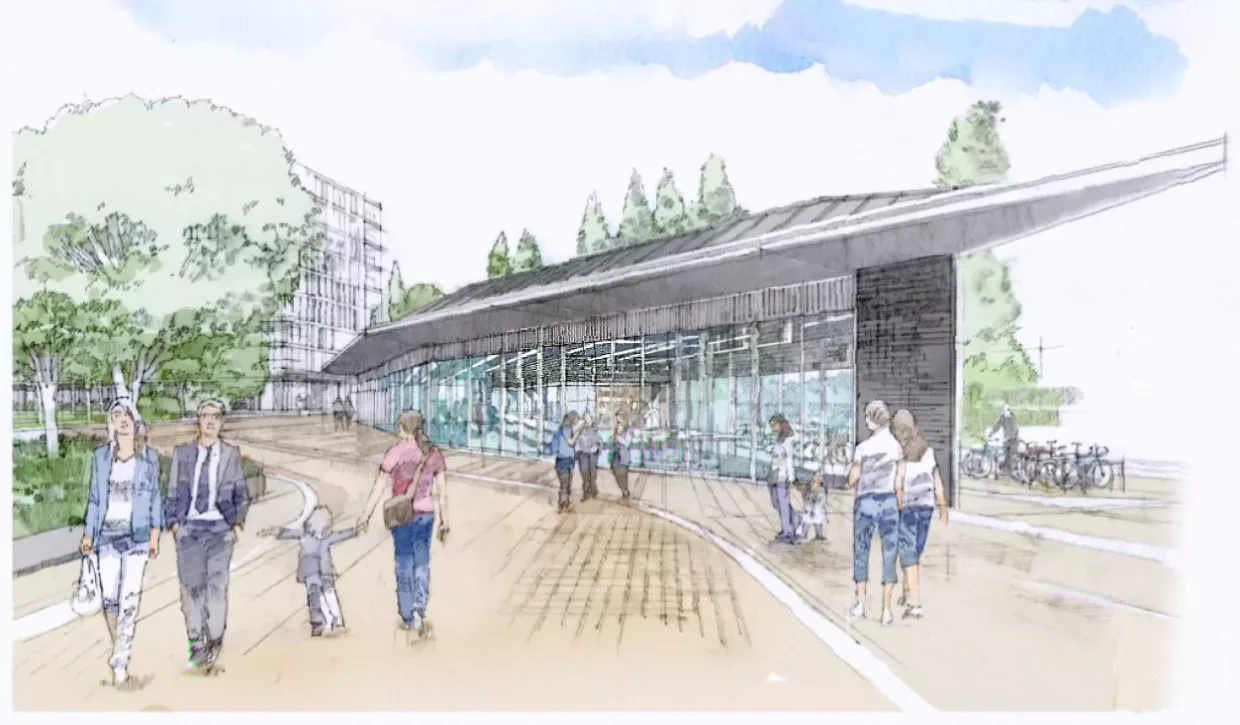
The station’s fate has been intrinsically linked to the homes it was meant to serve through a planning mechanism known as a Grampian condition. This condition stipulated that the housing development could not progress beyond its initial phases until the station was operational. Consequently, while over 1,100 homes are completed and a further 1,200 are under construction, the blockage has left parts of the area vacant. Crucially, 1,572 homes within the Beam Park scheme itself—half of them designated as affordable housing—have been on hold, with over 5,000 homes across three sites depending on the station’s opening to become viable.
In a significant shift to accelerate housing delivery, Barking and Dagenham councillors voted in March 2026 to amend this condition. The new wording allows housing construction to advance alongside station development, provided there is proof the station is signed off for construction and initial works have begun. This change aims to balance the urgent need for new homes with the delivery of the essential transport infrastructure.
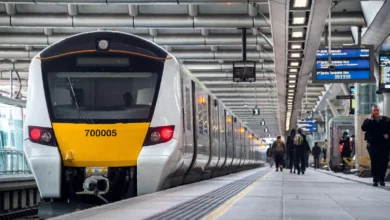
With the station now on the New Homes Accelerator programme and having received planning approval for its ticket office in February 2025, the path is finally clear. When opened, the station on the c2c line will provide journeys to London Fenchurch Street in about 20 minutes, serving a redeveloped former industrial area and aiming to end what Cllr Morgon called a “transport vacuum.” Its ultimate purpose is to catalyse growth, with the potential to enable up to 20,000 new homes in the wider area, alongside new schools, retail spaces, and community facilities, fundamentally transforming a neglected part of the Thames Estuary.