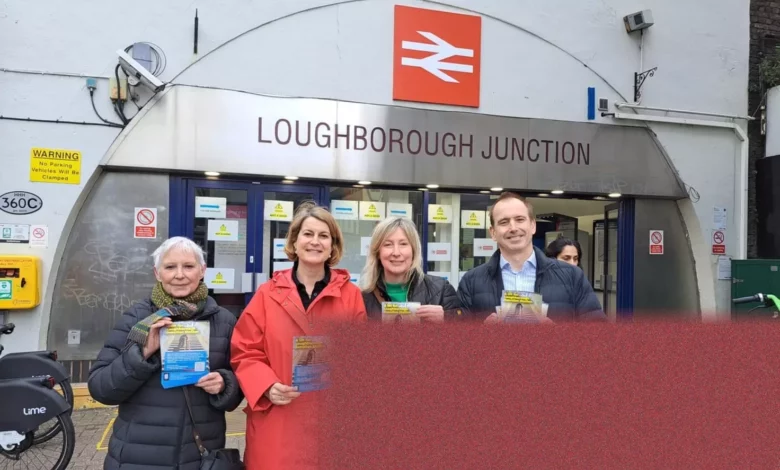
A £75,000 study aimed at unlocking step-free access at one of Lambeth’s most constrained stations has been funded, marking a critical first step in a long-fought community campaign. Lambeth Council confirmed it has secured the sum from local developer contributions to finance an Option Selection Report for Loughborough Junction station.
This feasibility work, described by the council as the essential first formal stage, is required to make a bid for major construction funding from the Department for Transport (DfT). Network Rail is scheduled to begin the design study in spring 2026, with completion expected by the end of that year.
A Campaign for Basic Access
The funding breakthrough follows years of advocacy by groups like the “Lift Up Loughborough Junction” campaign and the Loughborough Junction Action Group (LJAG), in an area identified as one of the most deprived wards in the borough. Local MP Helen Hayes has repeatedly raised the issue in Parliament, highlighting the reliance on rail in a constituency with limited Tube coverage.
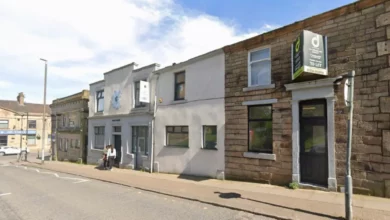
Campaigners argue the current station, built around 1864 and occupying half a railway arch, is not just inconvenient but unsafe. Its only access is via a “fairly narrow staircase” from a small ground-floor entrance up to the single island platform, which sits on a bridge over Coldharbour Lane. Concerns have been raised about evacuation risks, and there are anecdotal reports of some elderly residents having to slide down the stairs due to the lack of an alternative.
The barrier affects a wide range of people, including disabled and older residents, parents with prams, cyclists, and anyone with heavy luggage. Paul Richmond, Network Rail’s Principal Programme Sponsor, said the upcoming study would “improve accessibility for passengers and make a meaningful difference to their journeys.”
The Scale of the Engineering Challenge
The most significant hurdle for the project is the station’s extremely limited physical footprint. The tiny, arched structure offers no obvious space for a conventional lift shaft, meaning standard solutions are unworkable.
Consequently, the Network Rail study will have to explore more complex and costly alternatives. These could include acquiring land adjacent to the station to build a new entrance with a short footbridge over the tracks, or even “flipping” the entire entrance to the opposite side of Coldharbour Lane. Each option presents unique engineering and logistical challenges that the feasibility report must meticulously cost and plan.
The case for investment may be strengthened by unique footfall data. Campaign founder Nick Lewis claims Loughborough Junction is the only station in Lambeth to have seen a rise in passengers since the pandemic, with a 13.5% increase from 2019-20 to 2024-25, against an average 26% drop across other borough stations.
The Path to National Funding
Securing the £75,000 for the study is a tactical victory, but the larger goal is accessing the DfT’s “Access for All” (AfA) programme, the government’s primary fund for such upgrades. Lambeth’s Deputy Leader, Cllr Rezina Chowdhury, has reiterated the council’s commitment to achieving step-free access, aligning with its Transport Strategy for an inclusive network.
Historically, Loughborough Junction has been unsuccessful in AfA bids. The DfT prioritises schemes based on factors including passenger numbers, geographic spread, and the availability of third-party funding—making the locally-funded feasibility study a crucial lever. The national context is competitive; in January 2026, the DfT halted progress on 19 out of 50 stations undergoing AfA feasibility work due to affordability concerns.
Future funding may also be shaped by the establishment of Great British Railways (GBR), while Lambeth Council continues to engage with its Accessibility Working Group to ensure projects meet community needs. The journey towards a lift at Loughborough Junction remains long, but for campaigners and residents, the funded study represents the most concrete progress in years.