Mayor of London Sadiq Khan has put the capital’s growing number of large SUVs in his sights, warning that their size and design pose a unique danger to pedestrians and are clogging the city’s streets. The move forms part of a renewed push to eliminate road deaths, as new data suggests current efforts may fall short of ambitious targets.
Vision Zero: The Drive to Eliminate Road Deaths
The proposed measures are embedded within London’s “Vision Zero” initiative, a strategy first launched in 2018 with the goal of eradicating all deaths and serious injuries on the city’s roads by 2041. While an estimated 262 lives have been saved since 2015 due to action by Vision Zero partners, Transport for London’s own data indicates the mayor’s targets are currently on track to be missed.
The newly updated “Vision Zero 2” action plan contains 43 measures, with a continued critical focus on reducing vehicle speeds. Key to this is expanding 20mph limits, with a goal to make them the default on all TfL roads within the Congestion Charging Zone. On outer roads, such as sections of the North Circular (A406), top speeds are set to be reduced from 50mph to 40mph on stretches with side roads or housing. TfL cites evidence of a 25% reduction in collisions in central London following the introduction of widespread 20mph limits.
The SUV “Worrying Trend”: Evidence of Increased Lethality
Alongside speed reduction, tackling the surge in Sports Utility Vehicles has emerged as a distinct priority. TfL’s chief safety, health and environment officer, Lilli Matson, stated the organisation is gathering evidence on a “worrying trend in disproportionately lethal collisions involving SUVs”.
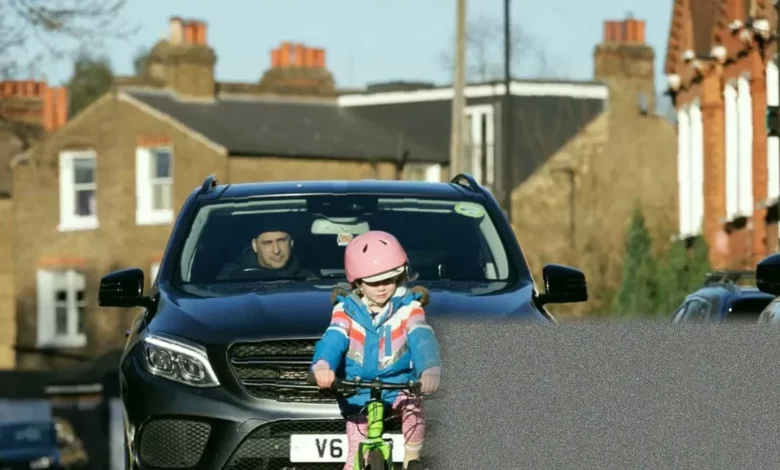
The statistical risk is stark. Mayor Khan cited preliminary evidence showing a child hit by a large SUV is 77% more likely to be killed, with the risk tripling for children under nine. This is supported by broader research indicating pedestrians and cyclists are 44% more likely to die if struck by an SUV, a figure that rises to 82% for children.
The danger is attributed to vehicle design. The taller, blunter front ends of SUVs make pedestrians, particularly children, harder for drivers to see. In a collision, the impact is more likely to strike critical organs or the head, and victims are more often thrown into traffic rather than onto the vehicle’s bonnet.
A Capital Not Designed for “Car Spreading”
Beyond safety, the physical footprint of these vehicles is causing practical problems in a densely built city. “London wasn’t designed for large SUVs,” Khan said, highlighting issues with parking and congestion.
The numbers explain why. From approximately 80,000 in 2002, there are now nearly 800,000 SUVs on London’s roads, making up 31% of all cars. Nationally, they account for about 60% of new sales. Cars overall are growing; the average width of new models in the UK and EU increases by about 1cm every two years, and their mass has risen 15% since 2001.
This trend, described as “car spreading”, means many new cars are too wide for standard parking bays. Some large luxury SUVs no longer fit in off-street spaces, and can occupy up to nine-tenths of a bay, leaving less than 20cm of clearance. On narrow residential streets, they can block the passage of other vehicles, including buses, slowing the entire network. “Parking spaces are smaller than these large SUVs… Some of our side roads simply aren’t wide enough,” Khan added.
Policy Response and Personal Example
In response, Khan and TfL are considering options including additional charges on “outsize vehicles”. Part of the work involves creating a formal definition for the targeted SUVs, likely based on weight and dimensions, with a focus on the largest models rather than smaller crossovers like the Nissan Qashqai.
In a move to lead by example, the Mayor addressed his own transport. While he does not own an SUV, he is escorted by Metropolitan Police protection officers in a large armoured vehicle. “Yes, of course, I have an armoured vehicle. But… I think it’s a message I’ll be speaking to the police as well,” he said, indicating he would encourage the Met to consider a smaller vehicle. The police have been asked to review this arrangement.
Industry Pushback and Wider Precedents
The Society of Motor Manufacturers and Traders (SMMT), the industry lobby group, has criticised the potential measures. Its chief executive, Mike Hawes, said they could “unfairly penalise” drivers who need larger vehicles for essential mobility and “restricts consumer choice”. He stated that every UK car is certified to “exacting safety and pedestrian protection standards,” with billions invested in advanced safety technology.
Historically, the SMMT has dismissed similar proposals as based on “anti-SUV stereotypes, misinformation and out-of-date… research”. The industry faces broader challenges, having also expressed concerns about the pace of the UK’s transition to electric vehicles.
Other cities are taking similar action. Cardiff has become the first UK council to implement higher parking charges for larger vehicles, and Paris has introduced increased fees for heavier cars, setting a precedent London is now actively examining.