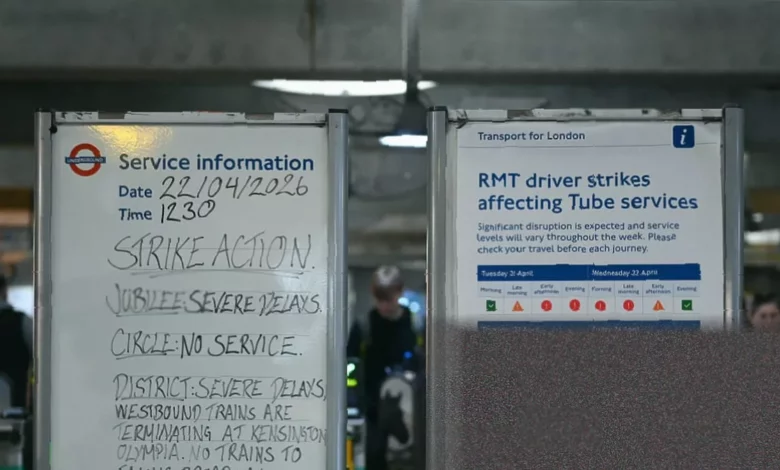
London faces another two days of tube strike disruption starting Thursday midday, as a second 24-hour walkout by RMT union drivers brings further travel chaos to the capital. The industrial action, following a first strike on Tuesday, is part of an escalating dispute over Transport for London’s proposals to introduce a four-day working week for drivers.
Strike impact and travel alternatives
Transport for London has warned passengers to expect significant disruption, with services reduced across all lines from midday Thursday and finishing by 8pm. The first trains on Friday morning will not start until 7.30am. Most of the Piccadilly, Waterloo & City and Circle lines are expected to have no service during strike hours, along with parts of the Metropolitan and Central lines. Other rail services, including the London Overground, Elizabeth line and the DLR, will continue to run.
The impact of Tuesday’s strike saw a significant shift in how Londoners travelled. Santander bike hires were up 60% on Tuesday morning, according to TfL, while Voi, an operator of e-scooter and e-bike rentals, reported a 52% increase in rides compared to the previous week. Many commuters also opted to walk, with some companies relaxing rules to allow more working from home. The overall congestion appeared lower than during major strikes last September, though passengers on operating lines still reported long waits and crowded trains.
The core of the dispute: safety, fatigue and an “imposed” scheme
At the heart of the conflict are fundamental disagreements over safety and negotiation. The RMT union objects to what it calls an “imposed, fake four-day week,” raising serious concerns from members about increased shift length and resulting fatigue impacting safety. The union argues that compressing a working week into four days inevitably leads to longer daily shifts, which they believe compromises the wellbeing of drivers and, by extension, passenger safety.
The RMT’s specific alternative is a 32-hour working week spread over four days with no loss of pay. TfL’s proposal, however, is for a 35-hour week over four days. The union states it has sought written assurances from TfL that members can remain on their current five-day shift patterns and agreed terms and conditions, claims it has not received an adequate response. An RMT spokesperson accused TfL of a “U-turn,” stating: “The strikes are going ahead because TfL said they would negotiate on all elements of the proposal and then U-turned, saying to us they would go ahead without any changes.”
This dispute occurs within a divided workforce. Just over half of London’s tube drivers are members of the Aslef union, which has welcomed TfL’s four-day week plan, with its members having voted to accept it back in April 2025. Aslef has expressed surprise at the RMT’s strike action, creating a notable split between the two driver unions.
TfL’s position and the economic toll
Transport for London maintains that its proposals are voluntary, cost-neutral, and designed to bring London Underground in line with working patterns at other train operating companies. Nick Dent, director of customer operations for London Underground, stated the “changes would be voluntary, there would be no reduction in contractual hours and those who wish to continue a five-day working week pattern would be able to do so.” TfL’s Chief Operating Officer, Claire Mann, has echoed this position.
The economic cost of the disruption is severe. Analysis suggests the series of tube strikes planned by the RMT into June could cost London’s economy between £360 million and £760 million. The hospitality sector is being hit particularly hard, with some businesses reporting drops in custom of up to 40% on strike days, threatening millions of pounds in London’s fragile night-time economy. Wider impacts include reduced tourism, employee lateness, and operational challenges for businesses across the capital.
With no further talks having taken place, the standoff continues. The RMT has scheduled four more 24-hour strikes in May and June, consisting of two sets of two-day stoppages, unless the dispute is resolved. TfL is urging the union to call off the action and return to talks, but the RMT’s General Secretary, Eddie Dempsey, has stated that despite approaching negotiations in good faith, “TfL seem unwilling to make any concessions.”