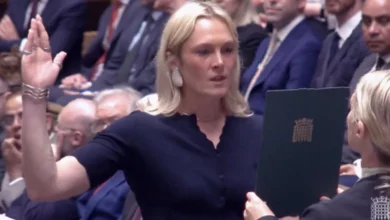
A Green Party MP has launched a scathing attack on the Labour government, accusing it of “offensively caricaturing” working-class people by suggesting they do not support a ban on greyhound racing in England.
Hannah Spencer, the MP for Gorton and Denton and a former plumber, said the suggestion that the sport’s historical popularity in so-called ‘red wall’ areas meant working-class communities opposed a ban was a gross misrepresentation. “Lisa Nandy just continuously offends people by saying that working-class people don’t care about dogs or each other. It is a caricature and it is very offensive,” Spencer said. “Working-class people are fed up with gambling companies being able to wreak havoc in people’s lives.”
The Toll on Greyhounds: Injuries and Deaths
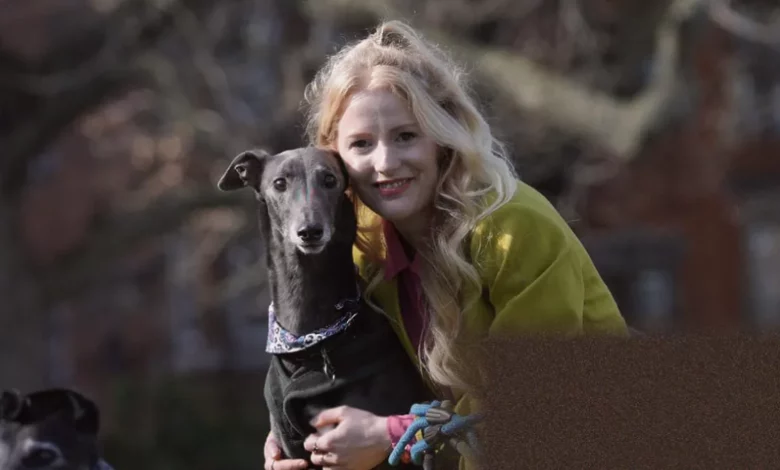
The core of Spencer’s opposition, which propelled her into politics, is the welfare cost of the sport. She has four rescue greyhounds, each bearing the scars of the industry. One, Olive, raced at the Belle Vue track Spencer campaigned to close. “When I got her, she was really broken,” she said. Another, Judy, was kept in a kennel for a decade and used solely for breeding, while her first greyhound, Graham, was left terrified of the outside world after being confined to a shed.
These personal stories are reflected in stark industry-wide statistics. According to records from the Greyhound Board of Great Britain (GBGB), 2,700 greyhounds died and more than 26,500 injuries were recorded between 2018 and 2023. More recent 2024 figures from the GBGB show 346 deaths and 3,809 injuries. Since GBGB records began in 2017, nearly 4,000 greyhounds have died and over 35,000 injuries logged.
The League Against Cruel Sports reports that 123 of these deaths in 2024 were trackside fatalities, with a further 55 dogs put to sleep off-track after being deemed unsuitable for rehoming. Animal welfare charities attribute the injuries—including broken legs, backs, paralysis, and head trauma—to the high-speed, oval-track nature of the sport, compounded by concerns over kennelling, transport, and a lack of enrichment for the dogs.
This evidence has driven legislative change elsewhere in the UK. Both Scotland and Wales have recently passed bills to ban greyhound racing, with the last track in Scotland set to close and the Welsh ban coming into force between 2027 and 2030. The Green Party, through figures like MSP Mark Ruskell who championed the Scottish ban, argues the sport “belongs in the past”.
Labour’s Gambling Industry Ties
Critics like Spencer connect Labour’s reluctance to follow Scotland and Wales to its financial and social links with the gambling sector. “That is what opened my eyes to Labour, how lobbied and biased they are,” she said, questioning why MPs accept “really expensive hospitality packages from gambling companies”.
Records show the Labour Party has accepted over £1 million in donations from gambling firms and executives in recent years, including from figures like casino magnate Derek Webb and Bet365’s Peter Coates. Senior Labour figures have also accepted gifts and hospitality; Shadow Chancellor Rachel Reeves received £20,000 in donations for her private office and tickets to a show, while Business Secretary Jonathan Reynolds accepted a ticket for a European Championship match.
Against this backdrop, Culture Secretary Lisa Nandy’s defence of the industry has drawn particular fire. She has told parliament the industry “brings joy to a lot of people” and “brings positive benefits to the United Kingdom,” while emphasising the government has “absolutely no plans whatsoever to ban greyhound racing”. Sources close to Nandy rejected the suggestion she believed working-class people did not care about dogs.
Matt Zarb-Cousin, co-founder of the gambling-blocking app Gamban, argues the industry has long traded on a false class representation. “The gambling lobby in Westminster has had successive governments believing they somehow speak for the working class while their sector exploits and extracts from it. To make the assumption ordinary working people somehow don’t care about the welfare of dogs is a form of class prejudice,” he said.
The industry itself, through the GBGB’s commercial director Mark Moisley, stresses its economic contribution of £164m a year and 5,400 jobs, calling greyhound racing “enshrined in British culture” and a top 10 spectator sport.
Spencer believes the conversation on animal welfare in racing is broadening, pointing to the recent Grand National where two horses, Giovinco and Pikar, died—bringing the total equine fatalities at Aintree since 2000 to 65. “A conversation needs to be had about horse racing,” she said. “We all saw those awful pictures of a horse that had been raced to death to make money for gambling companies. That conversation is coming.”