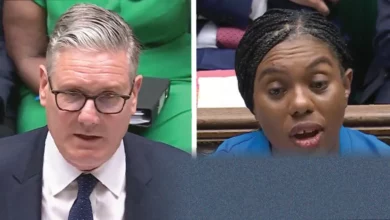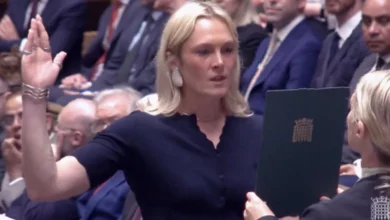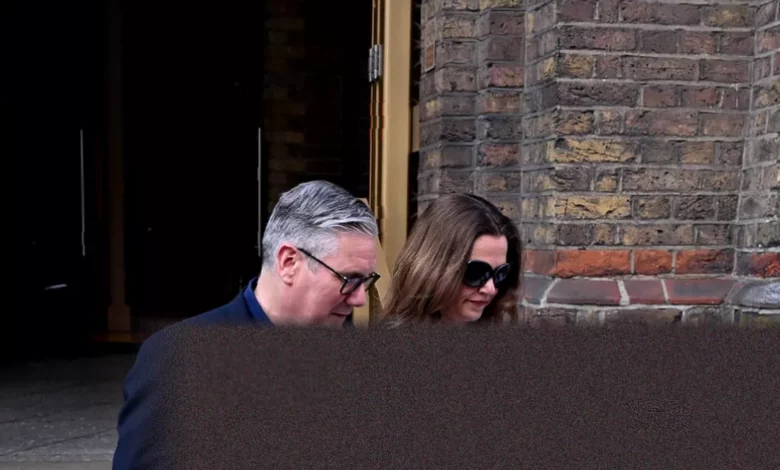
Labour faces a potential leadership crisis following poor local election results, with the full scale of the damage not expected to be known until Saturday night when enough votes have been counted. The results will determine whether Sir Keir Starmer’s government has suffered a conventional midterm kicking or a full-blown collapse, and fears are already mounting about what the outcome reveals about the state of British politics. The party is bracing for heavy losses, with Reform UK expected to perform strongly, a development that some observers believe could lead to the total collapse of the traditional two-party system. The prime minister’s opponents within Labour were gathering long before polling stations closed, driven in part by anxiety over the long-term implications of candidates caught expressing extreme views.
Fallout from the ballot box
Labour’s internal tensions have erupted into open manoeuvring. Angela Rayner is expected to make an intervention this weekend, while Wes Streeting — the preferred pick of many ministers, if not party members — is said to have an entire shadow operation ready to go. Streeting’s allies have indicated he has a “plan for government” and a strategy to become leader, and reports suggest he has secured the support of enough Labour MPs to meet the 20 per cent threshold — currently 81 MPs — required to trigger a formal leadership challenge. He has stated publicly that he does not want Starmer challenged after the May local elections, but has not ruled out running if a contest is triggered. Next week, the soft-left Mainstream grouping will publish a report on “Manchesterism” that looks uncannily like the beginnings of a manifesto for Andy Burnham, one of the most popular politicians in the UK. Though Starmer is visibly digging in, the idea of him leading the party into another general election is regarded as vanishingly unlikely, and there will be calls this weekend to get the inevitable over with.
The pressure on the prime minister has been building for months. His popularity has plunged after repeated missteps since he took office in July 2024. The so-called Lord Mandelson affair has added to the strain. Meanwhile, Ed Miliband’s stock is reportedly rising due to his thoughtful approach, adding another potential contender to the mix. Yet triggering a leadership contest right now would be a mistake, not least because some potential players are not even on the pitch yet. Burnham is not currently in parliament, and supporters argue he should be given time to return; otherwise, he could become Labour’s martyred king over the water. A swift and uncontested coronation may look appealingly clean, but in retrospect it did Gordon Brown no favours by 2009, and a full-length leadership contest would have been a useful stress test for Theresa May in 2016. The better reason for hesitating before pressing the nuclear button is to guard against the whole thing blowing up in Labour’s face.
Leadership contenders and the challenges ahead
Whoever leads Labour and Britain through the next three years will face a daunting set of circumstances. The UK economy is at risk of recession, with growth forecasts being downgraded partly due to the fallout from the Iran war and its impact on energy prices and supply chains. The country is more vulnerable to soaring energy prices than the eurozone or the United States. The cost of living crisis remains acute, with rising food, energy and rent prices hitting households, particularly those on lower incomes. Inflation has eased from its peak but remains elevated, and real incomes have fallen. At the same time, the government has committed to increasing defence spending to 2.5 per cent of GDP by 2027, with ambitions to reach 3 per cent in the next parliament — the largest sustained increase since the end of the Cold War. Finding a way to raise billions more for defence, most likely by circumventing manifesto promises on tax, will be necessary while simultaneously convincing the bond markets that Britain is not bust. All this must be achieved while trying to bring an angrily polarised country together. None of the current contenders look entirely ready, but nor does the current prime minister. As the party entrusted nearly two years ago with power, Labour has a moral duty to resolve that conundrum.
If Labour chooses to bundle a democratically elected prime minister out of the door — either via a consensual months-long transition or more brutally — then what follows must be a genuine contest geared to the actual job. However, Nigel Farage and Zack Polanski could respond to a leadership contest by demanding a general election, accusing Labour of clinging illegitimately to power by imposing a new, unelected leader over the people’s heads. Farage might whip the more riot-prone parts of his fanbase into a fury at the idea of a “squatter” prime minister, likely to the left of the one they already hate. Though governments should not be held hostage by their opponents, to rerun the kind of infuriatingly exclusive process by which a tiny group of Tory members repeatedly changed leaders mid-parliament — and repeatedly got it wrong — in the current climate would be madness. The 99 per cent of Britons who are not paid-up party members, and therefore not entitled to a vote, need somehow to be brought into the room.
Reforming leadership contests to test candidates properly
Gaby Hinsliff, a Guardian columnist who chaired Labour leadership hustings in 2010 and 2015, argues that the current format is profoundly unfit for purpose. Candidates traipse around the country trying to deliver clips for social media, while party members dwell lovingly on big-picture ideas such as international diplomacy at the expense of things voters often care about more. Across all parties, leadership contests have become a perfect test of candidates’ ability to find their own side’s erogenous zones while failing to ask the questions that in retrospect mattered most.
The most crucial question is how candidates make decisions. Being prime minister consists of judgment call after judgment call on dilemmas escalated to No 10 precisely because they are too big or bitterly contested to be resolved by anyone else. Too late, the country discovered that Starmer does not seem actually to enjoy taking political decisions; that May relied alarmingly heavily on her chiefs of staff; that Boris Johnson tended to agree with whoever he was talking to at the time, leaving a trail of chaos in his wake. A reformed contest would force candidates to demonstrate their decision-making under pressure.
Parliamentary colleagues who see potential leaders up close daily know things the rest of us do not. Tory MPs did their best to raise the alarm in 2022 about Liz Truss, but Tory members did not want to hear it — a mistake their Labour counterparts should beware repeating. The contest should include a rigorous test of whether candidates genuinely know what they are talking about. You would learn more from ten minutes of each candidate being publicly and remorselessly grilled on economic policy by, say, Gordon Brown than from weeks of hustings. Crucially, candidates must convince the overwhelming majority of voters who currently say they would not vote Labour at least to give them a chance to put things right. If they cannot, pressure for an early general election will soon become overwhelming.
US-style open primaries may be a step too far for the Labour party, but holding public events open to all-comers on top of more traditional hustings for voting members would be a far better test of how prospective leaders handle hostile voters — and perhaps the beginning of building a mandate. The Labour party has a complex internal structure, with factions ranging from democratic socialists to social democrats. Under Starmer, the party has shifted towards the centre, leading to the rise of groups such as Labour First and Progress, alongside older factions like Blue Labour, the soft left and the hard left. These factions play a significant role in leadership contests, candidate selection and policy decisions. Since 2015, Labour has used a one-person-one-vote system that includes party members and affiliated trade union supporters.
All of this would take time to organise, and by the end of this weekend Labour MPs may conclude they do not have that time. But if they succumb to that pressure, they must remember that they will not just be auditioning a leader for their own party: they will be choosing a prime minister for the country. Spin that roulette wheel too soon, and it will not land on red.