The timing of any potential referral of the Prime Minister to the House of Commons Privileges Committee has raised questions, with one source suggesting that the current push appears to be little more than an attempt to “score points in advance of the local elections”. The observation undercuts the serious institutional purpose of the committee, which exists to investigate potential contempts of Parliament, and instead frames the current debate as a tactical manoeuvre rather than a case of genuine parliamentary wrongdoing.
The committee’s potential future role
Should unanswered questions about the Prime Minister’s conduct be deemed of sufficient importance, the Privileges Committee could eventually step in. Established in 1995 after the “cash for questions” scandal, the committee is a House of Commons select committee tasked with investigating potential breaches of parliamentary privilege and contempts of Parliament. Its members are all MPs, with a composition that reflects the broader make-up of the House — the committee that investigated Boris Johnson over “Partygate” had seven members: four Conservatives, two Labour and one Scottish National Party member. The committee has the power to compel an MP to attend, and its work is entirely separate from the legal process, since only parliamentarians can decide matters of parliamentary privilege.
Contempt of privilege is defined as any act or failure to act that “may prevent or hinder the work of either House of Parliament”. Parliamentary privilege itself includes legal exemptions for MPs, such as immunity from defamation laws when speaking in Parliament, intended to allow them to perform their roles effectively. The committee investigates matters only when referred by the whole House, meaning a vote in the Commons is required before any inquiry can begin.
The current doubt: is there a case to answer?
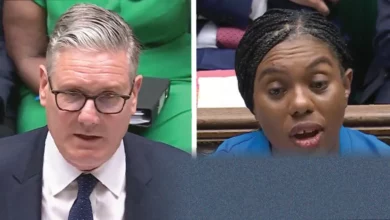
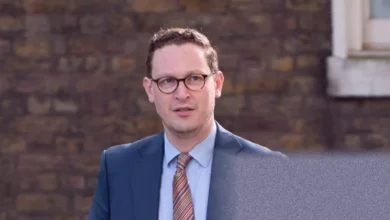
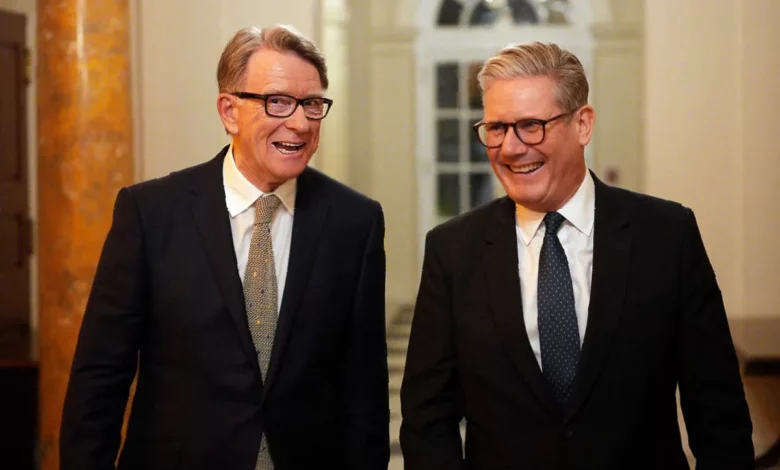
At present, however, there is considerable doubt about whether the committee should even be considering the Prime Minister. The controversy centres on allegations that Sir Keir Starmer misled Parliament over the vetting of Lord Peter Mandelson for the role of ambassador to Washington. The Conservative Party, led by Kemi Badenoch, has called for Starmer to be referred to the Privileges Committee. But Cabinet minister Darren Jones has stated there is “no case to answer”. Labour former cabinet ministers Alan Johnson and David Blunkett went further, branding the move a “nakedly political stunt with no substance” ahead of the upcoming polls. They argued that comparisons with the Johnson case are “absurd”, pointing out that a police investigation had directly disproved Johnson’s statements about lockdown breaches, providing him with a case to answer for knowingly misleading Parliament — a circumstance they say does not apply here.
The Mandelson vetting scandal also involves former Foreign Office head Olly Robbins and Starmer’s former chief of staff Morgan McSweeney, adding layers of political sensitivity. A vote on a potential referral could be held soon, depending on the Speaker’s decision, but the Labour response has been consistent: this is a political attack, not a genuine parliamentary matter.
Political motivations and election timing
The question of why the Privileges Committee is being invoked now, rather than at any other point, lies at the heart of the political calculation. Local elections are scheduled across the UK on Thursday, 7 May 2026 — just days after the current calls for a probe. In England, voters will decide 5,066 council seats across 136 local authorities, including all 32 London boroughs, six county councils and six directly elected mayors. Key deadlines have already passed: nominations closed on 9 April, the voter registration deadline was 20 April, and postal vote applications closed on 21 April. Voter ID will be required at polling stations.
The political context is critical. Current polling suggests Labour could face significant losses in these elections, potentially its worst local election performance. Reform UK is predicted to make substantial gains, possibly tripling its local representation, and the Greens are also expected to increase their number of councillors. The Conservatives are forecast for a significant net loss. In London, polling indicates a potential shift in control for a third of boroughs, with Reform and the Greens making inroads; Hackney and Lewisham are highlighted as key Labour-held boroughs that the Greens are targeting. Recent local election results from May 2025 show Labour holding 34% of council seats in England (down 2% from 2024), the Conservatives at 26% (down 4%), Liberal Democrats at 19% (up 1%), and Reform UK at 5% with 677 councillors.
It is against this backdrop that the Conservatives have chosen to press for a Privileges Committee investigation. The phrase “playing silly political games” has been used to describe the opposition’s tactics — an accusation that gains force when set beside the concrete evidence of election pressures. Labour’s former ministers have called the referral effort a “nakedly political stunt”, and the source who questioned the timing pointed out that the committee’s involvement “apart from potentially people trying to score points” lacks a clear parliamentary justification. The wider history of political scandals — from “cash for questions” and the Profumo affair to the 2009 expenses scandal and more recently “Partygate”, which led to Boris Johnson’s resignation after the Privileges Committee’s draft report — shows how such inquiries can reshape a government’s fate. But the absence of a police investigation or a direct contradiction of a statement by the Prime Minister leaves the current call looking more like electioneering than a serious contempt of Parliament.