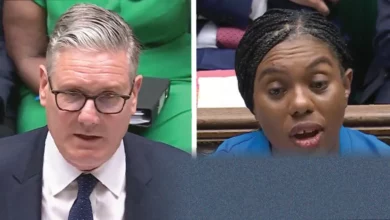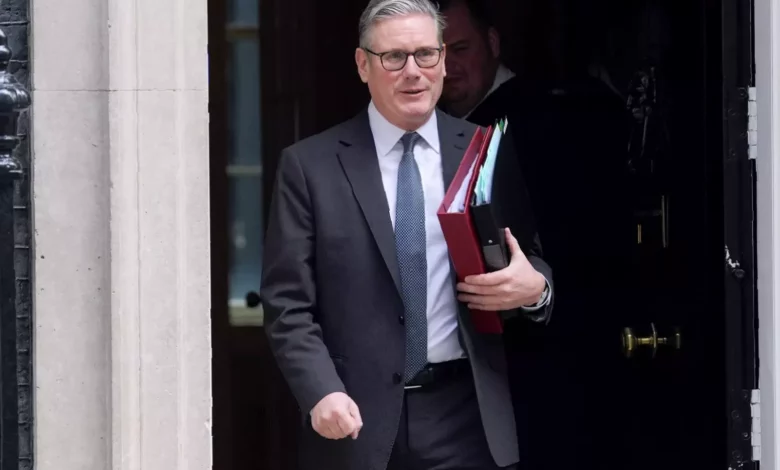
With the clock ticking down to local and devolved elections on 7 May, a sense of political endgame is enveloping Westminster. For Sir Keir Starmer’s Labour government, the vote is being widely described as “D-Day”, a potentially existential test from which his premiership may not recover.
The grim outlook is underscored by a stark electoral projection, based on analysis from the modelling company Bombe, which suggests Labour could lose around 1,700 council seats. Reform UK is forecast to gain approximately 1,500, with the Green Party adding 600. Within the Parliamentary Labour Party, the mood is sombre, with fears of wipeouts in Wales, Scotland, London, and Labour’s traditional northern heartlands.
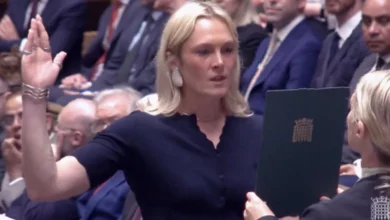
These fears are not abstract. Last month, the Green Party delivered a seismic blow by winning the Gorton and Denton by-election, a seat Labour had held for over a century. The Green candidate, Hannah Spencer, secured 40.7% of the vote, marking the party’s first by-election victory in England and pushing Labour into third. The defeat was compounded by reports that Andy Burnham, the popular Mayor of Greater Manchester, had been blocked by the party’s National Executive Committee from standing as the Labour candidate—a move interpreted by some as a missed opportunity to shore up the vote and a potential spark for future leadership tensions.
A Party in Revolt
The electoral pressure has ignited open rebellion from key quarters. Unite, the trade union and a major Labour donor, has slashed its funding to the party by 40%, a cut of £580,000. Its general secretary, Sharon Graham, explicitly linked the decision to dissatisfaction with Labour’s handling of the Birmingham bin strike and its economic direction. In a blunt warning that echoed the private fears of many MPs, Graham told Sky News: “I think after the May elections there will be a move to change leader because I think Labour are going to pretty much be decimated in those elections.”
This external pressure mirrors intense internal manoeuvring. Sir Keir, with his enemies circling, is understood to be contemplating a final major reset of his government in a bid to reclaim control and shift his party to the left. According to insiders, this could involve the dramatic return of two formerly ousted figures: Deputy Prime Minister Angela Rayner and former Transport Secretary Louise Haigh.
Rayner resigned last year after an investigation by Sir Laurie Magnus, the Prime Minister’s independent adviser on ministerial standards, found she had not met the “highest possible standards of proper conduct” regarding a stamp duty controversy. She had been accused of underpaying £40,000 on a flat in Hove through complex property arrangements. An ongoing HMRC investigation into the matter was expected to be resolved around the time of the May elections.
Louise Haigh was forced to quit in November 2024 after reports resurfaced of a 2014 conviction for fraud by false representation, relating to a work phone she reported stolen in 2013 only to later find it at home. She had declared the spent conviction in 2020.
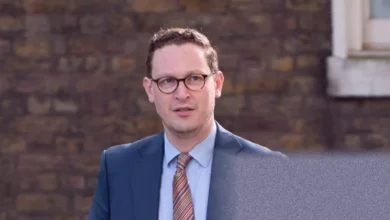
Their potential rehabilitation, insiders suggest, would be balanced by the removal of two key cabinet figures: Chancellor Rachel Reeves and Health Secretary Wes Streeting. “A shift to the left means a change in economic policy, which means a new chancellor,” one source claimed. The current favourites to replace Reeves are said to be Treasury Minister Torsten Bell—the former chief executive of the influential Resolution Foundation think tank—and Chancellor of the Duchy of Lancaster, Darren Jones, who is also Chief Secretary to the Prime Minister.
The Rayner Calculus
Angela Rayner’s return, however, is far from certain. While Sir Keir has expressed a desire to bring her back, allies say she is weighing her options. Her speech this week to the left-wing Mainstream group, which contained unveiled criticisms of government policy on immigration and the economy, was seen as a signal of her independent positioning.
“She did not come into politics to be prime minister, but if there was support for her and a contest, then she could be persuaded to run,” one ally noted. Internal polling conducted by her supporters reportedly concludes she is one of only two potential candidates who could replace Sir Keir, the other being Andy Burnham, who is ineligible as he is not an MP.
Allies acknowledge a key problem: her reputation has been “tarnished” by association with both Sir Keir’s contentious policies and, before that, Jeremy Corbyn. “Angela has never had the chance to really present herself and what she believes. She needs to do that before she makes any leadership run,” another ally said. This explains a series of targeted interventions on issues like supporting pubs and restaurants, and forcing the publication of papers relating to the Peter Mandelson scandal.
Scandal and a Hollowed-Out Operation
The Mandelson affair continues to haunt the Prime Minister. Newly released documents reveal that Sir Keir was warned of a “general reputational risk” in appointing Lord Mandelson as US ambassador in 2024 due to his long-standing friendship with the convicted sex offender Jeffrey Epstein. The warnings, which included a note from national security adviser Jonathan Powell, highlighted that Mandelson had reportedly stayed at Epstein’s house while Epstein was in jail in 2009. Despite this, Starmer proceeded with the appointment.
Mandelson was eventually sacked in September 2025 as further revelations emerged, and he now faces a police investigation for potential misconduct in public office. The fallout claimed the resignation of Sir Keir’s chief of staff, Morgan McSweeney, who took responsibility for the advice. Insiders claim Starmer had long since “outsourced” dealing with Mandelson to McSweeney, finding the peer “irritating.”
The absence of both Mandelson and McSweeney has left a critical vacuum at the heart of Downing Street. “There’s nobody in his operation to do the political work on who should be in and who should be out,” a source said. This deficiency makes planning a complex reshuffle—a last-ditch attempt to change the government’s trajectory—exceptionally difficult. As one advisor starkly put it: “It is hard to recruit anybody when they think the prime minister could be gone in May.”
Rivals and Resets
Within this fraught environment, other leadership dynamics play out. Lucy Powell, who was sacked from the cabinet in September for being too left-wing on welfare reforms, won the contest to replace Rayner as deputy leader of the Labour Party in October 2025 and is said to be pushing for a return to a real cabinet job.
Health Secretary Wes Streeting, once seen as a leadership contender, is now described by some as having “missed his chance.” It has emerged that when Downing Street briefed in December that Streeting was planning a coup, Starmer was actually on the verge of sacking him for disloyalty. “Even if he stood against Keir now… Sir Keir feels that he could beat him in a contest and would not stand down,” a Labour source claimed. Allies of Rayner say their internal polling shows Streeting’s popularity is “tanking.”
Chancellor Rachel Reeves, architect of a “modern supply-side economics” agenda she terms “securonomics,” has also seen her political standing falter. Her approval ratings have reportedly plummeted to a net favourability of -59, following significant tax rises and a focus on fiscal responsibility. Her potential removal would be the clearest signal of a leftward policy shift.
As Sir Keir Starmer braces for what one insider termed “an existential beating” on 7 May, he faces a perfect storm: catastrophic electoral projections, a financial crisis within the party with net assets at their lowest since 2014, a hollowed-out Number 10 operation, and open talk of a leadership challenge. The planned reset is a high-stakes gamble, but the question permeating Westminster is whether any reshuffle can save a premiership that many believe has already run out of time.