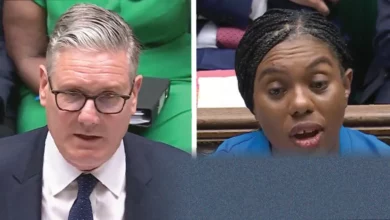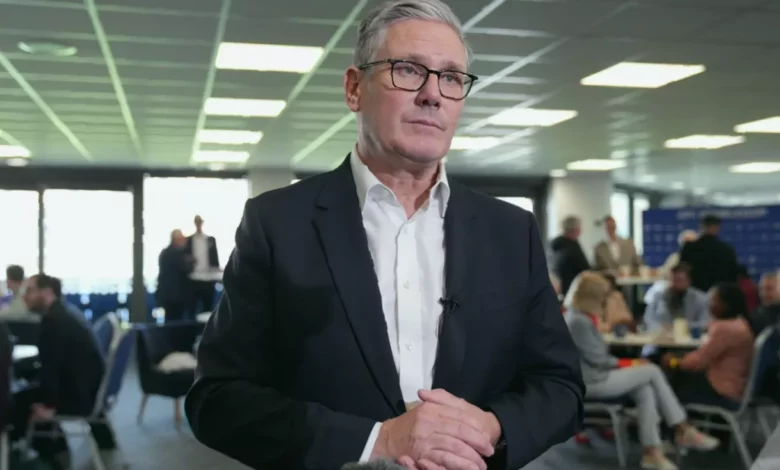
Keir Starmer has directly blamed Brexit for Labour’s catastrophic local election losses, declaring that forging closer ties with Europe will be at the centre of his response as he insists he will lead the party into the next general election. In his first major interview since the results, the Prime Minister told the Sunday Mirror he would be “full-throated” about the need for a closer relationship with Brussels.
‘Brexit has held back our young people’
Starmer argued that leaving the European Union had damaged opportunities for a generation. “I feel that Brexit has held back our young people,” he said. “They should be free to work, study, travel in European countries, just as I was able to when I was growing up. That has been smashed away from young people because of Brexit. I’m not going to let Brexit stand in the way of their opportunities, and therefore we’ll push forward on that.” The comments come as Labour lost control of several councils to Reform UK in areas that voted Leave in the 2016 referendum, including St Helens and Sunderland — both long regarded as party strongholds.
Devastating losses from Sunderland to Cardiff Bay
The scale of the defeat was severe. Labour lost more than 1,200 council seats in England and surrendered control of 37 councils. Reform UK, led by Nigel Farage, gained over 1,350 seats and took control of 14 councils, eight of which were previously run by Labour — many in the party’s northern English heartlands. In Wales, Labour lost control of the Senedd for the first time, reduced to just nine seats out of 96. First Minister Eluned Morgan lost her own seat in a further humiliation. The SNP claimed victory in Scotland, where Scottish Labour tied with Reform UK for second place. The losses extended to London, where the Green Party toppled a huge Labour majority in Lewisham, ousted the Labour mayor of Hackney, and took control of Waltham Forest. Reform UK also won its first London borough, Havering. Nigel Farage hailed the results as “a truly historic shift in British politics”. Political analysts say the outcome signals a potential shift towards a multi-party system, with some national polls placing Reform UK ahead of Labour in vote intention. Reform’s support is understood to combine older Leave voters, anti-immigration voters, culturally conservative working-class Labour defectors, and disillusioned former Conservatives.
Leadership challenge looms
Starmer now faces a serious fight to keep his job. Former Foreign Office minister Catherine West has said she will launch a leadership bid on Monday unless the Prime Minister is ushered out by the Cabinet. Speaking to The Independent, West described the election results as “cataclysmic” and said: “I am terrified we will end up with prime minister Farage.” She has the backing of at least 10 other MPs and is confident she can gather the 81 needed to trigger a contest. Around 30 Labour backbenchers have publicly suggested Starmer should either quit or set a timetable for his departure, with more recent estimates putting the number at 37. Starmer has vowed to fight on. “I’m not going to walk away from the job I was elected to do in July 2024,” he said. “Of course the results are tough, they’re really tough and I’m not sugar coating that.” Asked if he would lead Labour at the next general election, he replied: “Yes I will, and I’ve always said it’s a decade of national renewal.” Some senior figures have backed him. Technology Secretary Liz Kendall has said Starmer will not resign or set a timetable, while Deputy Prime Minister David Lammy acknowledged the need for change but cautioned against changing leaders mid-flight.
Economic plan for ‘forgotten’ voters
In what appears to be an attempt to address the concerns of voters who feel left behind, Starmer has promised “an economy that really works for everyone, wherever they live”. Downing Street and the Treasury are drawing up support packages for families, targeting fuel costs and household bills. The move comes as the ongoing conflict in the Middle East involving Iran has pushed up global oil and gas prices, with significant consequences for household budgets. Petrol prices rose by approximately 14 pence per litre between late February and late March 2026, while diesel rose by 29 pence. Brent crude temporarily exceeded $100 a barrel, and disruption to supplies through the Strait of Hormuz has created further inflationary pressures. Household gas bills are expected to rise, and the energy price spike is likely to feed into higher inflation and potential interest rate rises. Starmer has framed his response as part of a 10-year project of “national renewal”, arguing that the legacy inherited from the previous government was “an appalling legacy on all fronts, not just the economy, which was broken”. To bolster his leadership and broaden his appeal, Starmer appointed former prime minister Gordon Brown as special envoy on global finance on Saturday. Brown will advise on international financial cooperation to enhance economic security and resilience, particularly concerning defence-related investments and UK-Europe relations. Baroness Harriet Harman was also appointed as adviser on women and girls, tasked with galvanising government to tackle violence, improve economic opportunities, and enhance representation. Harman previously led efforts that resulted in the Domestic Violence Crime and Victims Act. Despite the dramatic losses, Starmer has brushed off the threat posed by the Greens and Reform UK at the next general election. “I have a strong belief that there aren’t many people who actually want Zack Polanski or Nigel Farage as prime minister,” he told The Observer. “I think that the mainstream majority actually want to know that we, the Government, have progressive answers to the challenges that they face on a daily basis, and we need to spell out in terms and with conviction that we do have those progressive answers.”