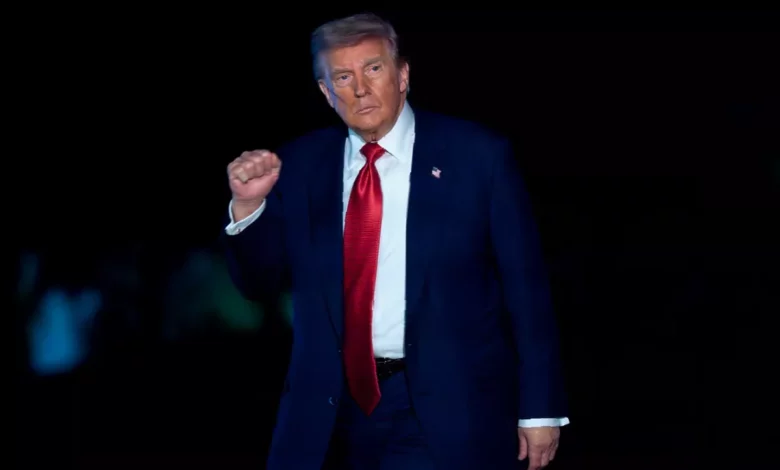
Donald Trump has congratulated John Swinney on his party’s victory in the Scottish parliamentary election, a result that leaves Labour reeling and piles further pressure on Sir Keir Starmer.
Writing on his Truth Social platform hours after the results were confirmed, the US president hailed the SNP leader as a “good man” who “worked very hard” and “deserves this Big Electoral Victory”. Mr Trump specifically credited Mr Swinney, alongside King Charles and Queen Camilla, with securing the removal of US tariffs on Scotch whisky – a claim the First Minister has previously made, and which was backed up by the president’s post. Mr Swinney was forced to release a thank-you text from Mr Trump after initial mockery on social media.
SNP victory without a majority
The Scottish National Party secured 58 seats in the 129-member Scottish Parliament, winning a fifth consecutive term in government but falling seven short of the 65 needed for an overall majority. John Swinney, who took over as SNP leader in May 2024, said he would be a First Minister for all of Scotland. The Scottish Greens took a record 15 seats, potentially forming a pro-independence bloc with the SNP, while the Conservatives suffered their worst-ever result with 12 seats and the Liberal Democrats won 10.
Labour, by contrast, endured a disastrous night, tying with Reform UK on just 17 seats each – a result that marks a significant breakthrough for Nigel Farage’s party north of the border. Scottish Labour leader Anas Sarwar admitted his party was “hurting” and said they had “lost the argument”. He indicated he would remain as leader to “hold it together”, but acknowledged that a “national wave” had proved impossible to overcome. Labour haemorrhaged support in former strongholds while Reform made stunning gains. In Wales, Plaid Cymru became the largest party in the Senedd, with outgoing first minister Eluned Morgan losing her seat.
The significance of Trump’s endorsement
Mr Trump’s intervention carries considerable weight in the context of the trade dispute that has scarred the Scotch whisky industry. In April 2025 the US imposed a 10% tariff on Scotch whisky imports, a move that cost the sector an estimated £4 million per week in lost export revenue. By May 2026, total lost exports to the US were estimated at £150 million, with export volumes falling by 15% between May and December 2025. The US is the largest and most valuable export market for Scotch whisky.
Those tariffs were removed on 30 April 2026, following a state visit by King Charles and Queen Camilla, and were framed as a restoration of “zero-for-zero” trade. Mr Swinney has been credited with playing an influential role, reportedly communicating directly with Mr Trump and highlighting how the tariffs also affected jobs and profits in Kentucky by reducing bourbon barrel sales to Scotland. Mr Trump himself said the King and Queen “got me to do something that nobody else was able to do, without hardly even asking”. The Scotch whisky industry welcomed the removal as “very good news” and a “significant boost”, though some sources cautioned that an immediate rebound in demand was unlikely.
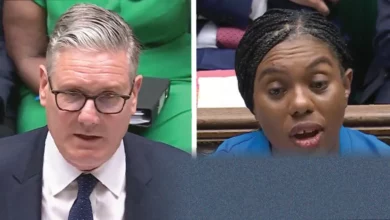
The president’s post also amounts to a thinly veiled swipe at Sir Keir Starmer, whose relations with Mr Trump have worsened in recent months. The pair are at odds over the president’s approach to the Middle East, with Mr Trump having previously called Sir Keir “no Winston Churchill”. Mr Trump has a history of intervening in British politics, having criticised Prime Ministers Theresa May and Boris Johnson as well as London mayor Sadiq Khan, and expressed opinions on Brexit and the NHS.
Fallout for Starmer
The elections in Scotland, Wales and English local councils have triggered open calls for Sir Keir Starmer to resign. Richard Burgon, leader of the Socialist Campaign Group of left-wing Labour MPs, demanded the prime minister set out a timetable for his departure. “It is clear that Keir has fought his last election as Labour leader and, deep down, he will know it,” Mr Burgon said. Other backbench MPs have also urged an immediate change in direction.
Sir Keir has insisted he “will not walk away” and has vowed to fight on, despite being blamed for losing hundreds of councillors in England and the humiliation in Wales. Some ministers have privately insisted there will be no attempt to push him out. The results come less than two years after Mr Starmer’s landslide general election victory in July 2024, when Labour won 412 seats and ended 14 years of Conservative rule – albeit with a vote share of 33.7%, the lowest for any governing party on record. The 2024 election also highlighted a fragmented political system, with smaller parties like Reform UK, the Greens and Plaid Cymru increasing their vote shares and seats, while the SNP suffered a significant decline in its Westminster representation.
Speaking as the results came in on Friday, Sir Keir declared: “I’m not going to walk away and plunge the country into chaos.”