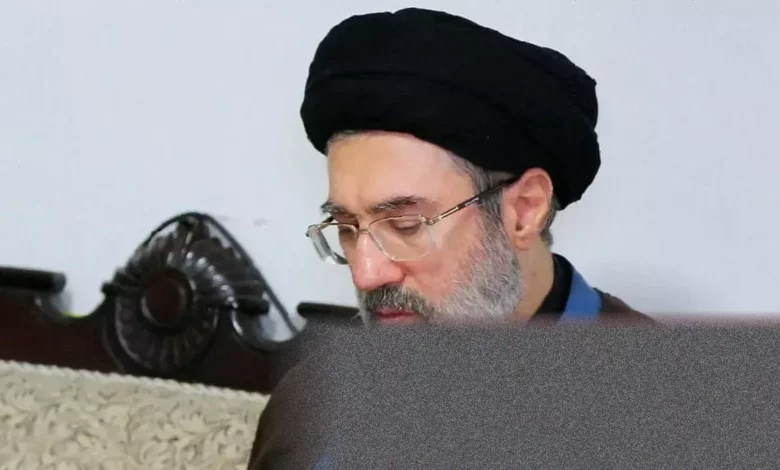
The hardline grip on power in Tehran has been formally secured with the appointment of Mojtaba Khamenei as Iran’s new Supreme Leader, succeeding his father, Ali. This consolidation of control within the ruling family comes as a wider conflict, now in its tenth day, continues to escalate across the Middle East with severe human and economic cost.
Regional Conflict Intensifies
Fresh waves of missile and drone strikes were reported between Israel and Iran on Monday. The Israeli military stated it had begun attacks in central Iran and struck Hezbollah infrastructure in Beirut. In response, Iran and its network of proxy forces appeared to launch assaults across the region.
These included reported strikes, said to have been intercepted, targeting a US diplomatic facility near Baghdad’s international airport, and the interception of a drone east of Saudi Arabia’s northern Jawf region. In Bahrain, thick smoke was seen rising from the direction of the Bapco oil refinery on Sitra island, following an Iranian drone attack overnight that injured 32 people.
The human toll is mounting. The US military reported a seventh American service member has died from wounds sustained during Iran’s initial counterattack, with nine others seriously injured. The Israeli military said two of its soldiers were killed in southern Lebanon on Sunday. According to Iran’s UN ambassador, US-Israeli attacks have killed at least 1,332 Iranian civilians and wounded thousands.
https://x.com/BarakRavid/status/2030823150095659454
In Lebanon, Hezbollah said it was fighting Israeli forces who landed by helicopter in the east of the country near the Syrian border. The Iran-backed group claimed it detected approximately 15 Israeli helicopters and engaged the force, with two Hezbollah officials stating an Israeli helicopter was downed. Lebanon’s state news agency reported “fierce clashes” in the area. This marks the second such operation reported in the region recently.
Economic Shockwaves and Global Response
The war has triggered a severe energy and economic crisis, sending global oil prices soaring past $100 a barrel for the first time since 2022. At one point, Brent crude reached $117.08 per barrel and West Texas Intermediate hit $119.96. The conflict is wiping an estimated 20 million barrels of oil from the market daily, compounded by the effective week-long closure of the Strait of Hormuz, a chokepoint for about one-fifth of global oil and seaborne gas tankers.
The fallout is cascading through national economies, particularly in Asia which relied on the Middle East for 59% of its crude oil imports last year. Bahrain’s state-owned Bapco Energies declared force majeure on its group operations after the attack on its refinery, freeing it from contractual obligations. This follows a similar move by QatarEnergy, the world’s largest LNG exporter, which suspended production and declared force majeure after “military attacks” on its facilities.
https://x.com/KSAMOFA/status/2030824314950254673
Governments are scrambling to respond. Vietnam is considering slashing fuel import tariffs to zero after domestic gasoline prices rose 21%, citing the need to ensure national energy security. South Korea’s president announced a move to cap domestic fuel prices for the first time in nearly three decades, calling the crisis a “significant burden” on its import-dependent economy.
Elsewhere in Asia, emergency conservation measures are being rolled out. Bangladesh is closing all universities from Monday, bringing forward Eid holidays to save electricity. Myanmar’s military rulers will ban half of all private vehicles from roads each day using an odd-even license plate system. In the Philippines, government offices are adopting flexible work, setting air conditioning no lower than 24C, and considering a four-day week. Thailand’s defence ministry has also advised agencies to cut air conditioning use and utilise video conferencing.
Geopolitical Maneuvering
The crisis is reshaping regional alliances and prompting new deployments. Saudi Arabia issued a strong condemnation of what it called Iran’s “reprehensible” and unjustifiable aggression against the kingdom and other Gulf Cooperation Council states.
Further afield, Turkey plans to deploy six F-16 fighter jets to northern Cyprus on Monday to bolster the defences of the Turkish Cypriot community, a move reportedly under consideration as conflict spreads. Meanwhile, envoys for former US President Donald Trump, Steve Witkoff and Jared Kushner, are planning to travel to Israel on Tuesday to meet Prime Minister Benjamin Netanyahu, according to a report citing US and knowledgeable sources.
https://x.com/MOI_QatarEn/status/2030821600379936849
Qatar, host to major US military assets and a key mediator in the region, announced it had arrested 313 people of different nationalities for allegedly inciting public concern by filming unauthorised video clips and spreading rumours related to the war.
The conflict’s disruption has also triggered a large-scale repatriation effort. More than 2,200 Australians have returned home via commercial flights from the Middle East since the conflict began, with multiple flights arriving daily from the UAE and Qatar.
Away from the battlefield and boardrooms, a human drama is unfolding for Iran’s women’s football team, stranded in Australia after the Women’s Asian Cup. Dubbed “wartime traitors” by a state-linked commentator at home for initially not singing the national anthem, the players now face a torrid choice between a potentially unsafe return to Iran or exile, which could endanger family and friends left behind.