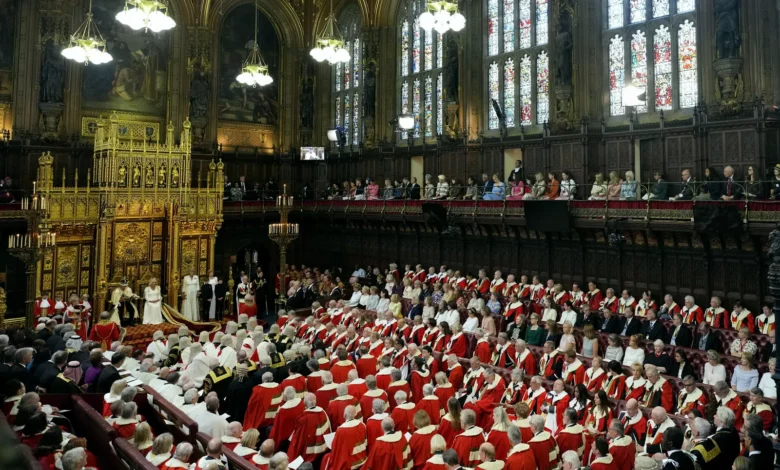
Hereditary peers are out of the House of Lords after centuries, as Parliament was formally prorogued on Wednesday in a ceremony that brought a historic chapter of British political life to a close. The formal announcement, delivered on behalf of King Charles III at a traditional ceremony in the upper chamber, ended the right of those who inherit their titles through their families to sit and vote in the Lords.
Centuries of Tradition End
The removal of the remaining 92 hereditary peers represents the most significant reform to the House of Lords in a generation, surpassing even the changes of the 1999 Act. Under the House of Lords Act 1999, the automatic right of approximately 700 hereditary peers to sit in the Lords was removed, but 92 were allowed to remain as a temporary compromise. Those 92 held their seats through a system of by-elections in which only other hereditary peers could vote. As of March this year, 81 hereditary peers remained, making up about 11% of the House’s membership. They were largely Conservatives – around half – and Crossbenchers, who made up more than a third.
The House of Lords (Hereditary Peers) Act 2026, which received Royal Assent on 18 March, has now reduced that number to zero. The Act was introduced by the government in September 2024 as part of a manifesto commitment to reform the upper chamber. Baroness Smith of Basildon, the Leader of the House of Lords, set out the principle behind the legislation: “No one should sit in our Parliament by way of an inherited title.” Several of the hereditary peers who lost their seats have since been permitted to continue sitting as life peers.
Critics of the hereditary peerage have long argued the system is “outdated and indefensible” and that reform is “long overdue and essential.” Some Conservatives, however, have described the move as a “vendetta” and “political vandalism.” The change leaves the United Kingdom as one of only two countries in the world with hereditary legislators, the other being Lesotho.
The historical significance is considerable. Efforts to reform the House of Lords date back more than a century. The Parliament Act 1911 curbed the Lords’ veto over money bills, the Parliament Act 1949 reduced its delaying power further, and the House of Lords Act 1999 stripped most hereditary peers of their automatic seats. The Constitutional Reform Act 2005 created the UK Supreme Court, ending the role of Law Lords as legislators. Later, the House of Lords Reform Act 2014 allowed for resignation and expulsion. Proposals for a hybrid or fully elected chamber have been debated but never enacted.
Ceremony and New Laws
The prorogation ceremony itself was steeped in tradition. MPs, led by Speaker of the House of Commons Sir Lindsay Hoyle, filed out of the Commons after being summoned by Black Rod Ed Davis, the senior officer responsible for ceremonial protocol. Black Rod is a senior officer of the House of Lords – Davis was appointed to the role in April 2025, having previously served as Governor and Commander-in-Chief of Gibraltar. The royal address was read out by Baroness Smith of Basildon, who outlined legislation passed during the session. The formal announcement was delivered on behalf of the King.
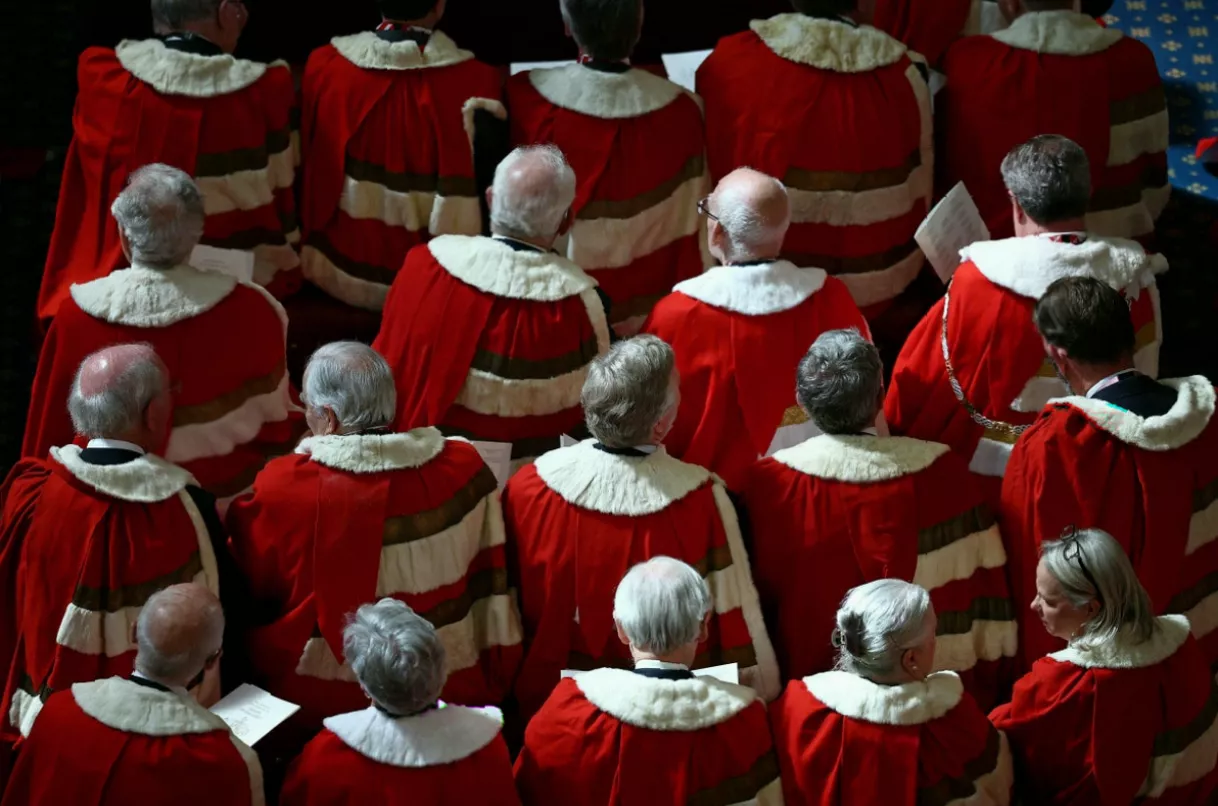
Before the prorogation, the Lord Speaker, Lord Forsyth of Drumlean, paid tribute to the departing hereditary peers. Lord Forsyth, who was elected as the fifth Lord Speaker in January 2026 and took office on 2 February, said: “At the conclusion of this session, those noble lords who sit by virtue of hereditary peerages will cease to be members of this House. On behalf of the House, I pay tribute to their distinguished service and offer them our sincere thanks.”
A Royal Commission comprising five peers signalled that nine new laws had received royal assent as the session came to an end. As each act was read out, the clerk said in Norman French Le Roy le veult—“The King wills it”—a practice dating back to the Norman Conquest.
The nine laws are:
- National Insurance Contributions (Employer Pensions Contributions) Act
- Grenfell Tower Memorial (Expenditure) Act
- Ministerial Salaries (Amendment) Act
- Tobacco and Vapes Act – This Act aims to promote public health by reducing tobacco use and tackling youth vaping. It raises the age of sale for tobacco products by one year annually from 2027, meaning no one born on or after 1 January 2009 can ever be legally sold tobacco. It also grants powers to expand smokefree places, introduce vape-free places, require licensing for tobacco and vape sales, and regulate vape flavours, packaging and displays. The Act does not criminalise smoking itself.
- Victims and Courts Act
- Crime and Policing Act – This Act supports the government’s Safer Streets Mission, aiming to halve knife crime and violence against women and girls within a decade. It equips police with powers to combat anti-social behaviour, crime and terrorism, and includes measures on youth diversion orders and terrorism legislation. It received Royal Assent on 29 April.
- Children’s Wellbeing and Schools Act
- Pension Schemes Act – This Act introduces significant reforms to the UK pensions system. It enables automatic consolidation of small pension pots, establishes a Value for Money framework to assess scheme performance, and aims to create larger, better-performing funds. It is expected to benefit over 20 million workers, potentially increasing retirement savings by up to £29,000. The Act received Royal Assent on 29 April.
- English Devolution and Community Empowerment Act – This Act sets up a new framework for devolving powers to local government and combined authorities in England. It gives mayors new planning powers, establishes “Strategic Authorities” for quicker devolution from Whitehall, and introduces a Community Right to Buy and Gambling Impact Assessments. It received Royal Assent on 29 April.
MPs and peers will return on 13 May for the King’s Speech, which will set out the government’s future legislative agenda.