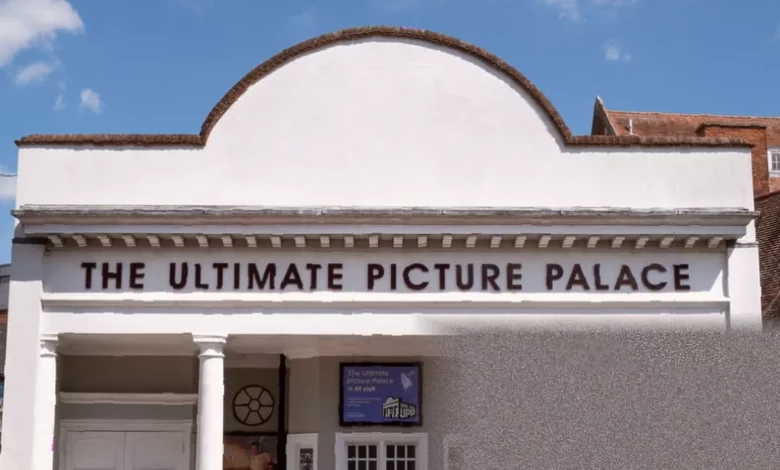
The Ultimate Picture Palace, one of the oldest independent cinemas in the United Kingdom, is facing the prospect of closure after its landlord, Oriel College at the University of Oxford, refused to extend its lease – a move the cinema’s director says is blocking desperately needed renovations and pushing the beloved venue “on a financial knife-edge”.
The cinema, which opened in 1911 as the East Oxford Picture Palace, occupies a Grade II-listed building on the city’s Cowley Road. Known to generations of students and residents as the UPP, its 106 seats are sold through an old-fashioned box office window to patrons queuing on the street, and its screen is revealed by a manually opened curtain. Among its celebrated former patrons is the Oscar-winning director Sam Mendes.
After decades of instability, the UPP was saved from potential closure in 2022 when it became a community-owned business. More than 1,200 supporters raised funds to buy shares, securing the cinema’s immediate future. But that future is now threatened again by what the cinema’s management describes as a refusal from Oriel College to amend the current lease, which runs until 2037.
Renovations blocked, costs rising
Micaela Tuckwell, the UPP’s executive director, said the lack of a longer lease prevents the cinema from applying for grant funding that would allow essential improvements. The planned works include upgrades to energy efficiency and accessibility – changes that have become increasingly urgent as operating costs have risen by 25% over the last four years.
“Without a lease extension, we cannot access the grants we need – and we are in a really big emergency,” Tuckwell said. The cinema, despite growing its audience, remains financially precarious. The improvements are considered vital to its survival, yet they require a commitment from Oriel College that has not been forthcoming.
The UPP has shown remarkable resilience in recent years. While many independent cinemas have struggled with a national fall in audiences after the pandemic, the UPP reported a 20% increase in ticket sales, with a quarter of those sales to under-25s. Its programming remains distinctively alternative and artistic: foreign language films account for more than a fifth of sales, and classic or repertory features make up a similar share.
Kit Finnie, the cinema’s lead projectionist, said the UPP also plays a vital role in combating social isolation. There is a two-year waiting list to volunteer, and the cinema collaborates with local charities including Asylum Welcome, which supports refugees and asylum seekers. “This is a really safe and consistent interaction: coming here, feeling OK that you’re by yourself, and sitting with a tea or coffee to interact with a piece of art,” Finnie said. “This is the only affordable way to have that interaction.”
College’s stance and local opposition
A spokesperson for Oriel College said: “This lease was agreed recently in 2022 with a new registered society. We have no plans to amend the lease at this early stage in the tenancy … We continue to be in dialogue with the new managers about how to ensure the cinema remains open to the wider public.”
The UPP campaign has suggested that the site forms part of Oriel’s “Fifth Quad” development plan, intended for graduate student accommodation. The college already owns a number of properties in east Oxford, including those surrounding the cinema, and its expansion is seen by many residents as part of a wider trend of “studentification” that is reshaping the city. One local, Imo, said: “Every closure from the university’s encroachment has a scarring effect – if this trend continues there will be no space for locals to do things on their own terms.”
The college’s provost, Lord Neil Mendoza, also chairs Historic England, the public body responsible for championing the country’s historic buildings and environments. A spokesperson for Historic England said: “We know cultural institutions, including cinemas, are important to local communities and can help to sustain our high streets and town centres. Businesses offering cultural experiences, through art, theatre, cinema, music, are often attracted to historic sites because these places really resonate with local people. We aim for historic buildings to be kept in use so they can continue to be anchors for communities and loved for longer.”
Campaign and political pressure
A campaign and petition to save the UPP has gathered more than 22,000 signatures. The Oxford East MP, Anneliese Dodds, raised the cinema’s future in Parliament last month. She said she had discussed the matter with Lord Mendoza, who told her he wants to work with the UPP. “I really hope that can happen,” Dodds said.
In March, Lord Mendoza and the university’s vice-chancellor, Professor Irene Tracey, attended a special “Save the UPP” screening of Hamnet hosted at the cinema by Dame Pippa Harris, the film’s Oscar-nominated producer. Harris, who recalled visiting a disco in Oxford at the age of 13 with Sam Mendes, is one of many notable figures supporting the campaign.
Malcolm Atkins, a 69-year-old local artist and regular patron since the 1970s, described the cinema’s unique atmosphere. “All the films I still love best I saw there – A Touch of Zen, Celine and Julie Go Boating … the cinema was so good for long, meditative films, and I haven’t experienced cinematic wonder comparable since,” he said.
The UPP’s collaborations extend beyond local charities to include Oxford Brookes University’s film department and the Ruskin School of Art. Tom Jowett, head of programming and partnerships, works to maintain the cinema’s distinctive cultural offer. Finnie, the lead projectionist, noted that the venue still uses 35mm film projection – a rarity that adds to its character and appeal.
The campaign has also reached out to Lord William Hague, the university’s chancellor, and Lisa Nandy, the Secretary of State for Culture, Media and Sport, as supporters urge Oriel College to grant a long-term lease and allow the cinema the security it needs to invest in its future.