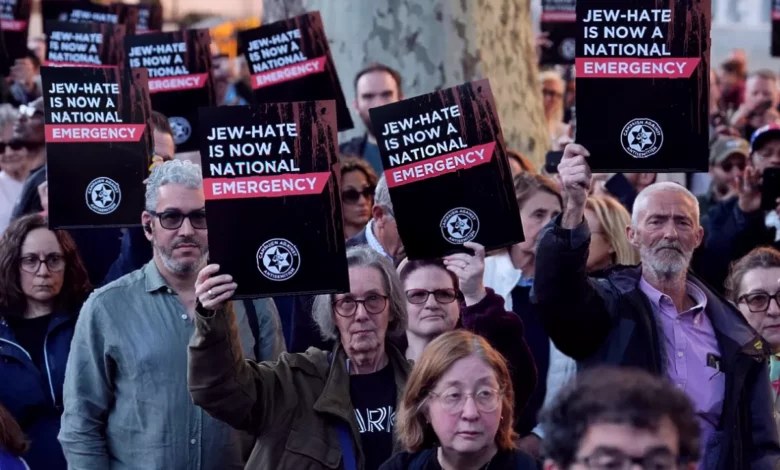
A broad coalition of organisations, spanning faith groups, sporting bodies, charities and the media, has signed an open letter to the Jewish community declaring that “this country belongs to you as much as any of us”. The letter, coordinated by the Together Coalition and published on 9 May 2026, comes in direct response to a wave of antisemitic attacks that has left the community reeling and pushed the UK’s national terrorism threat level to “severe” for the first time in more than four years.
Who has signed?
Signatories include the Football Association, the Premier League, and faith leaders from the Church of England as well as the Muslim, Hindu, Sikh and Zoroastrian communities. The National Lottery Community Fund and the Women’s Institute are also among the signatories, alongside numerous organisations from the media, sport and charity sectors. The breadth of the coalition is deliberate: it signals a unified societal stance rather than a section of society speaking on behalf of another. The Premier League adopted the International Holocaust Remembrance Alliance (IHRA) definition of antisemitism in December 2020, a move that aimed to standardise the identification of antisemitic behaviour within football. The Football Association has previously faced criticism for its response to such incidents — for instance, it was criticised for skipping a moment of silence for victims of a Manchester synagogue attack.
What the letter says
The open letter emphasises that antisemitism is “a problem for all of us to fix”, explicitly rejecting the notion that it is the Jewish community’s responsibility alone to tackle. “This is not a problem for Jewish people to have to respond to,” the letter states. “This is a problem for all of us to fix.” Brendan Cox, co-founder of the Together Coalition, described antisemitism as “a cancer in our society that undermines the kind of inclusive country that we all want to build”. The letter is framed as a message of solidarity and shared responsibility, arguing that standing together in the face of hatred is not merely a moral imperative but the most effective way to defeat extremism. A separate letter from the group Survivors Against Terror — made up of individuals who have experienced or lost loved ones in terrorist attacks — echoed that sentiment, stating: “Standing together in the face of hatred is not just the right thing to do – it’s the most effective way of defeating terrorism.”
The attacks that prompted it
The open letter was published in the immediate aftermath of a series of antisemitic incidents that have escalated fear within the Jewish community. The most recent catalyst was the stabbing of two Jewish men in Golders Green, north London, on 26 April 2026. Police are treating the stabbing as a terrorist incident. That attack followed a wider pattern of violence: arson attempts on Jewish sites, including synagogues and emergency vehicles; an attempted firebombing of a London synagogue; and the deaths of two Jewish men at a synagogue in Manchester during Yom Kippur in October 2025. Graffiti bearing antisemitic slogans was also daubed at a golf club in a Jewish area of London. The cumulative effect has been profound. The UK’s national terrorism threat level was raised from “substantial” to “severe” for the first time in over four years, indicating that a terrorist attack is considered “highly likely”. The decision was driven by an increase in both Islamist and extreme right-wing threats.
Prime Minister Keir Starmer has acknowledged the fear within the Jewish community, saying people are “scared to show who they are in their community, scared to go to synagogue… scared to go to university as a Jew, to send their children to school as a Jew”. The Community Security Trust (CST) recorded 3,700 antisemitic incidents in 2025, a 4% increase from the previous year. A YouGov survey indicated that 63% of Britons view prejudice against Jews as a major or significant problem.
Government and institutional responses
The government has announced an additional £25 million in funding to enhance security for Jewish communities. The CST has already received substantial state support, including a £72 million security package that runs through to 2028. New legislation is being planned to allow for tougher action against proxies of foreign powers, such as Iran, who are suspected of backing antisemitic attacks; offenders could face up to 14 years in prison. The Metropolitan Police have established a community protection team of 100 extra officers and have stated that 300 more are needed to tackle the rise in antisemitism. The Premier League’s adoption of the IHRA definition of antisemitism in 2020 remains a significant institutional benchmark in sporting bodies’ efforts to combat hate.
The letter’s message of shared responsibility is reinforced by the interfaith solidarity it demonstrates. Muslim leaders have issued statements urging their communities to do more to combat Jew-hatred, and the Council of Christians and Jews has a long history of confronting antisemitism and promoting mutual respect. The letter itself is a direct attempt to shift the burden of response from the Jewish community to the whole of society — a call that, its signatories argue, has become urgent as the threat level rises and the attacks continue.