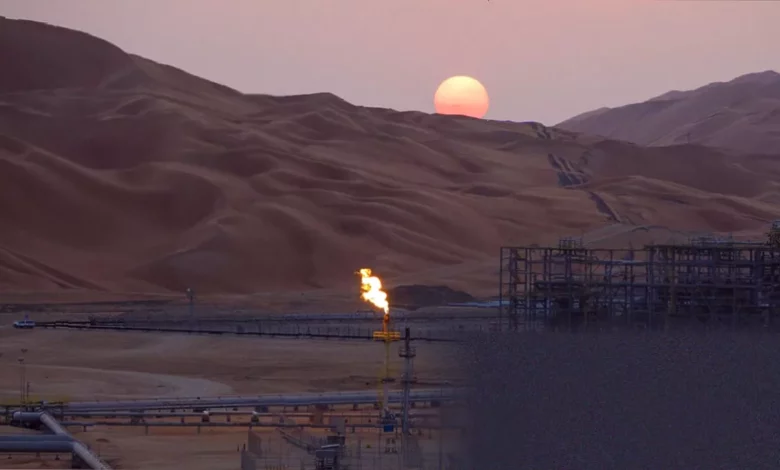
Oil companies have been banking more than $30 million every hour in unearned profits since the US-Israeli attacks on Iran began, according to exclusive analysis commissioned by the Guardian – and the first quarterly results suggest the true figure may be far higher. That windfall, driven entirely by the spike in global oil prices, is being paid by ordinary people every time they fill up a car or pay an energy bill.
A friend of mine was recently left in tears after filling up the car she relies on to drive to work. Thanks to the surge in prices at the pumps, she wasn’t sure how her family was going to make it to the next paycheck. That personal distress is being multiplied across the UK. From July, household energy bills are forecast to rise by £209 a year, taking the average annual cost to £1,850, according to the latest price cap projections. The current cap sits at £1,641 until the end of June. The increase is a direct consequence of wholesale gas prices that doubled earlier this year after the conflict erupted.
War Profits Explained
The scale of the bonanza is staggering. The world’s top 100 oil and gas companies collectively earned over $30 million an hour in pure, unearned profit during the first month of the Iran war – an estimate based on the best available industry data. Now the first quarterly numbers are in, and they suggest that figure was a major underestimate. Shell’s adjusted earnings for the first three months of 2026 more than doubled to $6.9 billion, boosted by stronger trading, higher prices and improved refining margins. BP’s net profit surged 453 per cent to $3.8 billion, while its underlying replacement cost profit more than doubled to $3.2 billion, driven by what the company described as “exceptional oil trading” and stronger refining margins. TotalEnergies reported adjusted net income of $5.4 billion, up 29 per cent year-on-year, supported by higher production and robust prices. Even in the Gulf itself, where the flow of oil through the Strait of Hormuz has been reduced to a trickle, some companies have flourished. Aramco, the state-owned oil giant of Saudi Arabia, saw its profits jump 25 per cent to $32.5 billion, thanks to higher crude prices, increased sales volumes, and its ability to shift exports via its East-West Pipeline, bypassing the blocked strait.
Together, those four companies alone made $23 million an hour for the whole of January, February and March – even though the Iran conflict only started on 28 February. To put that in perspective, imagine receiving $6,200 every second, hour after hour, week after week. That is the rate at which just those four firms are accumulating profits.
These profits are considered unearned because the companies have done no extra work to generate them. They have simply ridden a soaring oil price created by war and supply disruption. The Strait of Hormuz normally carries about 20 per cent of the world’s oil and liquefied natural gas. Since the US-Israeli attacks on Iran and the subsequent retaliatory actions, traffic has been heavily restricted. Brent crude hit a high of $119.50 a barrel in March and has since settled around $100 a barrel. Analysts at Barclays maintain a $100 forecast for the year, with risks skewed to the upside. Traders are demanding a risk premium of about $14 a barrel, according to Goldman Sachs, to compensate for the danger of further supply disruptions – a premium that is expected to persist for years. US inventories are approaching their lowest levels since 2020, and even if the strait fully reopened, stocks would remain substantially below recent tight levels. J.P. Morgan has projected that regional production shut-ins could reach 12 million barrels a day if the strait remains closed.
The head of the International Energy Agency, Fatih Birol, described the conflict as the biggest shock ever to hit the global energy market. If the oil price stays at current levels, the top 100 companies are on course to make an additional $234 billion by the end of the year. Yet these windfalls are not new. Big oil has averaged $1 trillion a year in pure profit for roughly 50 years, and the sector benefits from explicit subsidies that totalled $1.3 trillion in 2022, according to the International Monetary Fund. Those riches have funded decades of lobbying and campaigns that blocked climate action long after the science became crystal clear. The UK’s official climate advisers warned on Tuesday that every care home and hospital will need air conditioning within the next ten years simply to stop heat killing people.
Talk of a windfall tax in the European Union – designed, in the words of officials, to “send a clear message that those who profit from the consequences of war must do their part to ease the burden on the general public” – has faded. Dozens of countries have instead cut fuel taxes to relieve consumers, reducing government revenue for public services. Climate analyst and writer Ketan Joshi summed up the systemic problem: “We cannot survive in this system. Hooking humanity on a fuel that becomes more profitable for companies when there is more bloodshed and conflict is a guaranteed recipe for more suffering in every way imaginable.”
The Green Silver Lining
Yet these peak profits contain the seeds of their own downfall. Sky-high fossil fuel prices are pushing people, companies and nations to accelerate the shift to green power for a simple reason: it is now cheaper and more reliable. As environmental activist Bill McKibben has observed, solar power does not need to transit through the Strait of Hormuz. Renewable energy has reached a tipping point: solar and battery storage are now cost-competitive without subsidies in most parts of the world.
Global spending on low-emission power generation has nearly doubled in five years, with solar photovoltaic investment expected to reach $450 billion in 2025. One consultancy estimates that an oil price of $100 a barrel will drive an additional $4 trillion in green investment by 2030. In the United States, renewable energy is projected to gain $120 billion in investment in 2026, with a potential record 62 gigawatts of new capacity. Artificial intelligence is emerging as a powerful driver for green investment, particularly to meet the energy demands of data centres.
On the ground, people are already voting with their feet. Sales of new electric cars in the UK leapt by 59.1 per cent in April 2026. Battery electric vehicles now account for 26.2 per cent of all new car registrations, and over two million fully electric cars are on UK roads – about 5.8 per cent of the total car fleet. Across Europe, buyer interest in electric vehicles has risen sharply since the war began, driven by the rising cost of petrol. There are headwinds: rising inflation and higher energy prices could temper growth, and supply chain disruptions for powertrain technologies may affect future sales. Manufacturers are currently falling short of the 28 per cent EV sales target set by the Zero Emission Vehicle mandate for 2025. But the direction of travel is unmistakable. In April, more than one in four new cars sold in Britain was electric – a milestone that would have seemed unthinkable only a few years ago.