HS2’s estimated cost has surged to as much as £102.7bn, with the first passenger services now not expected to begin until 2039 at the earliest, after a 15-month review by the project’s new chief executive. Transport Secretary Heidi Alexander, who unveiled the updated figures, described the original design as a “massively over-specced folly” and branded the scale of the cost and time increases “obscene.” Alexander, the ninth transport secretary to oversee the project since it was first proposed in 2009, admitted the situation made her angry – though critics note she has been in office for 18 months and cannot claim ignorance of the problems.
The revised cost range of £87.7bn to £102.7bn is a dramatic leap from the initial £32.7bn estimate set out by the Labour government when HS2 was conceived to tackle overcrowding and cut journey times on the West Coast Main Line. The original plan envisaged a Y-shaped network linking London to Birmingham, with spurs to Manchester and Leeds. But a review has attributed the project’s failings to its “original sins”: an overambitious technical design that aimed for speeds of up to 400 km/h, shifting political priorities, and escalating costs. Two-thirds of the latest cost increase, Alexander said, stems from omissions, underestimation and inefficient delivery; the remaining third is the result of inflation.
The National Audit Office has repeatedly warned that the Department for Transport and HS2 Ltd underestimated the task, leading to optimistic budgets and delivery dates. A separate review by Sir Stephen Lovegrove pointed to a culture that routinely appointed career civil servants as senior responsible officers without the necessary commercial experience, and noted that HS2 Ltd’s commercial discipline “did not materialise” as expected. Contracts awarded for construction have also been criticised for failing to drive performance. The project’s management was further overwhelmed, according to those who have followed its trajectory, by a 30,000-strong army of consultants and contractors that outgunned the civil servants and advisers trying to control it.
A decade of political indecision
Political leaders have been blamed for allowing the project to lumber on. The former Downing Street HS2 adviser Andrew Gilligan is reported to have said the scheme was “certain to fail from the start,” citing the wrong route, the wrong speed target and the wrong termini – and pointing to the “ludicrous” decision not to link it with HS1. David Cameron refused to heed early warnings; Boris Johnson favoured cancellation but funked it; Rishi Sunak scrapped the Manchester leg, a move that made the remaining line even worse value for money. The mayor of Greater Manchester, Andy Burnham, who once supported HS2, is now criticised by some for not lobbying to kill it in favour of local rail links. Across the Pennines, rail services are described as dire.
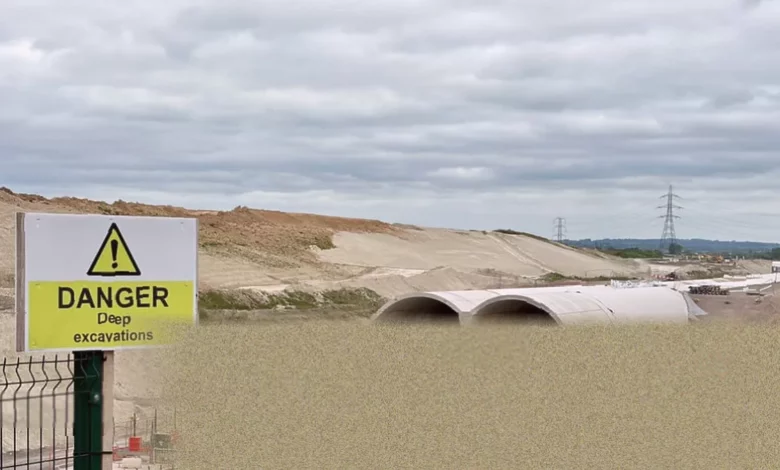
Despite the turmoil, construction has advanced in parts. As of May 2026, roughly one-third of the overall project is complete, with civil engineering – tunnels, bridges and earthworks – about two-thirds finished. Tunnelling is 85 per cent done, 108 million cubic metres of earth have been moved, and the longest railway viaduct in the UK has been completed in the Colne Valley. Yet not a single metre of track has been laid. Mark Wild, HS2 Ltd’s chief executive, has admitted that no track will be laid before 2029 at the earliest. Of 52 planned viaducts, only two are reportedly finished, and just 11 per cent of 169 bridges have been completed. To save time and money, the operating speed of the trains has been reduced from 360 km/h to 320 km/h (200 mph), a cut expected to save up to £2.5bn and bring the project in line with European and Japanese high-speed rail standards.
Alexander has announced a “reset” of the project, led by herself and Wild, with the senior team that delivered the Elizabeth Line drafted in to strip out complexity and improve management. The goal, she said, is to deliver HS2 at the “lowest reasonable cost and as quickly as possible.” But the record of similar promises – each accompanied by a clean-out and a new leadership team – has left many unconvinced.
The case for stopping now
The strongest argument for pressing ahead is the claim that cancellation would cost roughly as much as completion. A fresh assessment has put the cost of cancelling and remediating the works at between £33bn and £58bn, compared with £46.8bn to £61.7bn still needed to finish the job. This argument was rehearsed by HS2 Ltd itself, but critics dismiss it as nonsense. The £44bn already spent, they argue, should be treated as a sunk cost – and there is no way cancellation compensation could match the £60bn-plus still scheduled to be spent. “This has to be rubbish,” one commentator has said, pointing out that continuing to spend such sums on a single railway is manifestly worse value than using the money elsewhere.
The alternative investments are numerous. The annual HS2 budget stands at roughly £7bn – enough, it is argued, to build hospitals, schools, care centres, youth clubs and courtrooms across the country. In transport alone, Britain has just nine tram networks or metros, against France’s 30 and Germany’s 60; at the very least, Leeds could have one. Re-signalling, electrification and urban transit improvements are seen as far more urgent than shaving a few minutes off a journey between London and Birmingham for the relatively well-off. Robert Stephenson took less than five years to build the original London-to-Birmingham railway; HS2 has been in the planning for nearly two decades and has still not laid a metre of track.
Cancellation would also free up land for urban development. The multibillion-pound sites around London Euston and Birmingham’s Curzon Street – the latter of which has been described as looking “like a giant bomb has hit it” – could be turned into housing and commercial space. The vast shambles of HS2’s Coleshill interchange could accommodate an entire new town. Yet the government insists it is more important to get a few of the richer citizens of Birmingham to London a few minutes faster – perhaps one day.
The sole reason for not stopping HS2, according to its critics, is that it takes political courage – and that is in desperately short supply. Alexander could announce tomorrow that the project is halted, and simultaneously unveil a programme of far more needed rail investments and public spending. The idea that continuing with HS2 offers better value than any of these alternatives is, they say, absurd. Whether this government has the nerve to act on that remains to be seen.