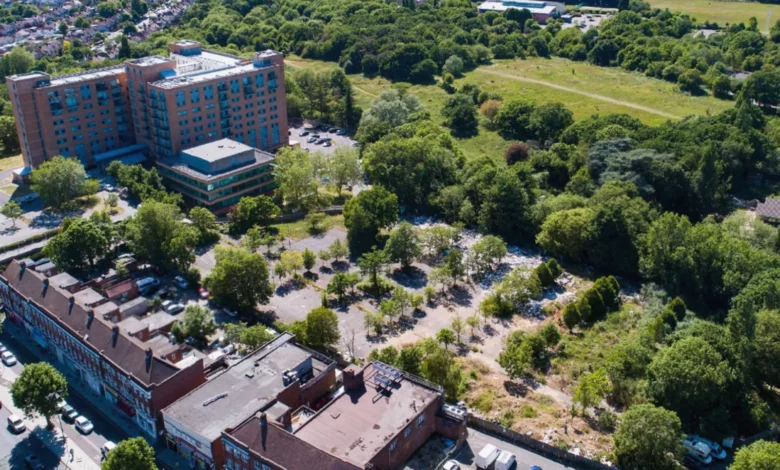
A planning application has been lodged for an 882-home development on a brownfield site adjacent to Sudbury Hill tube station in west London, promising a mix of conventional flats and co-living units on a former office car park.
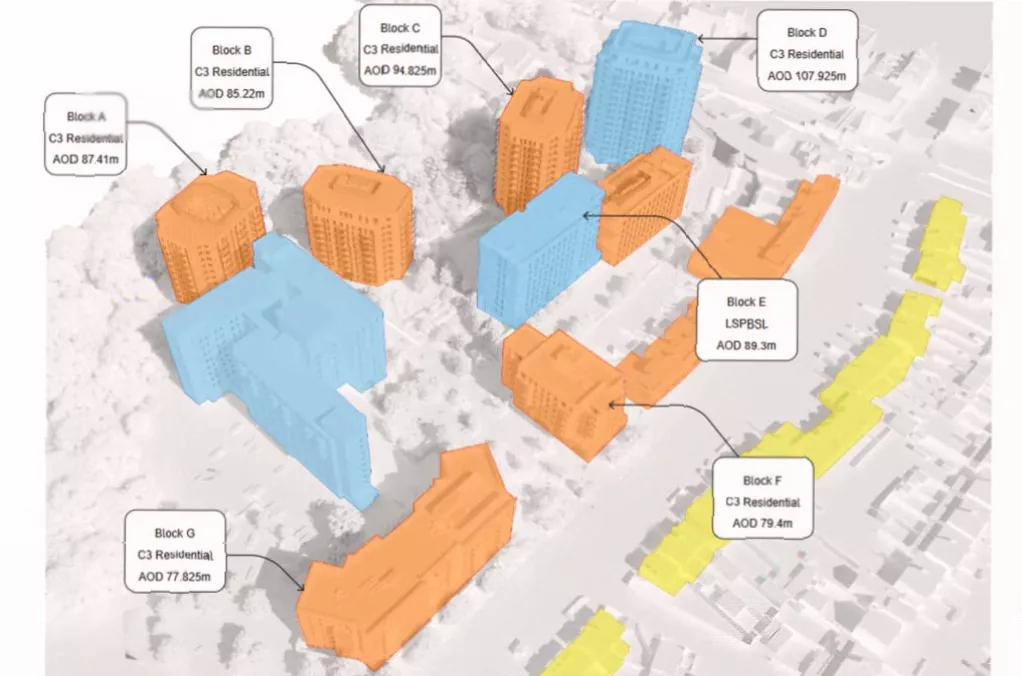
The 2.8-hectare plot sits between the Piccadilly line station and Atrium Point, a former ten-storey office building that has already been converted into housing. The current proposal, named Park View Place, would see seven new blocks constructed around the existing development, with the tallest buildings near the station potentially reaching up to 16 storeys. The site is classified as previously developed land and has a history of residential planning consents – between 2020 and 2022 approvals were granted for 558 homes across its northern and southern halves, though those schemes were later found to have deliverability issues relating to building heights, materials, internal layouts and insufficient single staircases under new regulations.
Housing mix and the co-living model
Of the 882 homes planned, 542 are conventional flats and houses ranging from one to three bedrooms. Of these, 407 will be sold at market prices and 135 offered at affordable prices – a figure that falls short of Ealing Council’s expectation of 35 per cent affordable housing. The remaining 340 units are designated as co-living accommodation, a form of rental housing that combines small private living spaces with shared amenities such as kitchens and communal lounges, similar to purpose-built student accommodation but aimed at young professionals.
The co-living element has been given particular prominence in the plans. Under Policy H16 of the London Plan, such developments are classified as Sui Generis – meaning they do not fit standard use classes – and are subject to minimum internal space standards of at least 18 square metres per unit. Crucially, co-living schemes are generally not relied upon to meet existing affordable housing quotas; developers often satisfy their obligations through cash-in-lieu contributions rather than providing on-site affordable homes. The Park View Place co-living blocks therefore sit outside the 135 affordable homes counted separately, though the overall number of affordable units remains below the council’s target.
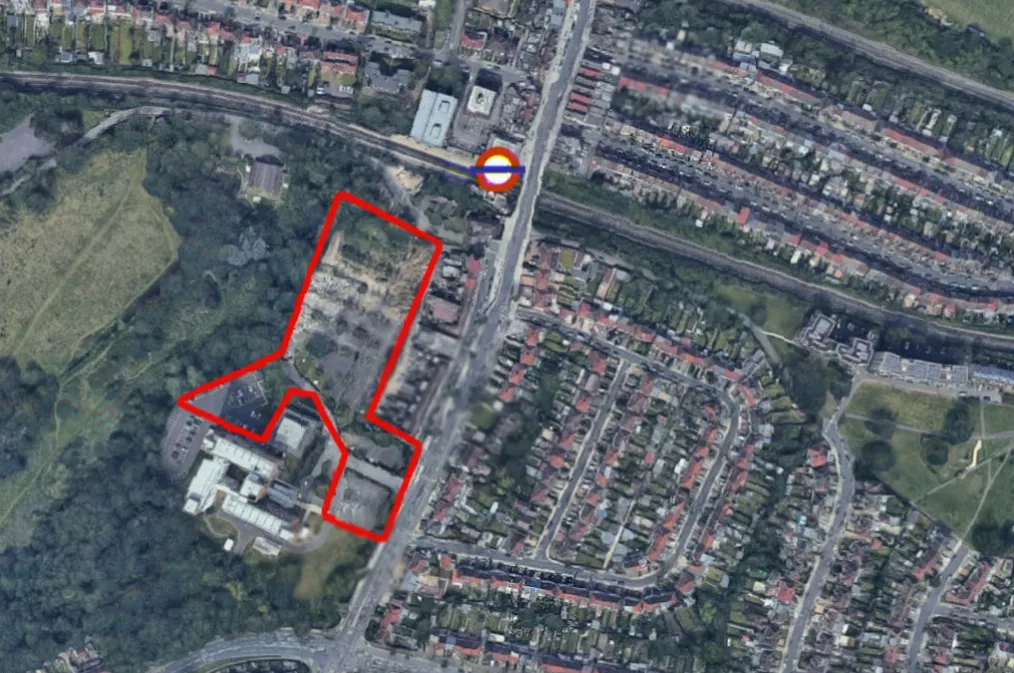
The development also includes ground-floor retail and café facilities in the blocks closest to the main road, with two buildings housing additional community facilities on the ground floor. Plans feature a new community centre, dedicated children’s play spaces and approximately 40 per cent of the site designated as publicly accessible open space. A new pedestrian connection to Grove Farm Park is proposed via a route across Costons Brook.
Design, transport and heritage
The revised masterplan emphasises a “sensitive” design, with lower buildings near existing residential areas, stepped roofs and varied materials. Commercial units and active frontages are planned for key corners and entrances. The site’s proximity to Sudbury Hill station – a Grade II listed building opened in 1903 and rebuilt in the early 1930s by modernist architect Charles Holden – has influenced the design, with the tallest blocks clustered near the station.
The development is intended to be largely car-free, with only 115 car parking spaces proposed – 75 of which will be re-provided for the adjacent Atrium Point development. More cycle storage is planned. A detailed traffic impact assessment has informed the layout and access points. The developers will make Section 106 contributions to Ealing Council to fund improvements to local transport, education and healthcare.
Community objections
All comments received on the planning application so far have been negative, with more than 19 objections registered. A recurring theme is the lack of additional facilities for new occupants, although one objector noted that a vacant GP surgery already exists in a nearby development. Another complaint described the site as one of the “few remaining wild spaces in Greenford” – a claim that appears to be based on a misunderstanding, given that the plot is a disused car park.
The sheer size of the development has drawn criticism, with residents arguing that building housing next to an existing ten-storey block is out of character for the area. Despite the largely car-free nature of the scheme, objectors claim it will lead to additional road congestion. One resident stated that the local road infrastructure is “simply not capable of supporting development on this scale.” Inadequate parking provision is a particular flashpoint, with fears that minimal on-site parking will force hundreds of additional vehicles onto surrounding residential streets, creating safety issues and obstructing emergency services.
The public consultation for the application closed on Friday, May 22. The decision on Park View Place now rests with Ealing Council’s planning committee.